

Understanding standard height doors is essential for ensuring safety, accessibility, and compliance in every Australian home or business.
Many property owners face confusion when choosing doors, as building codes and requirements have evolved over time. This makes door sizing decisions more complex than they first appear.
Knowing the benefits of choosing the right door height streamlines renovations, new builds, and guarantees a smooth installation process.
In this guide, you will find clear answers on 2026 standards, door types, compliance checks, installation tips, and the latest trends to help you make informed choices.
Understanding Standard Door Heights in Australia
Door heights have evolved significantly in Australia, mirroring changes in building codes and the needs of modern properties. For anyone planning renovations or new builds, understanding standard height doors is essential for compliance, accessibility, and long-term value. This section will clarify how door height standards have developed, what the current benchmarks are, and why they matter for your project.
Historical Evolution of Door Height Standards
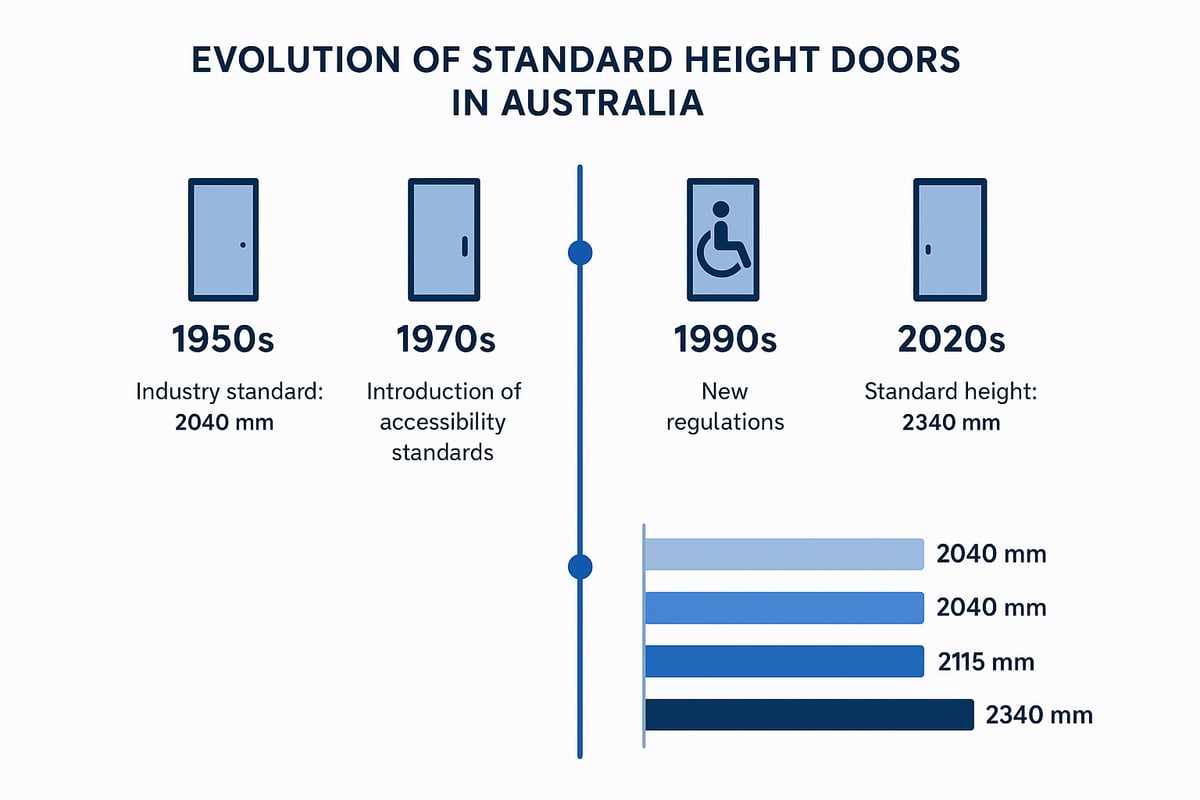
Australian door height standards have changed over the decades, influenced by both international norms and local requirements. In the mid-20th century, many homes featured doors as low as 1980mm, which suited lower ceilings common at the time. As architectural styles shifted and ceiling heights increased, so too did expectations for standard height doors.
International building codes also played a role, especially as Australia aligned more closely with global safety and accessibility benchmarks. The introduction of the National Construction Code (NCC) prompted updates, moving away from region-specific preferences toward a more universal approach. Today, standard height doors reflect a balance between tradition and modern demands.
Current Standard Heights for Residential and Commercial Doors
The 2026 standards set by the Australian Building Codes Board and Standards Australia have established clear benchmarks for door heights. In most new residential properties, internal hinged doors are typically 2040mm high, while external doors often match or exceed this height for added accessibility and security. Commercial buildings may require even taller doors, especially in high-traffic or public areas.
Specialty doors, such as those used for fire exits or accessible bathrooms, must meet specific minimum heights as outlined in the NCC. For a comprehensive overview of standard dimensions for different door types, the Standard Door Sizes in Australia guide provides detailed comparisons for both homes and businesses.
| Door Type | Common Heights (mm) |
|---|---|
| Internal Hinged | 2040 |
| External Entry | 2040–2340 |
| Garage (Residential) | 2100–2400 |
| Commercial | 2040–2700+ |
| PA Doors (Sheds) | 2040 |
Variations by Door Type: Internal, External, Garage, PA Doors
Different door types come with their own standard height doors. For instance, internal hinged doors are most often 2040mm, but taller options like 2340mm are available for homes with higher ceilings. Sliding doors for patios or living areas usually align with standard height doors but may be customised to match window transoms.
Garage doors present more variation. Residential garages often use roller or sectional doors ranging from 2100mm to 2400mm, while industrial sites may opt for doors over 3000mm high. Personal access (PA) doors, frequently used for sheds or workshops, are usually 2040mm but can be customised for unique spaces. Custom sizes are common for architectural projects or when retrofitting older buildings.
Regional and Local Council Considerations
Regional building regulations can affect standard height doors, particularly in areas with unique climate or safety concerns. For example, cyclone-prone regions in northern Australia might require higher clearances to accommodate reinforced door frames and stronger thresholds. Some local councils may also dictate minimum heights for certain door types to ensure compliance with energy efficiency or bushfire safety standards.
It is crucial to consult local authorities or a certified builder before finalising door heights, as overlooking these requirements can delay approvals or lead to costly retrofits. Understanding these regional nuances protects your investment and ensures your property meets all necessary rules.
Key Reasons for Adhering to Standard Heights
Adhering to standard height doors delivers several important benefits. Compliance with the latest standards ensures your project will pass inspections and avoid penalties. Standard sizes also make future replacements and upgrades more straightforward, protecting resale value.
Accessibility is another vital factor. Standard height doors support universal access, making your property safer and more inclusive for everyone. Non-standard doors may cause issues, such as restricted mobility access or difficulties with automated openers. Prioritising standard height doors is a practical decision for both immediate and long-term peace of mind.
Key Factors Influencing Door Height Selection
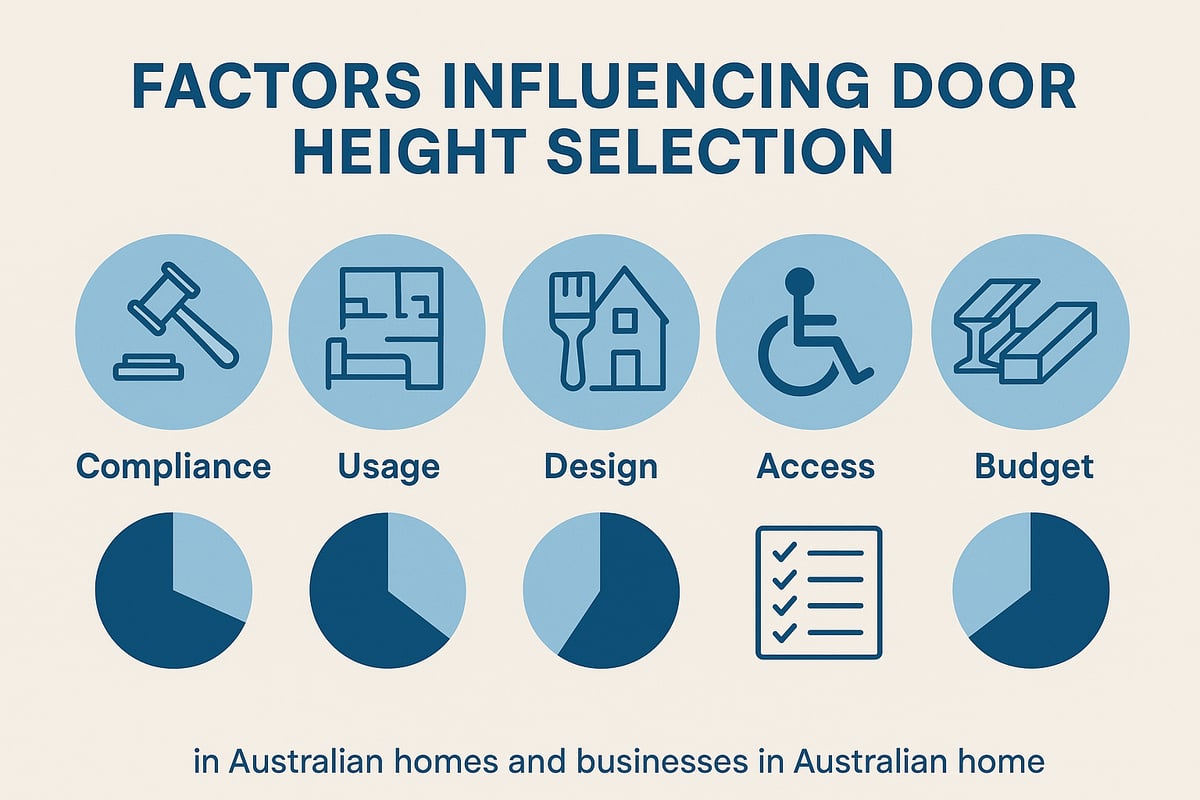
Selecting the right door height is a critical decision for any building project. Several factors shape the final choice, ensuring that standard height doors meet both functional and regulatory needs.
Building Codes and Legal Compliance
Compliance with the National Construction Code (NCC) is paramount when selecting standard height doors. The NCC 2022 and upcoming 2026 requirements set clear minimums for doorway heights, especially in exit routes and accessible areas. Ignoring these standards can result in delays, costly modifications, or even fines. For example, the NCC mandates that most doorways in new builds have a minimum clear opening height of 2040mm for residential settings. Accessibility standards, such as AS 1428.1, further dictate dimensions for inclusive access. For detailed compliance guidelines, consult the NCC 2022 Doorway Height Requirements. Ensuring your project aligns with these standards is essential for safety and future resale.
Functionality and Usage Needs
The intended use of a space directly impacts the selection of standard height doors. For example, a garage requires taller openings to accommodate vehicles, while a laundry or internal passage may only need standard heights. In commercial settings, roller and sectional doors often need to be higher for delivery trucks or equipment. A residential garage may use a 2100mm door, while a commercial garage could go up to 3000mm. Consider how the door will be used daily and whether the height supports all practical needs, now and into the future.
Aesthetic and Architectural Considerations
Modern trends in architecture influence the choice of standard height doors. Taller ceilings in new homes often call for doors at 2340mm or higher, contributing to a sense of openness and luxury. Minimalist designs may favour flush, oversized doors for a sleek look. Conversely, heritage homes might require custom heights to match existing frames. When selecting door heights, balance current trends with the timeless appeal and value of standard sizing, ensuring the result complements your property’s design.
Accessibility and Universal Design
Accessibility is increasingly important in Australian home and commercial design. Standard height doors must meet minimum requirements to allow for safe, easy passage of people using mobility aids, such as wheelchairs or walkers. Universal design principles recommend clear openings of at least 2040mm in residential settings to future-proof homes. Recent studies indicate that more Australian homes are adopting these standards, enhancing liveability for all residents. Factoring in accessibility from the outset avoids costly retrofits and ensures your property is welcoming to everyone.
Budget and Material Constraints
Budget and materials play a crucial role when choosing standard height doors. Standard sizes are generally more cost-effective, as they are mass-produced and readily available in popular finishes like Colorbond, timber, or glass. Custom heights, while sometimes necessary, often come with increased costs for manufacturing and installation. Material choice can also influence available height options, with some products limited to certain sizes. Always weigh the benefits of customisation against potential impacts on project timelines and costs.
Types of Doors and Their Standard Heights
Choosing the right door for your project starts with understanding the variety of standard height doors available in Australia. Each door type, from classic hinged options to advanced specialty solutions, comes with recommended heights for compliance, safety, and function. This section explores the main categories, typical heights, and what to consider for each.
Hinged Doors: Internal and External
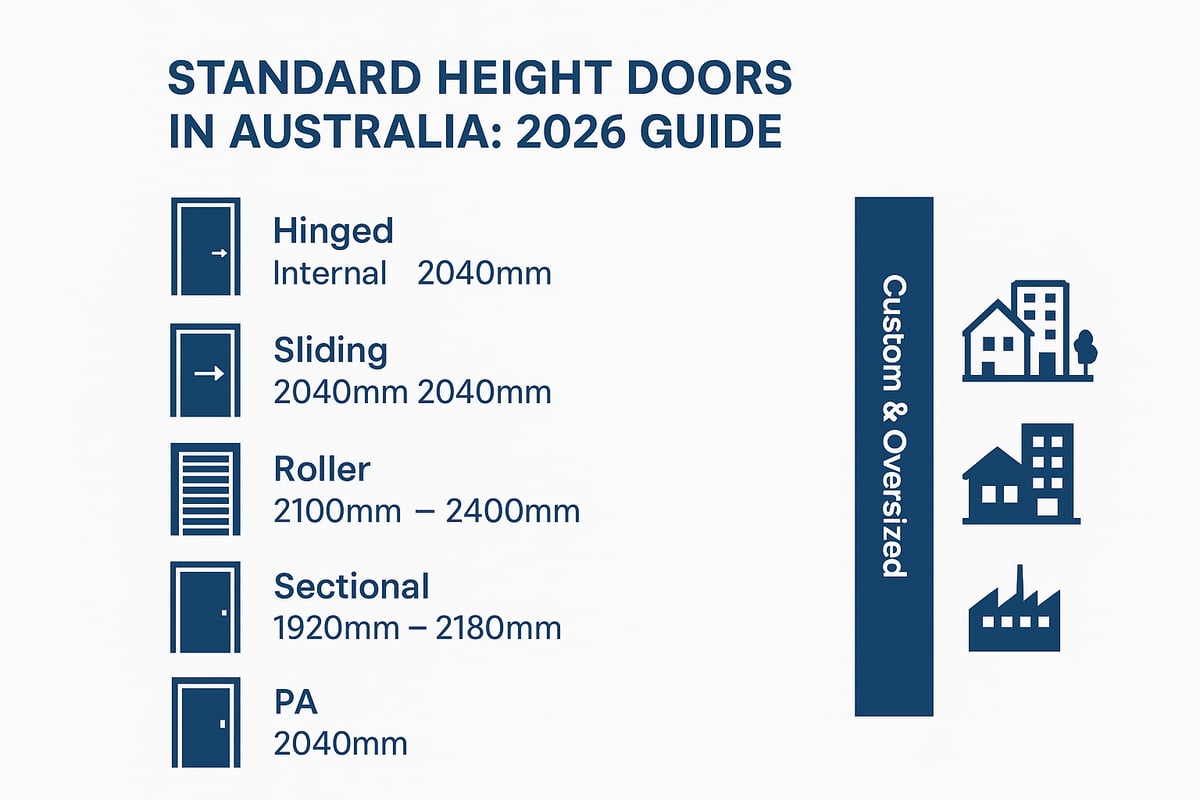
Hinged doors are the most common choice for both homes and businesses. The standard height doors for internal use are typically 2040mm. For main entry points and some external doors, 2340mm is also widely available, offering a more imposing presence and accommodating higher ceilings.
Applications include bedroom, bathroom, laundry, and entry doors. While these are the most common, some heritage or custom homes may feature non-standard height doors, requiring special orders. Always ensure the chosen door height matches frame and compliance needs.
Sliding Doors: Residential and Commercial
Sliding doors are popular for connecting indoor and outdoor spaces, or for maximising efficiency in tight areas. The standard height doors for sliding applications are most often 2040mm, matching the majority of Australian internal doors and aligning with ceiling heights.
Patio sliding doors, especially those with larger glass panels, may be available in taller options such as 2100mm or 2400mm. Commercial settings sometimes require even greater heights for accessibility or aesthetics. Frame thickness and hardware can influence the final installed height, so always check measurements carefully.
Roller Doors: Garage and Industrial
Roller doors are essential for garages, workshops, and many industrial spaces. In Australian homes, standard height doors for single garages are usually 2100mm, while double garages often use 2400mm. Industrial roller doors may exceed 3000mm to accommodate larger vehicles or machinery.
These heights provide enough clearance for most cars and utes, while still complying with building codes. Custom heights are available for unique site requirements, but opting for standard height doors often ensures faster installation, lower costs, and greater availability.
Sectional Doors: Panel Configurations and Heights
Sectional doors, made up of horizontal panels, are gaining popularity for both homes and businesses. Standard height doors in this category generally fall between 1920mm and 2180mm, depending on the number of panels and configuration. Four-panel doors are a common choice for residential garages.
Customisation is possible, especially for unique architectural needs. For a detailed breakdown of available sizes and configurations, see the Residential Sectional Door Heights Guide. Choosing the right sectional door height ensures optimal function and compliance with 2026 standards.
Personal Access (PA) Doors: Shed and Utility Access
PA doors provide convenient entry to sheds, workshops, and utility areas without the need to open a large roller or sectional door. The standard height doors for PA applications are typically 2040mm, slightly shorter than some main entry doors but perfectly suited for utility access.
These doors are designed for frequent use and easy installation in metal or timber frames. In commercial or industrial environments, PA doors may need to comply with additional safety or fire regulations, so always check relevant codes before selecting a size.
Specialty and Custom Doors
Some projects require doors outside standard height doors, such as oversized entry doors, fire-rated solutions, or accessible designs. Oversized doors might reach 2700mm or higher for dramatic entrances or commercial spaces. Fire-rated doors are often specified at standard heights for compliance, though custom heights can be arranged.
Accessible doors, designed for universal access, may also require specific heights to meet AS 1428.1 standards. When specifying custom doors, always consult with professionals to ensure compliance, performance, and a seamless fit.
Step-by-Step Guide: Measuring and Choosing the Right Door Height
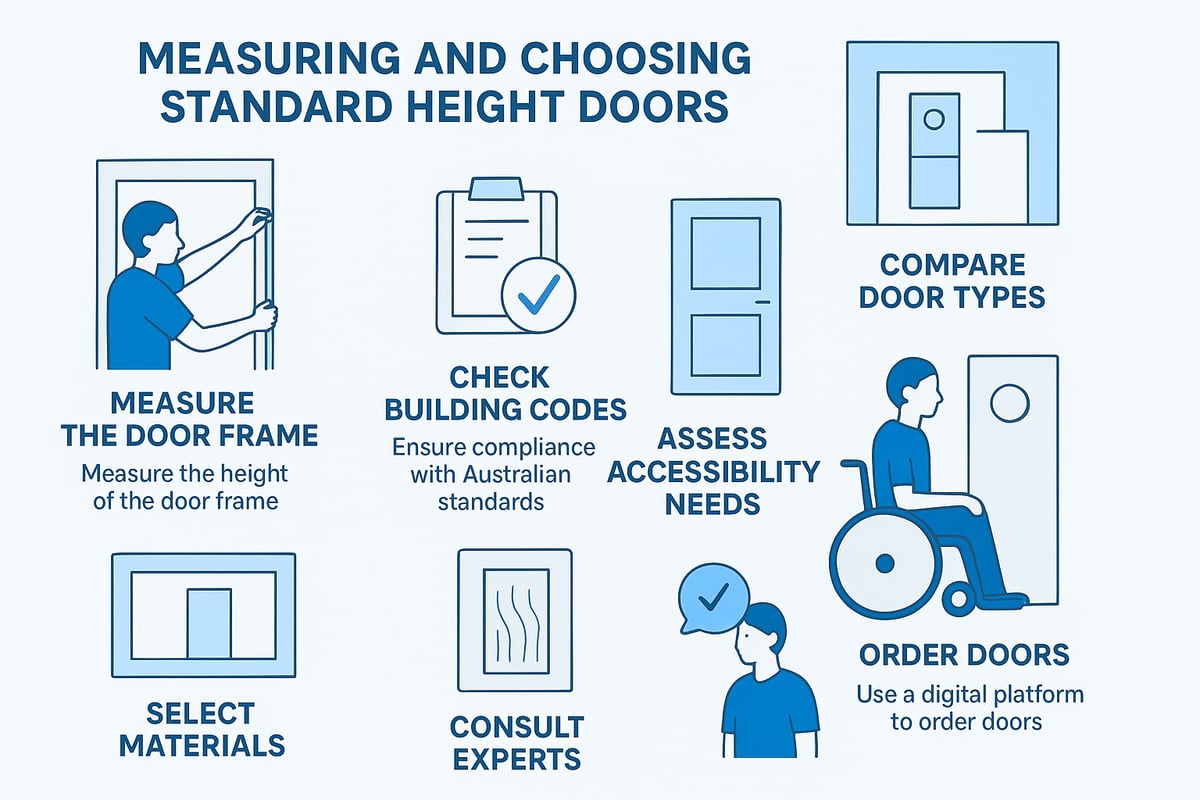
Choosing the right standard height doors for your project requires a methodical approach. Accurate measurements and informed decisions help ensure compliance, smooth installation, and long-term satisfaction. Follow these steps to simplify your selection process and avoid common pitfalls.
Step 1: Assess Your Opening and Frame
Start by measuring the width and height of your rough door opening. Use a reliable tape measure, and record measurements at multiple points, as frames and walls can be uneven. Remember, the size of your opening will determine which standard height doors fit best.
Be sure to account for allowances for the frame and any flooring to be added. For detailed guidance, refer to How to Measure a Garage Door Opening, which provides practical tips for accurate results.
Common mistakes include measuring only once, forgetting to subtract the frame thickness, or not checking for level and plumb openings. Taking the time now prevents costly adjustments later.
Step 2: Check Local Building Codes and Compliance
Before purchasing standard height doors, review the National Construction Code (NCC) and your local council's requirements. Standards can vary by state or territory, and some areas have stricter rules for specific door types or locations.
Access up-to-date regulations online or by contacting your local building authority. Non-compliance can result in legal issues or failed inspections, especially for fire exits, accessible entries, or garage doors.
Example: In cyclone-prone regions, door heights may need to meet additional clearance or reinforcement standards. Always confirm before proceeding.
Step 3: Consider Door Type and Functionality
Think about the intended use of each space, as this will influence your choice of standard height doors. For example, a garage, laundry, or fire escape may each require different minimum heights for optimal function.
Compare options such as roller, sectional, sliding, or personal access doors. In a residential garage, you might choose a 2100mm roller door, while a commercial garage could require a taller sectional door for larger vehicles.
Choosing the correct door type ensures both convenience and compliance.
Step 4: Evaluate Accessibility and Future Needs
Accessibility is essential for modern Australian homes and businesses. When selecting standard height doors, consider minimum clearances for wheelchair access and mobility aids, as outlined in AS 1428.1.
Plan for future needs, such as ageing in place or changes in occupancy. The trend toward universal design means more properties now incorporate accessible entry points.
Recent data shows an increasing percentage of new homes are adopting features like wider and taller doors for improved access.
Step 5: Select Materials and Finishes
Material choice can affect the available standard height doors. Popular options include Colorbond steel, timber, and glass, each with unique size limitations and finishes.
For example, glass sliding doors often come in taller heights to maximise light, while timber doors may have standard heights due to manufacturing constraints. Compare costs, durability, and aesthetics when making your decision.
Trends in Australia show a preference for minimalist or oversized doors in modern homes, but always ensure your chosen material supports your required height.
Step 6: Consult with Professionals or Suppliers
Consulting experts is crucial when dealing with unusual openings or custom requirements. Professional advice can help you navigate regulations, select the best standard height doors, and avoid installation errors.
Expect a site assessment, recommendations on door type, and guidance on compliance. Reputable suppliers provide detailed product specifications and support throughout the process.
Complex projects or non-standard spaces particularly benefit from early expert input, saving time and money in the long run.
Choosing Doors with Door Supply
Door Supply offers a comprehensive range of standard height doors for residential, commercial, and industrial projects across Australia. Their selection includes roller doors, sectional doors, sliding doors, and personal access doors, all available in multiple heights and finishes to suit any application.
Customers benefit from a user-friendly online platform that allows for instant pricing, custom sizing, and access to professional installation services. Door Supply's team provides tailored advice to ensure every order meets 2026 compliance standards and matches your unique site requirements.
With nationwide delivery and partnerships with leading Australian brands, Door Supply is the trusted choice for builders, renovators, and homeowners seeking convenience and quality. Selecting standard height doors through Door Supply streamlines your project and guarantees peace of mind.
Compliance, Installation, and Maintenance Tips for Standard Height Doors
Ensuring that your standard height doors meet the latest requirements is crucial for safety, legal compliance, and long-term performance. Adhering to best practices during installation and ongoing care will protect your investment and help avoid costly issues.
Ensuring Compliance with 2026 Standards
Compliance with the 2026 standards for standard height doors is mandatory for all new builds and major renovations. Start by confirming that your selected doors are certified to meet the current code, including minimum and maximum height allowances.
Request compliance documentation from your supplier before purchase. This typically includes product data sheets, certification labels, and installation instructions. For garage and roller doors, you can review practical options in the Standard Height Roller Doors Collection, which features doors designed to meet Australian standards.
Keep records of all compliance documents, as local councils may request them during inspections. Meeting these requirements not only avoids penalties but also ensures your property remains accessible and safe for all users.
Installation Best Practices for Different Door Types
Proper installation of standard height doors is essential to guarantee performance and longevity. Always follow manufacturer instructions, taking note of specific requirements for roller, sectional, sliding, or personal access (PA) doors.
For roller and sectional doors, ensure the tracks are level and the frame is square to prevent misalignment. Sliding doors require careful adjustment of rollers and tracks for smooth operation. When installing PA doors, double-check clearances for accessibility and emergency exit standards.
Common pitfalls include incorrect frame sizing, insufficient clearance, and over-tightening of hardware. Enlist a qualified installer for complex or heavy doors, especially in commercial or industrial settings, to ensure that all safety and compliance boxes are ticked.
Adjustments and Solutions for Non-Standard Openings
Not every project will suit standard height doors, especially in older properties or custom builds. If your opening falls outside standard sizes, you may need frame modifications, header adjustments, or infill panels to achieve a compliant fit.
Understanding door frame sizing is critical when adapting openings for new doors. For detailed guidance, refer to Door Frame Sizing Explained, which covers how frame dimensions impact the final installation.
When deciding between custom and standard solutions, consider the long-term benefits of compliance, ease of future replacement, and cost implications. Custom doors may be necessary for unique architectural features but should always be specified to meet relevant Australian standards.
Ongoing Maintenance for Longevity and Performance
Regular maintenance is key to maximising the lifespan and reliability of standard height doors. Set up a maintenance schedule based on door type and manufacturer recommendations.
For roller and sectional doors, lubricate moving parts and inspect tracks every six months. Sliding and PA doors benefit from cleaning runners and checking seals to avoid sticking or water ingress. Timber doors may require periodic repainting or sealing to protect against moisture.
Staying proactive with maintenance not only upholds performance but can also preserve warranties and enhance safety. A simple checklist can help you track tasks and spot issues early, reducing the risk of sudden failures or expensive repairs.
Troubleshooting Common Issues
Even with the best planning, standard height doors can encounter problems over time. Common issues include misalignment, sticking, or insufficient clearance, often caused by shifting foundations or wear and tear.
Address minor alignment problems by adjusting hinges or track brackets. If a door is sticking, check for debris in tracks or swelling due to moisture. For persistent issues, consult a professional to prevent further damage or compromise to safety.
Knowing when to seek expert help is vital. If you notice structural cracks, repeated malfunctions, or difficulty securing the door, professional assessment ensures your standard height doors remain compliant and functional for years to come.
Future Trends: Door Height Standards and Innovations for 2026 and Beyond
As the Australian construction landscape evolves, so do the requirements for standard height doors. The next few years promise significant changes in regulations, technology, and design preferences. Staying ahead of these trends will ensure that your projects remain compliant and future proof.
Evolving Building Codes and Anticipated Changes
Australia's building codes are moving towards greater inclusivity and adaptability. The 2026 updates to the National Construction Code (NCC) are expected to further align with universal design principles, ensuring that standard height doors meet the needs of all users.
For example, there is a push to increase minimum door heights in accessible routes, making homes and businesses more accommodating for people with mobility aids. This aligns closely with guidelines like the Liveable Housing Design Guidelines, which recommend minimum clear opening heights and widths for universal access.
Builders and renovators should anticipate stricter compliance checks and documentation requirements as these standards become mandatory.
Smart Doors and Automation Impact on Standard Heights
The integration of smart technology has been a driving force in modern door solutions. Automated openers, sensor systems, and access controls now influence how standard height doors are specified and installed.
For instance, garage and commercial doors often require additional clearance to accommodate motorised tracks and sensors. This means standard height doors may need to be taller to ensure seamless operation and to future proof properties for next generation automation.
Homeowners investing in smart home upgrades should consult suppliers early to confirm that chosen door heights will fit both current and future automation hardware.
Sustainability and Material Innovation
Sustainability is shaping the future of standard height doors across Australia. Eco friendly materials such as recycled steel, FSC certified timber, and energy efficient composites are becoming increasingly popular. These materials can influence available door heights due to their structural properties and manufacturing processes.
Recent data shows a steady uptake in sustainable doors, especially in new builds aiming for Green Star or NABERS ratings. Manufacturers are responding by offering a wider range of standard height doors in environmentally responsible finishes.
Choosing sustainable options not only benefits the environment but also enhances a property's long term value and compliance with emerging green building codes.
Customisation and Modular Door Solutions
The demand for flexible, modular door systems is reshaping how standard height doors are designed and supplied. Modular doors allow for easier upgrades, repairs, and adaptations as property needs evolve.
This trend is particularly strong in commercial and multi residential developments, where adaptable layouts are essential. Customisation options, such as adjustable panels or interchangeable finishes, mean that standard height doors can now be tailored to suit a wide variety of architectural styles and functional requirements.
Universal design principles, as promoted in resources like the Liveable Housing Design Guidelines, are also driving growth in custom solutions that support accessibility and long term usability.
International Influence and Global Trends
Australian standards for standard height doors are increasingly shaped by global trends. European and North American markets, for example, are setting new benchmarks with taller, wider doors and minimalist frames.
This international influence is reflected in local preferences for oversized entryways, frameless glass panels, and seamless transitions between indoor and outdoor spaces. As Australian building codes adapt, expect to see greater alignment with these global innovations, offering more choice and flexibility for homeowners and builders.
Staying informed about international best practices ensures your projects remain competitive and compliant as the market evolves.
Now that you have a clearer understanding of why getting door heights right is crucial for safety, compliance, and smooth installations, you’re in a great position to plan your next project with confidence. Whether you’re renovating or building new, choosing a sectional garage door can make all the difference in meeting Australia’s 2026 standards and ensuring long term value for your property. If you’re ready to take the next step and want a door that offers flexibility, security, and a seamless finish, you can Buy a sectional garage door to suit your needs.