
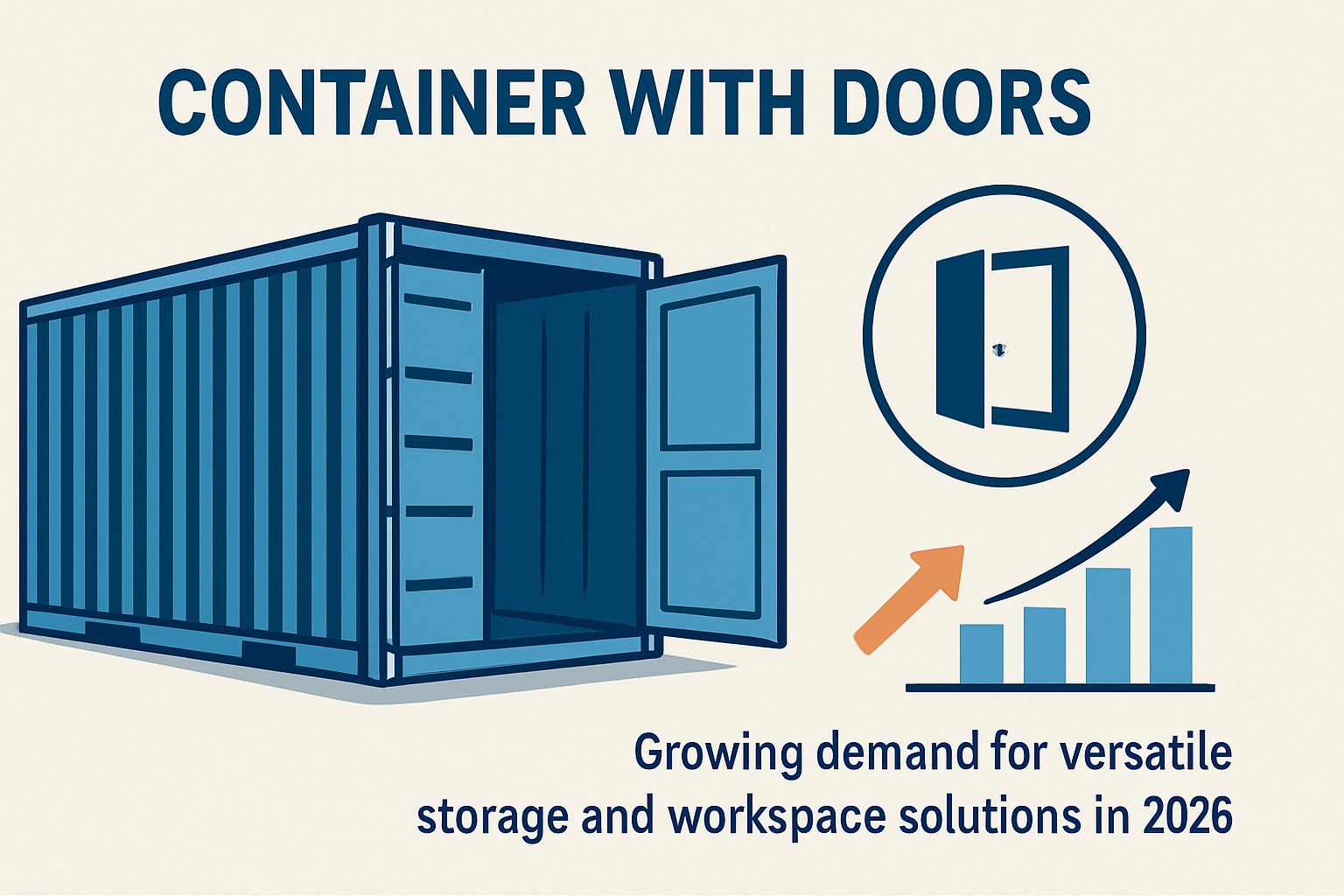
As Australians look for smarter ways to manage space in 2026, the demand for practical storage and flexible work areas continues to surge. Enter the container with doors—a modern solution designed for homeowners, businesses, and industrial users seeking secure, accessible, and adaptable spaces without the cost of traditional builds.
This guide delivers a clear overview of container with doors, outlining their types, essential features, and real-world applications. You will also learn how to select, install, and maintain the right option for your needs, plus discover what the future holds for this innovative storage and workspace trend.
Types of Containers With Doors
Navigating the world of container with doors means understanding the variety available to suit different needs. Whether for storage, transport, or conversion, the right type ensures optimal functionality and long-term value. Let’s break down the main types and what sets each apart.
Standard Shipping Containers With Doors
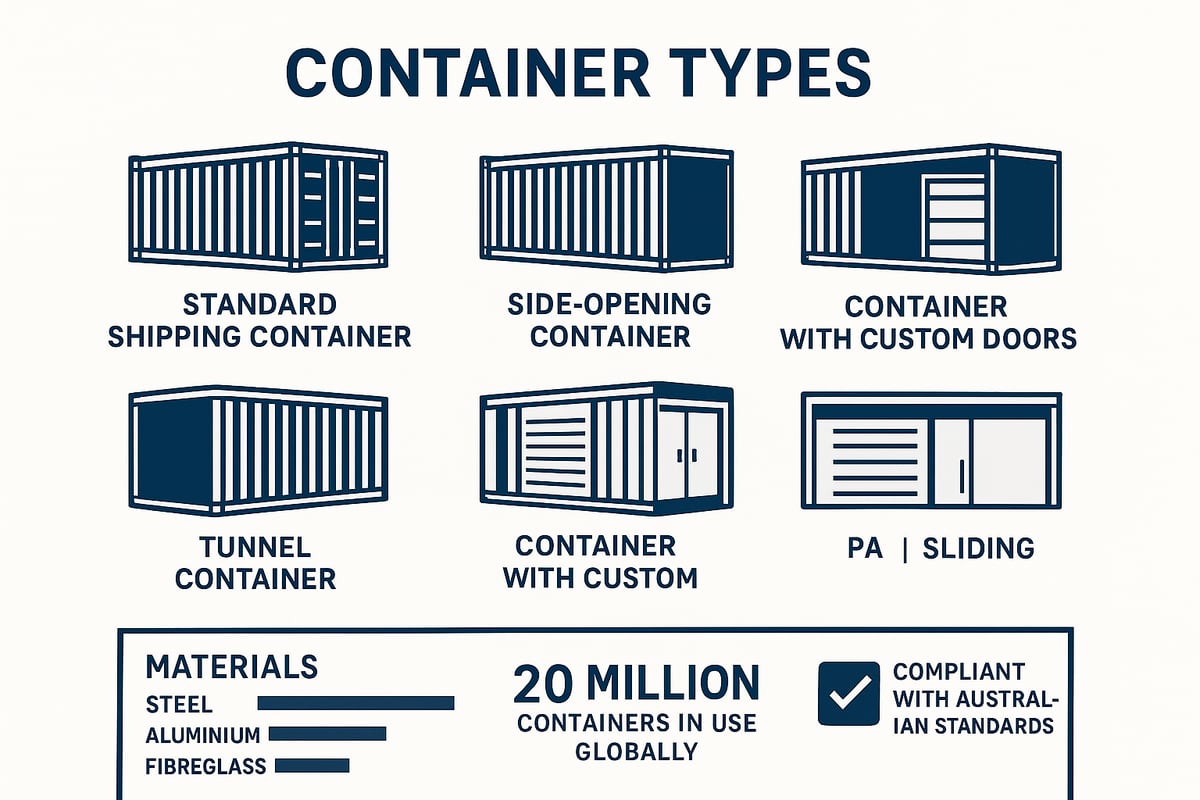
The most common container with doors is the ISO shipping container, available in 20ft and 40ft sizes. These units feature double swing doors at one end, built for easy loading and unloading.
You’ll find these containers used for secure storage, international shipping, and conversion into site offices or workshops. Their robust door design offers:
- Heavy duty locking bars for added security
- Weather-resistant seals to keep contents dry
- Reinforced steel construction for durability
For example, a 40ft high-cube container with doors is ideal for warehouse storage, accommodating tall equipment and bulk goods. As of 2024, more than 17 million shipping containers are in active use worldwide, making this format a reliable choice across industries.
Specialised Container Door Configurations
Beyond the standard, container with doors options include side-opening doors, tunnel containers, and high-security models. Side-opening containers offer full-length access for easy loading of bulky items or palletised goods. Tunnel containers, with doors at both ends, allow drive-through access or fast sorting of contents.
Some containers come fitted with lockbox-equipped doors for maximum security, ideal for retail pop-ups or temporary storage. For example, side-access containers suit retail environments where frequent, wide access is essential. Learn more about side-opening shipping containers and how they enhance accessibility for diverse applications.
Custom Container Doors
Customising a container with doors opens up even more possibilities. Modifications include:
- Roller doors for wide, unobstructed entry
- Personal access (PA) doors for quick entry and exit
- Sliding doors for space efficiency in tight areas
These options are popular for workshops, garages, and self-storage units. Consider a case study where a container office is fitted with multiple entry points, improving workflow and safety for staff. Custom doors can be tailored to specific operational needs, making the container with doors highly adaptable.
Door Materials and Finishes
The performance of any container with doors depends on the materials and finishes used. Common choices include:
| Material | Benefits | Applications |
|---|---|---|
| Steel | High security, durability | Most external doors |
| Aluminium | Lightweight, corrosion-resistant | Mobile or insulated units |
| Composite | Insulation, custom colours | Office or retail fitouts |
Weatherproofing and insulation are critical in the Australian climate. Many owners opt for powder-coated or painted finishes to match branding or blend with surroundings. Insulated doors help regulate interior temperatures, especially for refrigerated storage or converted living spaces.
Compliance and Australian Standards
Every container with doors must meet local AS/NZS safety and compliance requirements. This includes:
- Correct door installation methods
- Fire safety features and wind ratings
- Adherence to building codes for structural integrity
For example, doors on containers in cyclone-prone areas must meet specific wind resistance standards. Always check with your local council for permits and ensure all modifications align with Australian standards. Compliance not only guarantees safety but also protects your investment and resale value.
Key Features and Benefits of Containers With Doors
Choosing a container with doors offers a blend of advanced security, flexibility, and long-term value. Whether for home, business, or industrial use, these solutions provide a modern answer to evolving storage and workspace needs. Here, we break down the essential features and major benefits to help you make an informed decision.
Security and Access Control
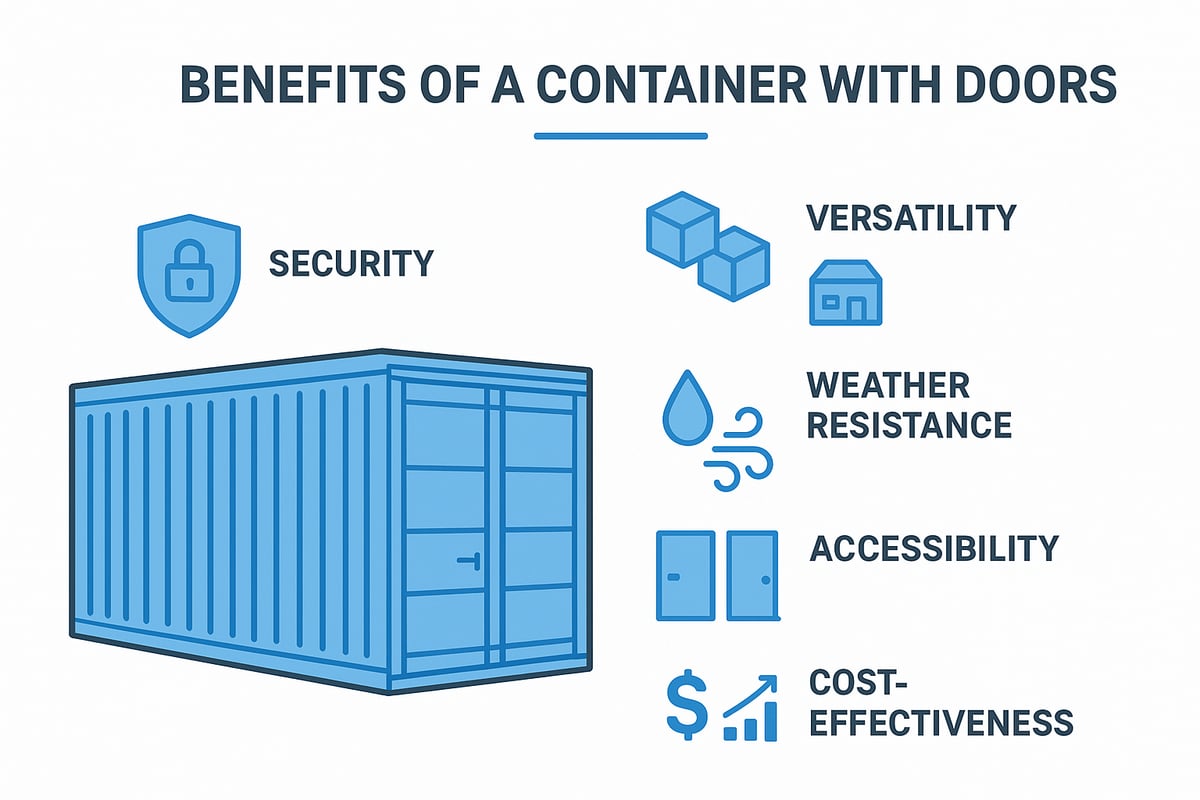
Security is a top priority for anyone investing in a container with doors. Modern units come equipped with heavy-duty locking systems, such as padlocks, lockboxes, and even electronic entry options. These features help deter theft and unauthorised access.
Access control is also essential, especially for commercial or residential self-storage applications. Many facilities implement layered security, including monitored access and reinforced doors. For a deeper dive into practical solutions, see this guide on maximising security and accessibility.
Features at a glance:
- Lockbox-equipped doors for added protection
- Electronic access for high-traffic areas
- Multiple entry points for staff and customers
A container with doors can be tailored to your security needs, ensuring peace of mind for valuable tools, stock, or equipment.
Versatility and Adaptability
One of the standout benefits of a container with doors is its adaptability. These containers serve as storage units, site offices, workshops, pop-up shops, and more.
The modular nature allows for easy expansion or reconfiguration as your needs change. Between 2023 and 2025, there was a 30% increase in container conversions for commercial spaces, highlighting their growing popularity.
Common uses include:
- Temporary or permanent workshops
- Modular retail outlets and cafes
- Flexible inventory storage
A container with doors provides a future-proof solution for changing business or household requirements.
Weather Resistance and Durability
Australian weather can be unpredictable, making durability a must. A container with doors is designed to withstand harsh elements, thanks to robust seals and corrosion-resistant finishes.
Sealing systems keep out water and dust, while cyclone-rated doors are available for regions prone to severe storms. Regular maintenance, such as lubricating hinges and checking seals, helps extend the lifespan.
Key features:
- Weatherproof doors for all climates
- Rust-resistant coatings for coastal locations
- Windlocked doors for cyclone-prone areas
For those in exposed environments, a container with doors delivers reliable protection year-round.
Ease of Use and Accessibility
A container with doors offers various entry options to suit different needs. Wide-opening double doors, side access, roller doors, and personal access doors improve usability for both individuals and teams.
Accessibility upgrades, such as ramps and automatic openers, ensure compliance with regulations and make loading easier for everyone. Low thresholds and wide entryways are particularly useful for moving large or heavy items.
Accessibility highlights:
- Custom door sizes for equipment or vehicle access
- Compliance options for disability access
- Easy-to-operate mechanisms for daily use
With a container with doors, you can streamline operations and improve efficiency on any site.
Cost-Effectiveness
Investing in a container with doors is often more affordable than building permanent structures. These units maintain value over time and can be resold or repurposed as needs evolve.
Comparing costs:
| Solution Type | Initial Cost | Maintenance | Resale Value | Flexibility |
|---|---|---|---|---|
| Container with doors | Low-Medium | Low | High | High |
| Traditional extension | High | Medium | Low | Low |
| Fixed garage | High | Medium | Medium | Low |
Many start-ups and small businesses report strong ROI from container-based operations, thanks to lower upfront investment and ongoing savings.
A container with doors is not just a practical storage option, it is a smart financial decision for many Australians.
Common Applications and Use Cases in Australia
The popularity of the container with doors has soared across Australian homes and businesses. Its adaptability and robust design make it a practical choice for a wide range of needs. Whether for secure storage, creative business solutions, or emergency response, the container with doors continues to prove its value in real-world settings.
Residential Uses
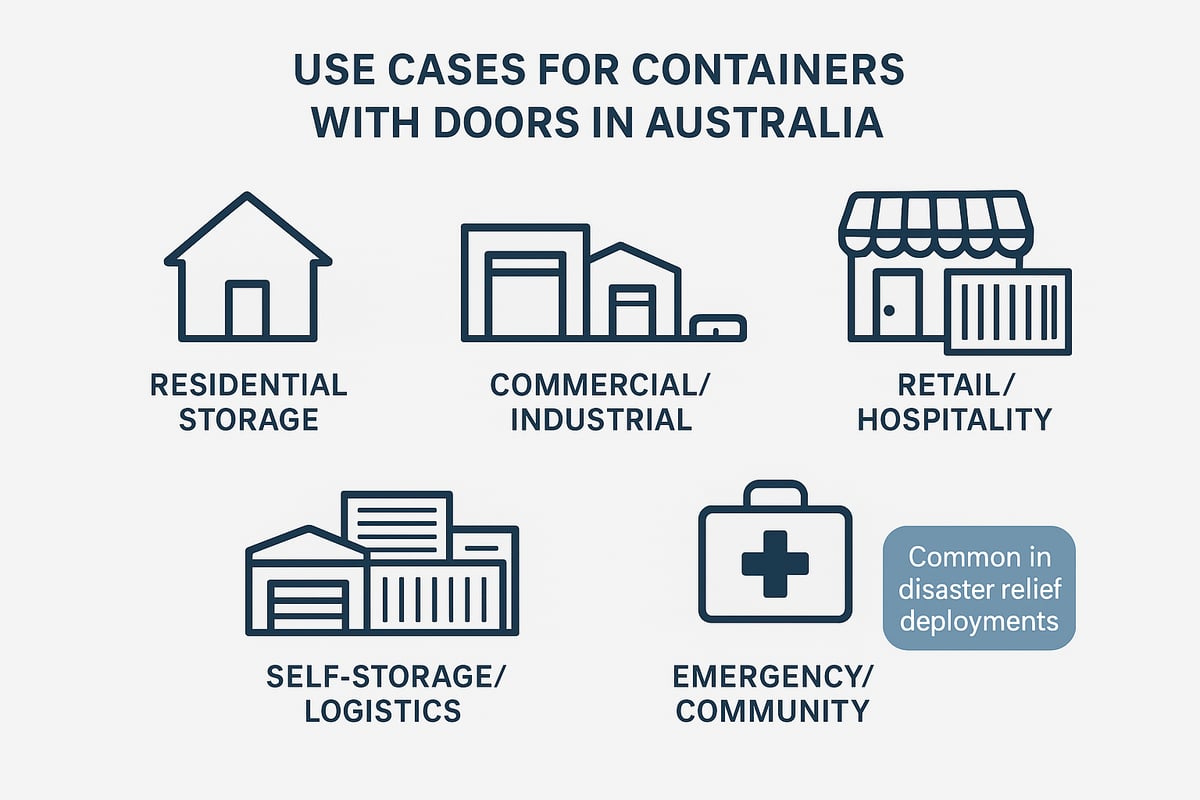
A container with doors is a sought-after solution for homeowners needing extra storage or functional space. Its secure, weatherproof build protects valuable items, from bikes to garden tools, against theft and the elements.
Many families use a container with doors as a backyard workshop or hobby room, offering a private, lockable area separate from the main house. Demand for container pool houses and granny flats has also grown, providing affordable, flexible living or entertainment spaces.
- Secure backyard storage for tools and equipment
- Workshop or creative studio with easy access
- Pool house or guest accommodation
The container with doors offers a cost-effective alternative to permanent building extensions, especially where council approval or quick setup is required.
Commercial and Industrial Uses
Businesses across Australia rely on the container with doors for reliable, mobile storage and workspace. Warehouses benefit from its modular design, enabling easy expansion or relocation as inventory needs change.
On construction sites, a container with doors serves as a secure tool room or temporary site office, keeping valuable equipment safe and organised. The mining and agriculture sectors use containers to store chemicals, spare parts, and machinery, taking advantage of their robust security features.
- Warehousing and overflow inventory management
- Mobile offices for construction and project sites
- Secure storage for mining and farm operations
A container with doors is often chosen for its durability in harsh environments, making it ideal for remote or industrial locations.
Retail and Hospitality
The rise of the container with doors in retail and hospitality is impossible to ignore. Pop-up shops, cafes, and event kiosks all benefit from the flexibility and customisation options available.
Retailers can modify a container with doors to create wide entrances and service windows, ensuring smooth customer flow. With a 20% increase in container-based retail outlets since 2024, this trend shows no signs of slowing.
- Pop-up stores and seasonal retail units
- Coffee shops or food stalls at events
- Ticket booths and hospitality kiosks
By adapting a container with doors, businesses can launch or expand operations with minimal upfront investment and fast turnaround times.
Self-Storage and Logistics
The container with doors has become a backbone of the self-storage industry. Operators expand quickly by adding container units, offering secure, weather-resistant storage for personal or business use.
Logistics companies use a container with doors for last-mile delivery hubs and mobile distribution centres. In cities like Melbourne and Sydney, containerised storage parks are transforming how Australians access flexible storage solutions.
- Self-storage businesses with container units
- Logistics and delivery station hubs
- Temporary warehousing for seasonal demand
Their modular nature allows businesses to scale up or down as needed, maximising efficiency with a container with doors.
Emergency and Community Solutions
A container with doors plays a vital role in emergency response and community support. Its rapid deployment capabilities are crucial for disaster relief, offering secure, weatherproof shelter within hours.
Medical clinics, vaccination centres, and temporary classrooms have all been established using a container with doors, providing safe, accessible spaces when traditional buildings are unavailable. Councils and charities also use containers for community storage or pop-up activity centres.
- Disaster relief shelters and field hospitals
- Mobile medical and vaccination clinics
- Community centres for local events or storage
For more on adapting containers for unique needs, see the Container conversions guide.
How to Choose the Right Container With Doors
Selecting the best container with doors involves a strategic approach. Whether you are a homeowner, business owner, or site manager, matching your requirements to the right features ensures a long-term, cost-effective solution. Let us walk through the key steps to make an informed decision and maximise your investment.
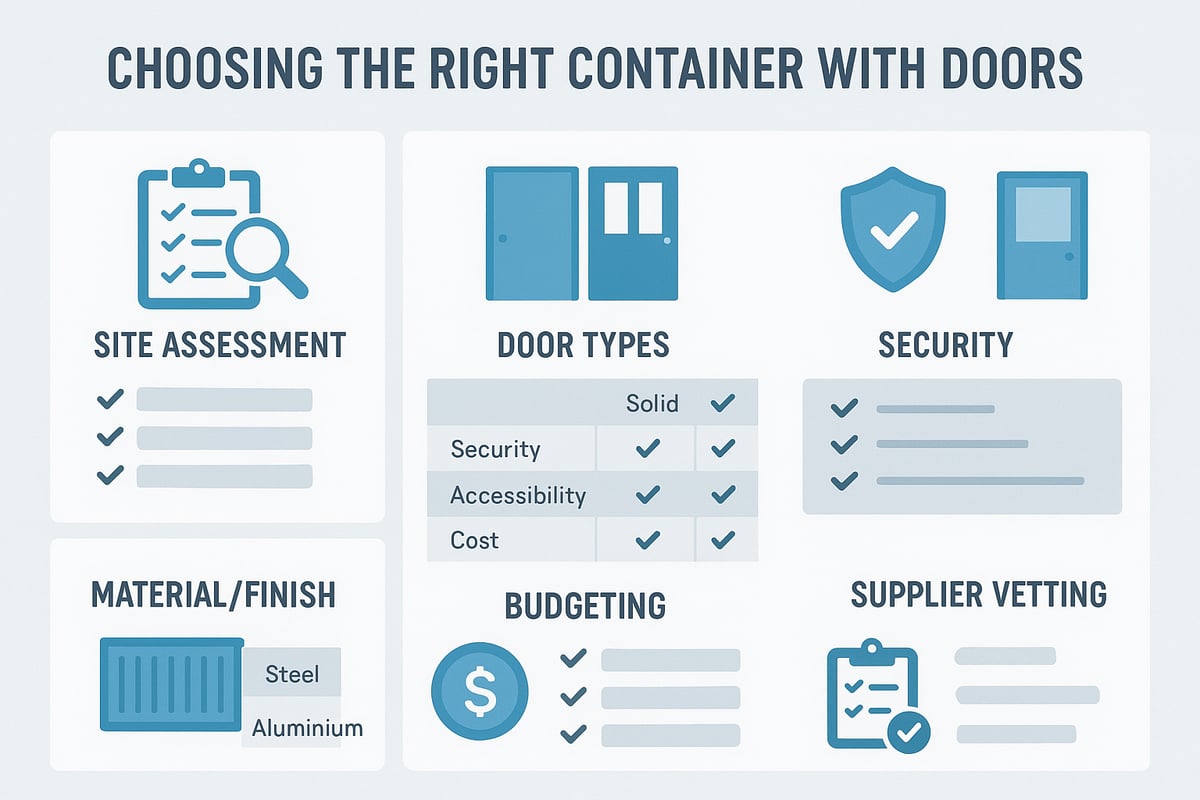
Assessing Your Needs and Site Requirements
Begin by evaluating your intended use for the container with doors. Consider the space available, the frequency of access, and any site constraints such as uneven ground or limited manoeuvring room. A thorough site assessment will help determine the right container size, door orientation, and access points.
Site Assessment Checklist:
- Measure available site area
- Check ground conditions and drainage
- Identify access routes for delivery
- Determine required door clearance
- Note any local council restrictions
By clarifying your needs up front, you ensure the container with doors will function as intended and comply with regulations.
Comparing Door Types and Configurations
Choosing the correct door type is crucial for usability and security. Options include double doors, side-opening doors, roller doors, and personal access (PA) doors. Each configuration offers unique benefits—double doors allow wide loading, while roller doors suit frequent, large-item access.
| Door Type | Best For | Accessibility | Security Level |
|---|---|---|---|
| Double Doors | General storage | High | High |
| Side Doors | Retail/workshops | Very High | High |
| Roller Doors | Workshops/garages | Highest | Medium |
| PA Doors | Offices/quick entry | Moderate | Medium |
For more details on installing doors in shipping containers, refer to this Installing a shipping container door guide. Your choice of container with doors should reflect both your operational needs and available space.
Security and Safety Considerations
Security is paramount for any container with doors. Look for containers equipped with robust locking systems, such as lockboxes, padlocks, or electronic locks. Consider additional reinforcements for high-value storage or sensitive materials.
Safety features should include adequate ventilation, fire-rated doors, and emergency exits where required. Always check that the container with doors complies with local council and building regulations to avoid costly retrofits.
Material and Finish Selection
Selecting the right materials ensures longevity and performance in Australian conditions. Steel is standard for durability, while aluminium offers lighter weight. Insulated doors are essential if you need temperature control for your container with doors.
Consider finishes that resist corrosion, such as powder coating or Colorbond. Colour options can help the unit blend in or support branding. The right material and finish combination will enhance both aesthetics and resilience.
Budgeting and Cost Factors
Understand all costs associated with your container with doors. Compare purchase versus hire options, factoring in delivery, installation, and any required modifications. Long-term value is crucial—containers generally retain value and offer strong resale potential.
| Cost Factor | Typical Range (AUD) |
|---|---|
| Base container (20ft) | $3,500–$6,000 |
| Door modifications | $500–$2,000 |
| Delivery/installation | $500–$1,200 |
Assess your budget against expected ROI, especially for business or rental applications.
Supplier Selection and Warranties
Choose a reputable supplier experienced in container with doors. Vet their compliance credentials, product quality, and after-sales support. Review warranty terms to ensure coverage for both container structure and door mechanisms.
Questions to Ask Suppliers:
- Are your doors compliant with Australian Standards?
- What is included in the warranty?
- Can you provide references or case studies?
- Do you offer installation services?
By thoroughly vetting suppliers, you protect your investment in a container with doors and ensure reliable support for years to come.
Installation and Maintenance Guide
Proper installation and ongoing maintenance are crucial for getting the most value out of your container with doors. Whether you’re preparing a new site, modifying doors, or ensuring compliance, each step impacts the lifespan and security of your investment. This guide breaks down the process into manageable stages for Australian homeowners, builders, and business owners.
Site Preparation and Delivery
Before your container with doors arrives, assess your site for accessibility, stability, and safety. Clear the area of debris, ensure the ground is level, and check for overhead obstructions like powerlines.
For delivery, choose between a crane lift or tilt-tray truck, depending on site restrictions and container size. Confirm access routes can accommodate large vehicles. Obtain any council permits required for placement, especially in residential areas.
Proper preparation ensures your container with doors is positioned safely and securely, reducing costs and delays during installation.
Door Installation and Modifications
Installing or modifying doors is a key step in customising your container with doors for specific needs. Options range from basic double doors to roller doors, personal access doors, or side entries. Many users opt for professional installation to ensure structural integrity, weather sealing, and security.
If you’re considering a roller door, follow best practices for fitting and alignment. For detailed guidance, see Installing a roller door. Always check that modifications meet Australian standards for safety and compliance.
Quality installation leads to better usability and longevity for your container with doors.
Weatherproofing and Insulation
Australian weather can be harsh, so protecting your container with doors from the elements is essential. Use high-quality seals around all door edges to prevent water and dust ingress. Consider adding insulation, especially for climate-sensitive storage or comfort in workspaces.
Choose doors with rust-resistant coatings and cyclone-rated hardware for coastal or high-wind regions. Regularly inspect seals and finishings for signs of wear. Effective weatherproofing helps maintain the contents and structural integrity of your container with doors.
Routine Maintenance and Repairs
Routine care keeps your container with doors functioning smoothly. Inspect hinges, locks, and seals for damage or wear every few months. Lubricate moving parts and clean away debris to prevent sticking. Address rust spots or chipped paint promptly to avoid further deterioration.
For more tips on preventative care, visit Maintaining your shipping container. A proactive maintenance schedule extends the life and value of your container with doors, ensuring optimal performance year-round.
Legal and Compliance Checks
Compliance with Australian standards is vital for any container with doors used in residential, commercial, or industrial settings. Check that all modifications, especially door installations, meet AS/NZS requirements for fire safety, wind resistance, and emergency egress.
Maintain records of permits, certifications, and inspections, as local councils may require documentation for ongoing use. Regularly review regulatory updates to stay compliant. Legal diligence protects your investment and ensures your container with doors is safe and authorised for its intended purpose.
Future Trends and Innovations in Container With Doors (2026 and Beyond)
The future of container with doors is rapidly evolving, driven by new technologies and changing demands in Australia. As we move into 2026, innovation is shaping how homeowners, businesses, and developers use these versatile solutions. Let’s explore the key trends set to redefine the industry, from smart access systems to sustainable materials and market growth.
Smart Access and Automation
Smart access is transforming how we interact with container with doors. In 2026, more storage units and site offices are adopting electronic locks, keyless entry, and remote monitoring. These systems allow business owners to manage access via smartphone apps, boosting security and convenience.
For self-storage businesses, app-controlled entry means clients can access their container with doors anytime, without physical keys. Integration with smart home or commercial security systems is also on the rise. This trend makes container with doors more adaptable for various uses, from construction to logistics.
Sustainable Materials and Eco-Friendly Solutions
Sustainability is a growing priority for anyone investing in a container with doors. Manufacturers are using more recycled steel and aluminium, reducing the environmental impact of each unit. Solar-powered door automation is becoming popular, cutting energy costs and supporting off-grid operations.
Eco-friendly insulation and weatherproofing upgrades help maintain internal temperatures and prevent condensation. For those in coastal or cyclone-prone areas, windlocked doors offer enhanced protection and energy efficiency. If you’re interested in learning more about these features, see The benefits of windlocked doors.
Design and Customisation Trends
Customisation is at the forefront of modern container with doors. Businesses and homeowners are seeking bespoke designs, from branded finishes to multi-functional doors that double as awnings or fold-out walls. This allows a container with doors to blend seamlessly with existing architecture or stand out as a unique feature.
Architectural integration is now a selling point, with more suppliers offering a broad palette of colours and finishes. For a deeper look at available options, explore articles on types of shipping containers, which highlight the diversity in door styles and configurations.
Regulatory Changes and Standards
Australian building codes for container with doors are evolving to address new safety, fire, and wind resistance requirements. Updates in 2026 are expected to focus on improved accessibility, fire safety, and compliance with local council regulations.
Staying informed about these changes ensures your container with doors meets all legal standards. This is especially crucial for commercial and retail applications, where regulatory compliance impacts insurance and business operations.
Market Outlook and Investment Opportunities
The demand for container with doors in Australia is forecast to rise steadily through 2026 and beyond. Growth is driven by the need for flexible, secure storage, rapid deployment, and cost-effective workspace solutions.
Property developers and business owners are investing in container with doors for housing, retail, and logistics hubs. With increasing interest in modular and sustainable construction, the market presents strong investment potential. Keeping up with these trends can help you make informed decisions and maximise your return on investment.
As we’ve explored, choosing the right container with doors can open up flexible, secure, and cost-effective solutions for your storage or workspace needs in 2026. Whether you’re looking for robust security, easy access, or adaptability to handle Australia’s harsh weather, the right door makes all the difference. If you’re considering upgrading your container or need a reliable option for your project, you can take the next step and Buy a Windlocked Roller Door for enhanced protection and peace of mind. It’s a practical choice that delivers both security and long-term value.