
Feeling stuck choosing a new roller door motor? If you're weighing up Nm ratings, trying to decide between AC and DC power, or just worried about buying a motor that won't fit your door, you’re not alone. The technical jargon can be overwhelming, and making the wrong choice for a DIY installation can be a costly mistake. The goal is to find a powerful, compatible motor without the confusion.
This is your complete, no-nonsense guide to getting it right. We cut through the complexity to give you clear, practical steps for selecting the perfect roller door motor. You’ll learn exactly how to match lifting capacity to your door’s weight and size, what safety features like auto-reverse are essential for your home, and how to ensure total compatibility before you purchase. By the end, you’ll have the confidence to choose a reliable, quality motor for your Australian garage.
Before You Buy: Key Compatibility Checks for Your Roller Door
Before selecting a new roller door motor, the most critical step is to confirm compatibility with your existing door. Choosing a mismatched motor can result in poor performance, unnecessary strain on both the door and the opener, and create significant safety hazards. The purpose of an electric overhead garage door opener is to automate a door that is already functioning correctly, not to force a faulty one to work.
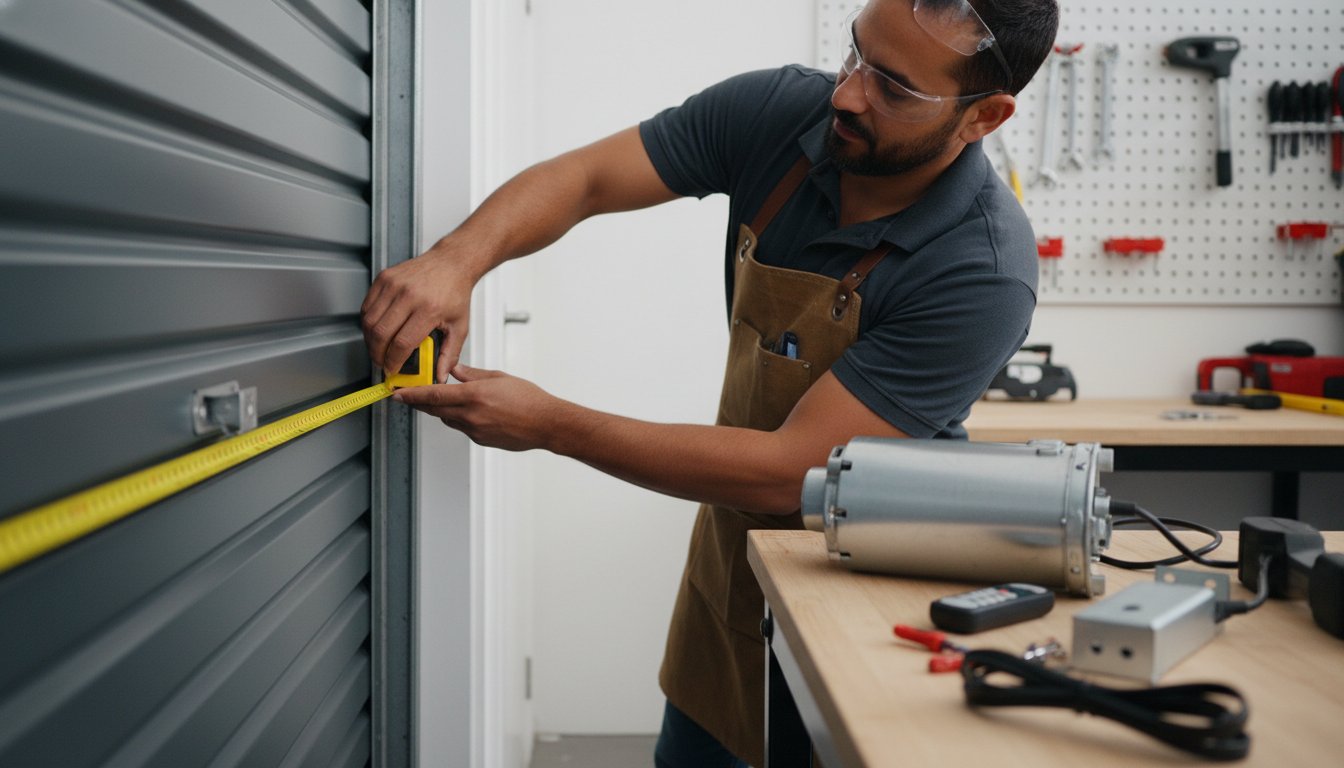
Fortunately, these essential checks are straightforward and can be completed in a few minutes with just a tape measure. Gathering this information upfront will make the process of selecting the right motor faster and ensure you get a product that performs reliably for years to come.
The video below demonstrates the components of a typical roller door opener, which can help you identify parts on your own system.
Measure Your Door's Size and Estimate its Weight
The physical size and weight of your door curtain are the primary factors determining the required power of a motor. Heavier or larger doors need a motor with a higher lifting capacity (rated in Newtons or Nm) to operate safely and effectively.
- Measure the curtain: Record the height and width of the roller door curtain itself, not the frame opening. Multiply these to get the total square metres (m²).
- Note the material: Is your door made from standard steel, thicker steel, or aluminium? Steel is significantly heavier and will require a more powerful motor.
Every motor specification lists a maximum door size in m², making this the most important measurement you need.
Assess Sideroom and Headroom Clearances
A roller door motor fits onto the end of the drum wheel, so it requires a specific amount of space. Check your clearances before you buy:
- Sideroom: This is the space from the edge of the door curtain to the nearest wall or obstruction. Most motors require a minimum of 100mm to 150mm of sideroom for installation.
- Headroom: This is the space from the top of the door opening to the ceiling. While roller door motors are compact, ensure there is enough clearance around the door roll to fit the unit without interference.
Check Your Door's Balance and Smooth Operation
A motor is designed to do the lifting for you, but it relies on a well-balanced door. A poorly balanced door places immense strain on a motor, leading to premature failure. Do not use a new motor to fix a stiff or heavy door.
To check the balance:
- Disconnect the old motor: Put the door into manual mode.
- Lift the door by hand: It should feel relatively light and move smoothly up and down the tracks without grinding or sticking.
- Test the hold: Leave the door halfway open. It should stay in position or move only slightly. If it slams shut or flies open, the springs require professional re-tensioning.
Always resolve balance issues before installing a new motor.
Decoding Roller Door Motor Specifications
Product pages for a roller door motor can be filled with technical jargon. To make an informed choice, it’s essential to understand what the key specifications mean. This guide breaks down the most important technical details in simple terms, focusing on power, motor type, and the safety features you should expect. Understanding these elements allows you to compare models effectively and select a motor that is safe, secure, and suitable for your specific door.
Power and Lifting Capacity (Nm)
The power of a roller door motor is measured in Newton-metres (Nm), which indicates its lifting force. A higher Nm rating means the motor can lift a larger, heavier door. Matching the Nm to your door size is critical for reliable, long-term operation. Using an underpowered motor will cause premature wear and failure.
Quick Guide: Door Size vs. Required Power
- Standard Single Doors (up to 12m²): 60-80 Nm is typically sufficient.
- Standard Double Doors (up to 16m²): Look for 100-120 Nm.
- Large or Wind-Rated Doors (16m²+): 120+ Nm is recommended.
Note: Commercial and industrial roller doors require significantly higher Nm ratings due to their size and weight.
AC vs. DC Motors: What's the Difference?
You will see motors listed as either AC (Alternating Current) or DC (Direct Current). AC motors are the traditional workhorses-simple and reliable. However, most modern openers use DC motors. DC technology allows for advanced features like a soft start/stop function, which reduces stress on the door and motor for a smoother, quieter operation. If you want features like battery backup or smart home connectivity, you will likely be choosing a DC motor.
Essential Safety and Security Features
A quality motor is not just about convenience; it’s a critical safety and security device. Look for these core features:
- Auto-Reverse: This is the most important safety mechanism. If the closing door contacts an obstruction, the motor must immediately reverse. This feature is so vital that in many regions, such as the US, it is part of a mandatory federal safety standard for all automatic operators.
- Manual Release: In case of a power outage, a manual release cord allows you to disengage the motor and open your roller door by hand.
- Rolling Code Technology: This security feature changes the remote control’s code every time you use it, preventing criminals from cloning your signal to gain access.
- LED Courtesy Light: An integrated light that automatically turns on when the motor is activated and switches off after a few minutes, safely illuminating your garage.
Comparing Popular Roller Door Motor Options
Roller door motors are available at various price points, each offering a different set of features and capabilities. Understanding these tiers is key to selecting a motor that meets your needs without overspending. This comparison breaks down what to expect from each category, helping you decide where your project fits. At Door Supply, we focus on stocking reliable, quality options across all price points, ensuring you get value and performance.
Entry-Level Motors (for Sheds and Single Garages)
These motors are the workhorses for smaller applications. They prioritise reliability and core functionality over advanced features, making them an excellent, cost-effective choice for standard-sized doors where simplicity is all that's required. A quality entry-level roller door motor provides security and convenience without unnecessary complexity.
- Best suited for: Smaller, single residential roller doors and shed doors (typically up to 10-12m²).
- Key features: Includes standard auto-reverse safety systems and two or more basic remote controls.
- Main benefit: A straightforward, budget-conscious solution that gets the job done reliably.
Mid-Range Motors (The Sweet Spot for Most Homes)
For most Australian homes, a mid-range motor offers the ideal balance of performance, modern features, and price. These units are powerful enough for double garages and often include upgrades that improve daily use, such as quieter operation and better lighting. This category is the most popular choice for homeowners undertaking a DIY upgrade or new installation.
- Best suited for: The majority of single and double residential roller doors.
- Key features: Often includes quieter and smoother DC operation, brighter LED courtesy lights, and sometimes options for battery backup.
- Main benefit: Excellent value, providing enhanced features and robust performance for everyday use.
Premium & Smart Motors (Heavy-Duty and Tech-Focused)
When you have a very large, heavy, or wind-rated door, or simply want the latest technology, a premium motor is the correct choice. These units are engineered for high-stress applications and often come with smart-home integration, allowing you to control and monitor your garage door from anywhere via your smartphone. They represent the best in power, durability, and convenience.
- Best suited for: Oversized, semi-industrial, or wind-rated roller doors.
- Key features: Robust construction, longer warranties, and smart add-ons like Wi-Fi kits for app control.
- Main benefit: Unmatched power for demanding applications and the convenience of smart technology.
No matter the size or weight of your door, having the right motor is crucial for safe and reliable operation. View our range of powerful motors for any door size.
Planning Your DIY Roller Door Motor Installation
Door Supply is a supply-only service, providing quality products directly to you. For a competent and handy person, installing a new motor is a manageable weekend project. It saves you the cost of a professional installer and gives you full control over the process.
Success comes down to preparation and following instructions. Safety is paramount; never rush the process. Always disconnect power when working on electrical components and ensure the door is secure before you begin. The manufacturer's installation manual provided with your roller door motor is your single most important tool-follow it precisely.
Tools and Equipment You'll Typically Need
Having all your tools ready before you start prevents delays and frustration. While specific requirements vary by model, most installations require a standard set of tools. We recommend having the following on hand:
- A sturdy ladder
- Socket and spanner/wrench set
- Power drill with various bits
- Screwdrivers (Phillips and flat-head)
- Tape measure and pencil
- String line and a spirit level
- Safety Gear: Always wear safety glasses and gloves.
A General Step-by-Step Installation Overview
This is a simplified overview to familiarise you with the process. Your specific motor manual will provide the detailed, step-by-step instructions you must follow.
- Prepare the Door: Ensure the door is in the closed position and operates smoothly by hand. Check that it is correctly balanced. Mark the mounting positions for the motor bracket on the wall or door bracket as per the manual.
- Mount the Motor: Securely attach the motor to the door's axle and mounting bracket using the supplied hardware. Ensure it is level and firmly engaged with the door drum.
- Set Limits and Program Remotes: Connect the power and follow the instructions to set the open and close travel limits. This critical step prevents the door from travelling too far. Once set, program your remote controls for operation.
Common Mistakes to Avoid
A successful DIY installation means avoiding common pitfalls. Pay close attention to these points to ensure your motor operates safely and reliably for years to come:
- Not checking door balance: A motor is designed to do the work of a well-balanced door, not to lift a faulty or heavy one. An unbalanced door will cause premature motor failure.
- Failing to properly engage the motor: The motor must be securely clamped and engaged with the door axle. A loose connection will cause slippage and operational issues.
- Incorrectly setting travel limits: Setting the limits too high or low can damage the door, the motor, or both. Be precise during this final setup stage.
Our motors come with detailed guides to help you succeed. Find your motor today.
Your Next Step: Securing the Right Roller Door Motor
Choosing the correct roller door motor is a straightforward process when you focus on the technical details. The most critical steps are performing key compatibility checks with your current door and accurately decoding motor specifications to match your door's size and weight. With this information, you can confidently select a unit that delivers reliable, long-term performance.
At Door Supply, we provide the high-quality components you need to complete the job. All our products are Proudly Australian Made, and we offer Nationwide Delivery to Your Door. Should you require assistance, our team is ready to provide Expert Support for Your DIY Project.
Take the final step in automating your garage. Shop our full range of DIY roller door motors and get your project underway.
Frequently Asked Questions
How much does a new roller door motor cost in Australia?
The supply-only cost for a new roller door motor in Australia typically ranges from A$350 to A$650. Basic models with fewer features sit at the lower end of this range, while motors with advanced security, battery backup, and smartphone connectivity are at the higher end. Price also depends on the brand and the lifting capacity required for your specific door size and weight. This cost does not include professional installation, which is a separate charge.
Can I install a motor on a very old roller door?
Yes, you can often motorise an older door, provided it is in good mechanical condition. The door must be well-balanced and run smoothly in its tracks. If the door is stiff, damaged, or difficult to lift by hand, these issues must be repaired first. A new motor will struggle and wear out prematurely if it is forced to lift a poorly functioning door. Always check the door's balance and operation before proceeding with a motor installation.
How long should a good quality roller door motor last?
A good quality roller door motor from a reputable brand should last between 10 to 15 years, and sometimes longer. Longevity is directly affected by usage frequency, regular maintenance, and the condition of the roller door itself. A well-maintained motor on a balanced door will always outlast a neglected unit that is forced to work harder than necessary. Investing in quality from the start ensures better reliability and a longer service life for your investment.
What is 'rolling code technology' and why do I need it?
Rolling code technology is a critical security feature in modern garage door openers. Each time you press your remote, it transmits a new, unique code to the motor. This prevents criminals from using a "code grabbing" device to capture and replicate your signal to gain access to your garage. It is an essential feature, not an optional extra, and ensures your home remains secure. All modern, reputable motors use this technology as a standard.
Can I use my old garage door remotes with a new motor?
No, in almost all cases you cannot use old remotes with a new motor. New motors operate on different frequencies and use modern security systems like rolling code technology that are incompatible with older remote controls. Your new motor will come with its own set of pre-programmed remotes. If you require additional remotes, you must purchase models that are specifically compatible with your new motor unit to ensure they can be programmed correctly.
Is it hard to replace an existing roller door motor yourself?
Replacing an existing roller door motor yourself is achievable if you have solid DIY skills, the correct tools, and can carefully follow the manufacturer's installation manual. The process involves removing the old unit, fitting the new one to the door axle, and setting the travel limits. Safety is paramount, so ensure the power is disconnected and the door is secured before you begin. If you are not confident, it is always best to hire a professional installer.
Do I need an electrician to install a roller door motor?
In Australia, you do not need an electrician if the motor plugs directly into an existing, correctly installed power point (GPO) near the door. However, if a new power point needs to be installed to power the motor, you are legally required to hire a licensed electrician to run the wiring and fit the outlet. All hard-wired motor installations must also be completed by a licensed electrician to comply with Australian standards and regulations.