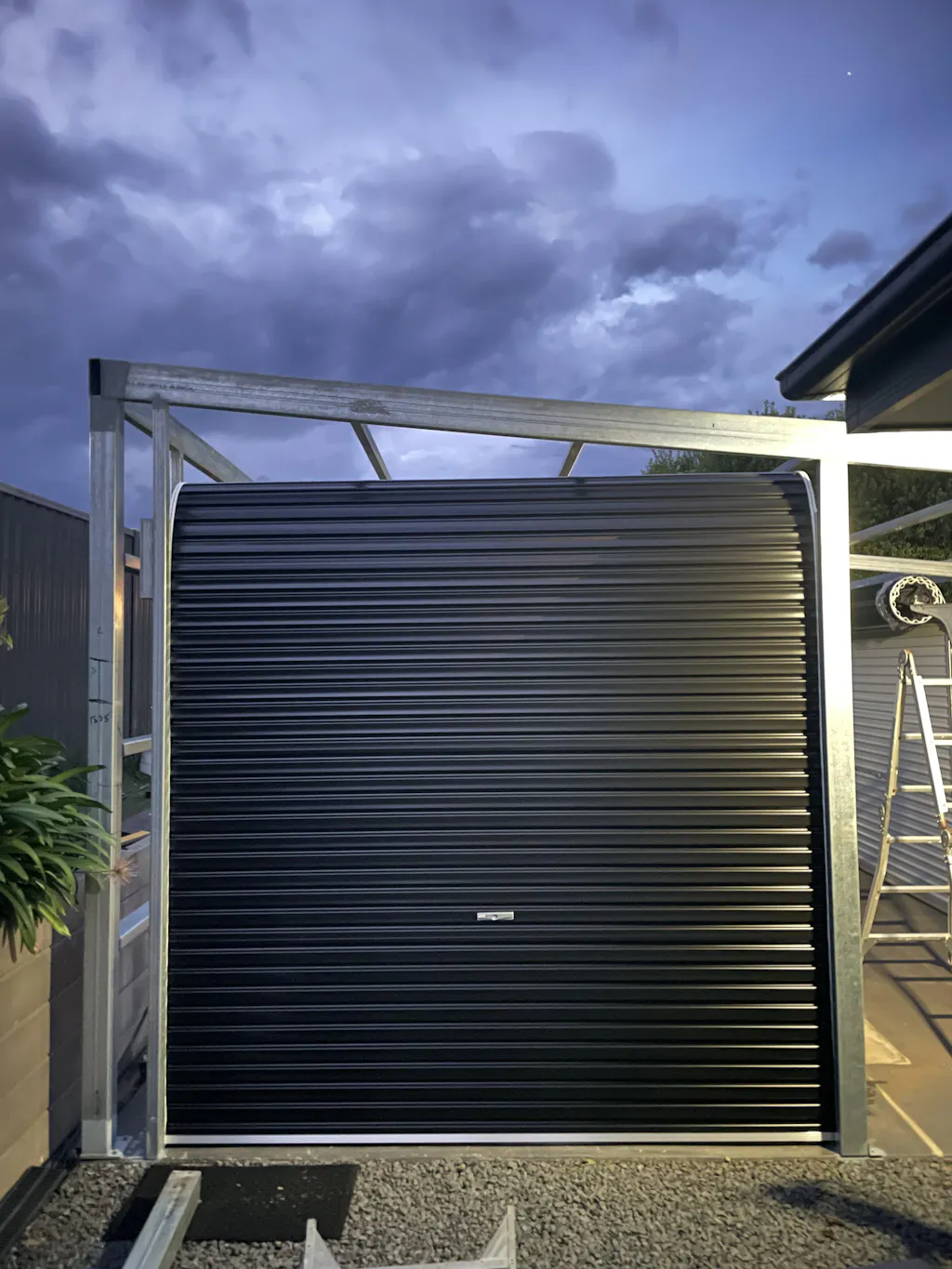
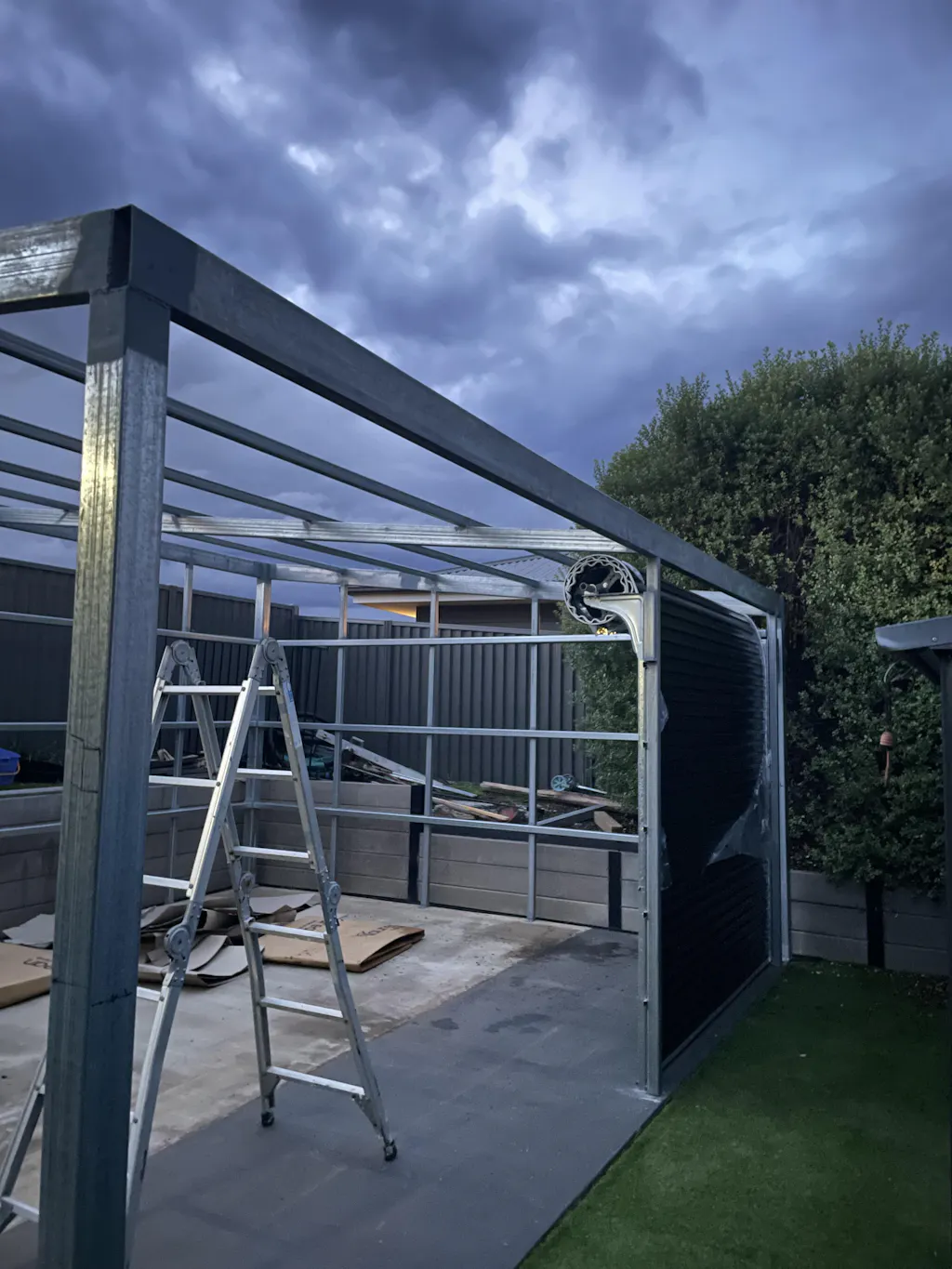
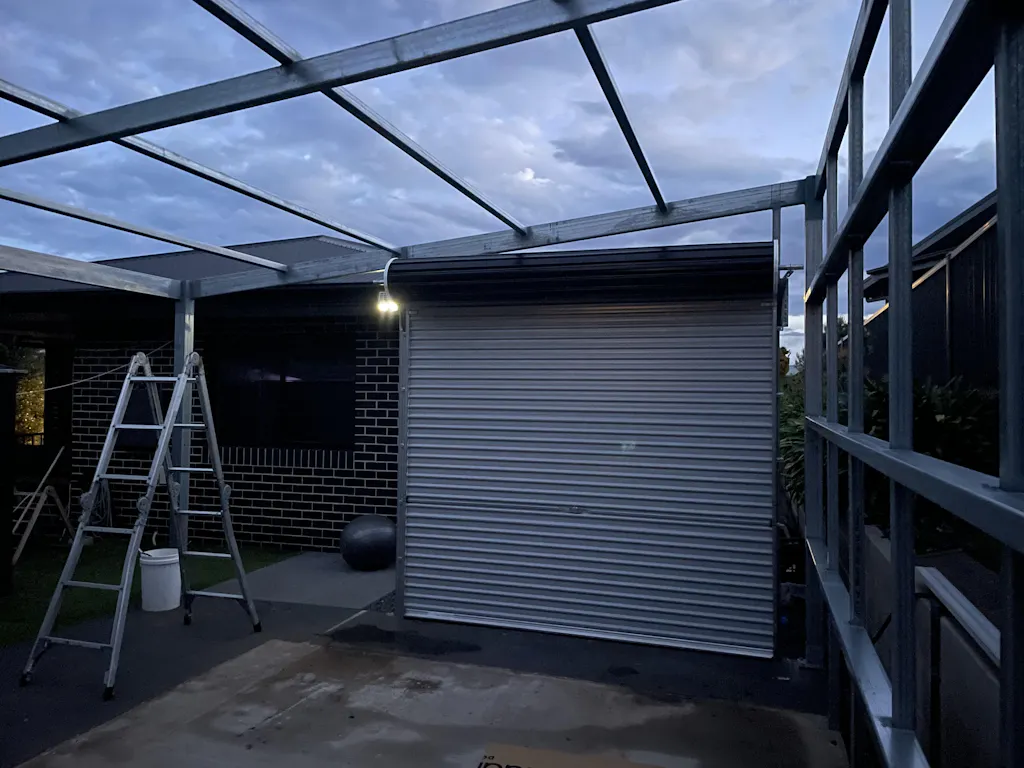
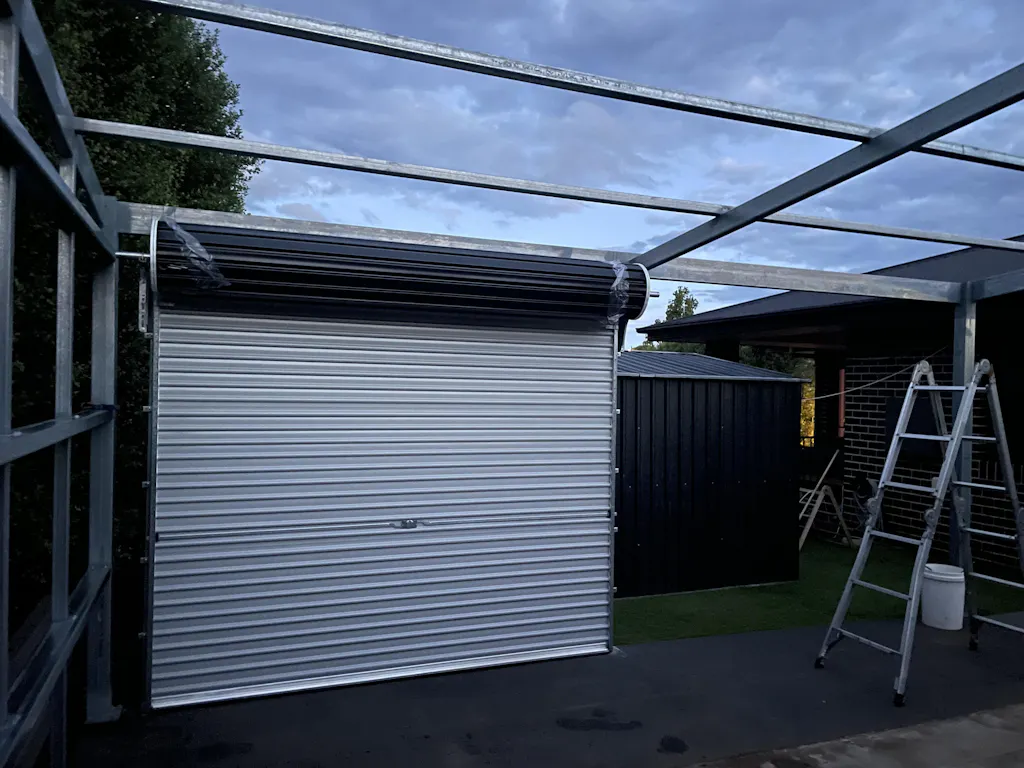
Converting a Carport into a Locked Garage
How to Enclose a Carport with a Garage Door — DIY Carport Conversion Guide
A carport does one job: keeps the rain off. It doesn't lock, it doesn't secure, and it doesn't stop anyone walking in and helping themselves to whatever's inside. If you've got tools, bikes, a second car, or anything else worth protecting, an open carport is essentially a covered outdoor display area.
Enclosing a carport with a garage door is one of the most cost-effective home security upgrades you can make. You're not building from scratch — the roof and posts are already there. In most cases, all you're adding is a door.
This guide walks through everything you need to think about before you start.
Is Your Carport Suitable for Enclosure?
Not every carport is a straightforward conversion. Before you get too far into carport enclosure ideas, check the following:
-
Headroom — a roller door needs clearance above the opening to coil up into. Measure from the top of the opening to the ceiling or roof structure. You need a minimum of around 450mm of headroom for a standard roller door. Less than that and you'll need a sectional door and maybe a low-headroom kit or a different door type.
-
Side room — you need roughly 75–150mm either side of the opening for the tracks and guides.
-
Structural posts — most carports have posts at the front corners. These can often serve as the side jambs for the door frame, but they need to be plumb and solid. If they're leaning or rotten at the base, fix that first.
-
The opening width — measure the actual clear opening between the posts, not the roof span. This is your starting point for door sizing.
-
Sloping Floor - Carports often have a sloping floor that might require a tapered door solution.
-
Council requirements — in some states and councils, enclosing a carport changes its classification from an open structure to a garage, which may require a development application or building approval. Worth a quick check with your local council before you start, particularly if you're also adding walls.
DIY Carport Conversion — Door Only, or Full Enclosure?
There are two versions of this project and they're quite different in scope.
Door only — you install a roller door across the front opening and leave the sides open or with existing screening. This is the simplest and cheapest version of a DIY carport conversion. It takes a weekend, requires basic tools, and dramatically improves security. Most people are surprised how much difference a lockable front makes even without fully enclosed sides.
Full enclosure — you add walls (Colorbond sheeting, timber framing, or masonry) to the sides and back in addition to the front door. This turns the carport into a proper garage. It's a bigger job, likely requires council approval depending on your location, and may need a licensed builder for the structural work. But the end result is a fully weatherproof, lockable space that adds genuine value to your property.
For most people reading this, the door-only conversion is the right starting point. It's the lowest cost, lowest complexity version of enclosing a carport — and it solves the primary problem immediately.
Choosing the Right Door for a Carport Enclosure
A roller door is the natural choice for most carport conversions. Here's why:
-
Compact coiling mechanism — unlike a panel lift door, a roller door coils above the opening, making it ideal for carports
-
No swing clearance needed — the door goes straight up, so vehicles can park close to the opening without obstruction
-
Custom sizing — roller doors can be manufactured to your exact width, which matters when you're working with an existing structure that may not conform to standard sizes
-
DIY installation — a roller door comes as a complete kit with all brackets, guides, and hardware included. If you're comfortable with basic tools and following instructions, it's a manageable weekend project
What size door do you need?
For a carport conversion, measure the clear opening width between your posts and add 50mm (25mm each side) for the guides. That's your door width. For height, measure from the finished floor level to the underside of the lintel or top beam — that's your door height.
If your opening is on the wider side — say, a double carport over 3.4m — add 100mm to the opening width instead of 50mm.
What height do you need?
Standard height doors (2200mm) suit most passenger vehicles comfortably. If you're parking an SUV, 4WD, or have a roof rack fitted, consider a high clearance door at 2500mm. It's a modest price difference on a custom-made door, and you'll never have to think about it again.
Wind rating
If your carport is exposed — coastal, on a ridge, or in a known high-wind area — a Windlocked door is worth the upgrade. The standard door will technically do the job, but a Windlocked door gives you the confidence that it'll stay put in a coastal storm rather than flexing out of the guides, especially if the new door is in an otherwise open space.
Framing the Opening
Most carport posts aren't set up to mount a garage door directly — you'll need to add a timber or steel sub-frame around the opening. This consists of two vertical jamb timbers fixed alongside the existing posts and a horizontal head timber across the top. The whole frame needs to be plumb, level, and square. Full framing specs and details are on our installation page.
The Installation Process
Once the frame is sorted, installing a roller door on a carport follows the same process as any standard installation — fix the guides and brackets, hang the drum, add tension, connect the lock, test and adjust. Allow a full day for a first-time install.
Full step-by-step instructions, videos, and framing guides are on our installation page.
What About the Sides and Back?
If you're going door-only for now, the sides can stay as-is or be dealt with later. Many people find that a lockable front door is 90% of what they need and never bother with the walls.
If you do want to enclose the sides, Colorbond sheeting is the most popular option for a DIY carport conversion — it's the same material as the door, it's weatherproof, and it's relatively straightforward to fix to an existing frame. Translucent roofing panels on one side can help retain natural light if the carport is your only daylight source for the space.
Enclosing a carport with a garage door is one of the best value upgrades on a per-dollar basis you can do to a residential property. The materials are affordable, the installation is DIY-friendly, and the result — a lockable, weatherproof space — is immediately useful.
The door is the starting point. Get that right and everything else follows.
Browse our roller door range — custom-made to your exact opening, delivered direct to your door anywhere in Australia. If you're not sure on sizing, get in touch, and we'll help you work it out.