
Thinking about upgrading your garage in 2026? With more Australians embracing DIY projects, mastering garage door installation how to is both a smart move and a valuable skill. This guide is designed to walk you through every step, helping you save money, boost home security, and achieve a modern, functional garage. Inside, you will discover how to choose the right door, prepare your space, follow safe installation steps, troubleshoot common issues, and maintain your investment. Ready to take action? Let’s get started on transforming your garage with confidence.
Understanding Garage Door Types & Choosing the Right Option
Choosing the right door is a crucial first step in any garage door installation how to process. The right choice impacts not only your home’s appearance, but also its functionality, security, and energy efficiency. Let’s break down the types, features, and essential considerations for Australian homeowners.
Overview of Garage Door Types
When researching garage door installation how to guides, you’ll find three main types: roller doors, sectional doors, and tilt doors. Each has unique benefits and drawbacks for Australian homes.
Here’s a quick comparison:
| Type | Pros | Cons | Space Required | Insulation |
|---|---|---|---|---|
| Roller | Space-saving, low maintenance, cost-effective | Limited styles, less insulation | Minimal head and back room | Low |
| Sectional | Excellent insulation, modern styles, secure | Needs more backroom, higher cost | Moderate headroom, clear Ceiling space required | High |
| Tilt | Simple design, good for small openings | Swings outward, limited automation | Needs front clearance | Low |
Roller doors are a top pick for compact driveways, as they roll neatly above the opening. Sectional doors offer superior insulation and a sleek, modern look, making them ideal for energy-conscious homeowners. Tilt doors, while less common, suit garages with unusual shapes or minimal side space.
Security is another key factor. Today’s doors can feature wind-locked guides for cyclone-prone areas, reinforced panels, and smart openers with rolling code technology. Automation compatibility is increasingly standard, allowing integration with remote controls and smart-home systems.
Colour and finish options are diverse. Most Australian homeowners prefer Colorbond steel for its durability, but timber-look finishes and custom colours are also widely available. It’s important to match your new door to your home’s style and the local climate, as insulation performance matters in both hot and cold regions.
No matter which you choose, the garage door installation how to approach will vary depending on type, so understanding these differences is essential before you buy.
Factors to Consider When Selecting a Garage Door
Once you’ve explored the types, it’s time to focus on the practicalities of garage door installation how to. Start by measuring your garage opening with absolute precision—width, height, and headroom all affect your options. For a step-by-step measurement guide, see this How to Measure a Garage Door Opening resource.
Next, assess your garage’s structure. Is it framed with brick, timber, or steel? Each material may require different fixings and reinforcement. Local council regulations and wind rating standards are also critical, especially in cyclone or bushfire zones. Make sure your chosen door complies with these rules.
Budget is a big consideration. In 2026, roller doors remain the most installed type in Australia thanks to their affordability and reliability. Sectional doors cost more but deliver better insulation and style. Compare warranty options and select reputable brands to ensure ongoing support.
Don’t forget to check for compatibility with automation and accessories. Some doors are easier to automate than others, and features like smart openers or battery backup can add value and convenience.
Lastly, factor in aesthetics. Choose a finish and colour that complements your house and meets your climate needs. A well-chosen door will boost both curb appeal and long-term functionality.
By carefully weighing these factors, you’ll set the foundation for a smooth garage door installation how to project that delivers lasting value and peace of mind.
Tools, Materials & Pre-Installation Preparation
Preparing for a successful garage door installation how to project starts with getting organised. The right tools, materials, and a safe, clear workspace are essential for efficiency and safety. Careful planning at this stage will set you up for a smooth installation process.
Essential Tools & Materials Checklist
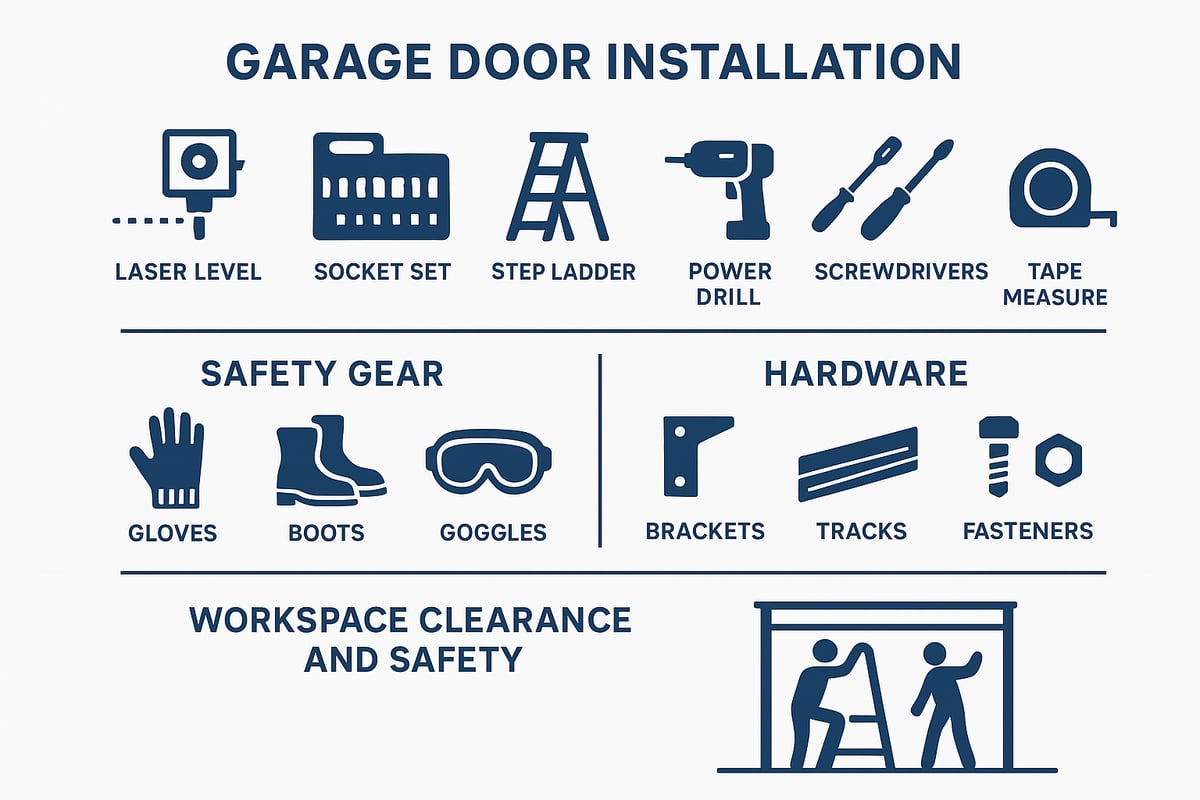
Before starting your garage door installation how to, gather all required tools and materials. Having everything on hand prevents delays and helps you avoid mistakes.
Must-have tools:
- Laser level
- Socket set
- Step ladders
- Power drill
- Screwdrivers
- Tape measure
- Softwood chock
Fasteners: Choose the right type for your wall, whether timber, steel, or masonry. Using the correct fasteners ensures your installation is both secure and compliant.
Safety gear: Gloves, sturdy boots, and safety goggles are non-negotiable for personal protection.
Door-specific hardware: Brackets, tracks, U-bolts, saddles, and weight bars are often included in door kits, but double-check your components list.
Preparing the Garage & Worksite
A clean and organised worksite is crucial to a smooth garage door installation how to. Start by clearing the area around your garage door opening, removing vehicles, tools, and any clutter. This minimises trip hazards and allows for unobstructed movement.
Inspect the garage walls, ceiling, and floor for structural soundness. Address any cracks, soft spots, or uneven surfaces before proceeding. Measure the width, height, and headroom of your opening carefully to confirm your door will fit.
Check for obstructions such as pipes, wiring, or shelving that could interfere with installation. For roller doors over 3430mm wide, ensure at least 50mm clearance on each side. Lay out all components and tools within easy reach, so you are prepared for every step.
Safety First: Pre-Installation Safety Checklist
Safety is at the heart of every garage door installation how to. Begin by reviewing the manufacturer’s instructions specific to your door model. Never remove the strapping on the door before it is secured in place, as this can cause sudden unrolling and injury.
Verify that all fasteners, brackets, and hardware are present and undamaged. Always wear your PPE—gloves, safety boots, and goggles—throughout the process. Enlist a helper for lifting and positioning the door, since garage doors are heavy and awkward to manoeuvre alone.
Double-check that your workspace is clear, your tools are in good working order, and you have a safe exit route in case of emergency. Thoughtful preparation and adherence to safety protocols will help you complete your installation confidently and without incident.
Step-by-Step Garage Door Installation Guide
A successful garage door installation how to project starts with careful planning and a clear understanding of each step. Whether you are a first-time DIYer or an experienced renovator, following a structured process ensures safety, efficiency, and a professional result.
Below, you will find a comprehensive, step-by-step garage door installation how to guide. Each phase is broken down for clarity, with practical tips and safety advice to help you achieve the best possible outcome.
Step 1: Installing the Door Brackets
Begin your garage door installation how to journey by measuring and marking the bracket positions. Use a tape measure to determine the exact width of your garage door opening. Mark out the bracket locations on the wall, ensuring you leave enough extra width as required by your door model.
A laser level is essential for this stage. Align the bracket marks perfectly to avoid any future alignment issues. For most Australian homes, brackets must be fixed to a solid surface, whether timber, steel, or brick. Select the correct fasteners for your wall type to guarantee a secure fit.
With your brackets in place, enlist a helper to lift and position the rolled-up garage door onto the brackets. This step requires careful coordination, as the door can be heavy and awkward to manoeuvre. Centre the door in the opening before securing the axle. Double-check that everything is level and square, as this will impact the smooth operation of your door.
If you are unsure about the complexity of this phase or have concerns about safety, it is wise to consult additional resources. For more insights into the importance of professional assistance and safety, refer to the Garage Door Installation Guide.
Taking your time with the initial setup is crucial. A well-prepared start sets the foundation for the rest of your garage door installation how to process.
Step 2: Tensioning the Door Springs
Tensioning the springs is a critical part of any garage door installation how to. Begin by attaching the axle to the brackets using the provided washers and nuts. Ensure each fastener is tight but not over-torqued, as overtightening can damage components or affect door movement.
Next, rotate the door to apply the correct number of spring turns. The specific number depends on your door size and manufacturer instructions, so double-check the manual before proceeding. Proper spring tension ensures your door will operate smoothly and safely.
During this step, always keep the strapping on the door until you are ready to cut it. This prevents the door from uncoiling unexpectedly. With a helper supporting the door, carefully cut the strapping. Use a softwood chock to hold the door in place while you work.
Safety is paramount when dealing with springs. Wear gloves and safety goggles, and never work alone. If you feel uncertain at any stage, pause and re-read the instructions. Remember, spring tension is what makes or breaks a safe garage door installation how to.
Step 3: Installing and Adjusting Roller Door Tracks
Once the springs are tensioned, move to the next phase of your garage door installation how to: installing and adjusting the tracks. Gently pull the door down to check that there is an even overlap on both sides. This ensures the door will run smoothly without catching.
Slide the tracks over the door edges and loosely secure them to the wall. Use a spirit level to confirm the tracks are perfectly vertical. Misaligned tracks are a common source of issues, so take your time with this step.
Test the door movement by raising and lowering it a few times. If you notice any resistance, check the track alignment and spring tension. Adjust as needed before tightening the tracks fully.
A well-aligned track system is the backbone of a reliable garage door installation how to. Pay attention to small details, and do not rush this stage. If you encounter binding or uneven movement, troubleshoot immediately rather than moving ahead.
Step 4: Final Fixings and Hardware
With the tracks in place, continue your garage door installation how to by securing all remaining hardware. Attach the door handle to the exterior, making sure it is at a comfortable height for regular use.
If your door kit includes a weight bar for the bottom rail, fit it now to add stability and enhance wind resistance. Go around the door, checking every bolt, nut, and fastener for tightness. This is an excellent time to inspect for any loose or missing hardware.
Remove all packaging, tools, and debris from the workspace. A tidy area reduces the risk of accidents and makes it easier to spot any remaining tasks. This attention to detail is what separates a good garage door installation how to from a great one.
Take a final look at the door alignment and ensure everything is secure. Do not overlook small adjustments, as these can prevent issues down the line.
Step 5: Testing Door Operation & Safety Features
The last stage in your garage door installation how to is thorough testing. Raise and lower the door several times to check for smooth, even movement. Listen for any unusual noises, and observe if the door binds or moves unevenly.
Test manual operation by opening and closing the door without the opener. If you have installed automation, follow the manufacturer’s steps to program the opener and test all safety features, such as auto-reverse and motion sensors.
Check that the door closes fully and seals properly against the floor. If you notice any problems, revisit the earlier steps to troubleshoot. Common issues, such as excessive noise or jerky movement, often come down to track alignment or spring tension.
Finally, review the safety features. Make sure sensors respond promptly and that the auto-reverse function works as intended. Regular testing is vital for ongoing safety and reliability.
By following this complete garage door installation how to, you set yourself up for a modern, secure, and smoothly functioning garage. Always prioritise safety, and do not hesitate to seek professional help if challenges arise.
Common Installation Challenges & Troubleshooting Tips
Even with a clear garage door installation how to guide, unexpected challenges can arise. Knowing how to troubleshoot common problems can save time and ensure your installation is safe and reliable.
Addressing Typical DIY Issues
Many homeowners encounter issues during their first garage door installation how to project. Here are the most frequent problems and practical solutions:
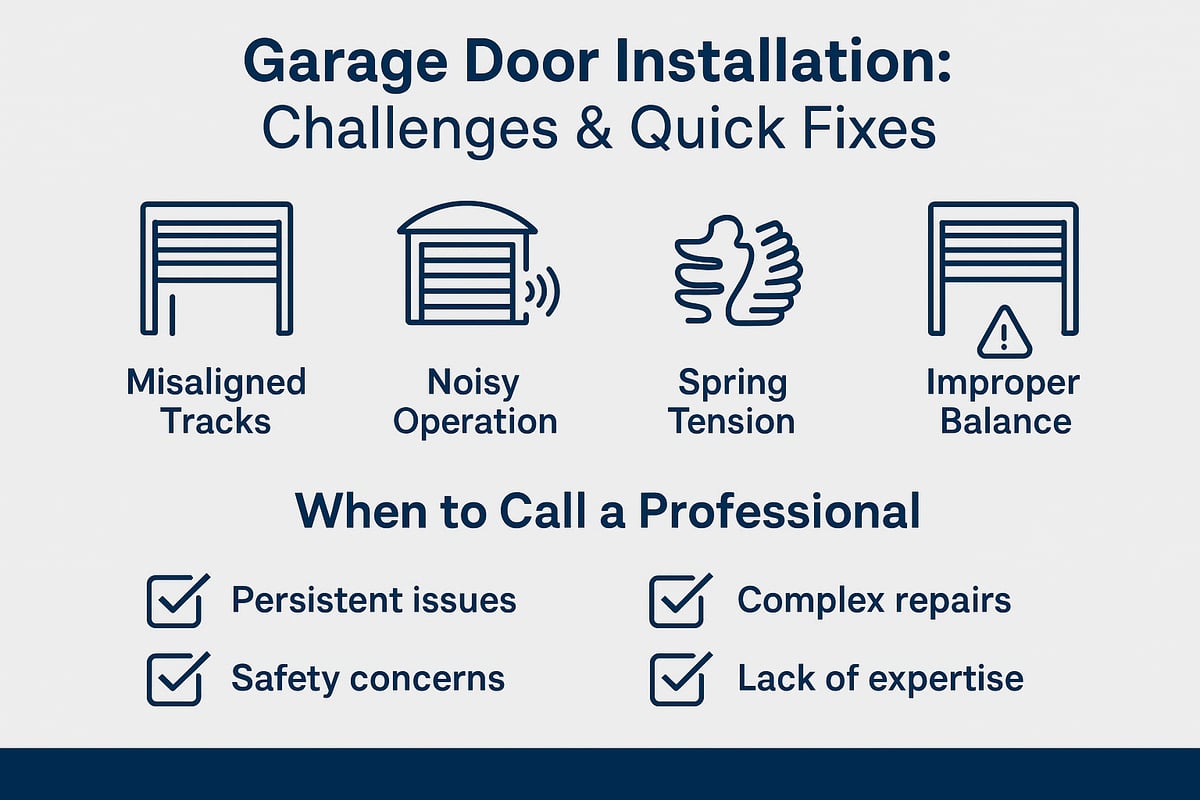
- Door not rolling smoothly: Check for misaligned tracks or inadequate spring tension. Tracks must be parallel and plumb. Adjust tension according to the manufacturer's instructions.
- Door sticks or binds: Inspect for debris, warped tracks, or incorrect bracket placement. Over-tightening tracks is a common cause of binding. Loosen slightly and retest the door.
- Excessive noise: Lubricate all moving parts with a silicone-based garage door lubricant. Ensure all bolts and fasteners are secure.
- Spring tension problems: If the door is too heavy or too light to lift, revisit the spring tension settings. Always follow the garage door installation how to manual for your specific door type.
- Automation issues: Confirm opener compatibility and correct installation. Double-check wiring and settings if your door is automated.
Remember, every garage door installation how to scenario can present unique challenges. Careful inspection and systematic troubleshooting will resolve most DIY issues.
When to Call a Professional
While many homeowners are comfortable with a garage door installation how to approach, some situations require expert intervention:
- Structural problems: Cracked walls, sagging headers, or uneven floors may compromise safety and performance.
- High-tension springs: Larger or commercial doors have springs under significant force. Mishandling can lead to serious injury.
- Electrical wiring: Integrated automation or smart features sometimes require licensed electricians for safe, compliant installation.
- Warranty and insurance: Incorrect installation can void warranties or affect insurance claims. Always check policy details.
If you are unsure about compliance or building codes, it is wise to consult Australian Garage Door Regulations to ensure your garage door installation how to efforts meet legal standards.
Professional installers bring specialised tools and expertise, reducing risk and ensuring the long-term reliability of your garage door installation how to project.
Garage Door Maintenance & Care for Longevity
Regular upkeep is essential for any homeowner wanting to make the most of their investment and avoid costly repairs down the line. If you have recently completed a garage door installation how to project, ongoing care is critical to ensure smooth, safe operation year after year.
Routine Maintenance Tasks
A successful garage door installation how to does not end with fitting the door — maintenance is ongoing. Routine care helps prevent issues and extends the system's lifespan.
Key maintenance tasks include:
- Cleaning the door curtain with a mild detergent every six months
- Inspecting tracks, rollers, and springs for visible wear or damage
- Lubricating moving parts with a purpose-made garage door lubricant
- Checking weather seals for cracks or brittleness and replacing as needed
Refer to this handy table for a quick summary:
| Task | Frequency |
|---|---|
| Clean door curtain | Every 6 months |
| Lubricate parts | Every 6 months |
| Inspect components | Every 6 months |
| Check weather seals | Annually |
For more practical advice, explore these garage door maintenance tips to keep your door running smoothly.
Preventative Measures & Safety Checks
To protect your investment after a garage door installation how to, adopt a proactive approach with safety and preventative checks.
Important steps include:
- Testing auto-reverse and safety sensors regularly to ensure they respond as intended
- Tightening any loosened bolts, nuts, or brackets to avoid operational hazards
- Monitoring for rust, corrosion, or paint damage, especially in coastal or humid areas
- Keeping the space around tracks and the opener clear of dust and debris
By performing these checks every few months, you minimise the risk of unexpected failures and help ensure your garage door continues to function safely.
Signs Your Garage Door Needs Attention
Even with a thorough garage door installation how to, some issues may arise over time. Pay attention to warning signs that your door needs maintenance or repair.
Common red flags include:
- Unusual noises, such as grinding or squeaking, during operation
- Jerky movement, hesitation, or the door failing to open or close fully
- Visible damage to panels or misaligned tracks
- The door reversing unexpectedly or becoming stuck
Industry estimates show that regular maintenance can extend a garage door’s lifespan by 5 to 10 years. Addressing issues early ensures your system stays reliable and safe for your family.
Garage Door Accessories & Automation Upgrades
Advancements in garage door accessories and automation are transforming the way Australian homeowners approach garage door installation how to projects. Upgrading your garage door with the latest technology not only boosts convenience, but also enhances security and energy efficiency. Whether you are considering a fresh install or retrofitting an existing door, understanding the available options will help you create a smarter, safer, and more comfortable home.
Modern Automation & Smart Features
The rise of smart home technology has made garage door installation how to projects more sophisticated and user friendly. Modern garage door openers now offer seamless integration with Wi Fi networks, enabling homeowners to control and monitor access via smartphone apps from anywhere. Features like rolling code remotes and keypad entry systems significantly increase security, making it harder for intruders to gain entry.
Battery backup systems ensure your door remains operational during power outages, while emergency release features provide peace of mind in urgent situations. Many new openers come equipped with quiet DC motors, perfect for attached garages where noise is a concern. For those seeking advanced automation, smart controllers allow for scheduled opening and closing, voice assistant compatibility, and real time notifications.
When choosing automation solutions, always check compatibility with your door type. For example, Garage Door Openers and Automation offers a range of openers designed for both roller and sectional doors, ensuring you can find the perfect fit for your garage door installation how to needs.
Essential Accessories for 2026 Homeowners
Selecting the right accessories is vital for maximising the performance and longevity of your garage door installation how to project. Weather seals and draft stoppers help prevent dust, water, and pests from entering your garage, while insulation kits can dramatically reduce heat loss, making your space more energy efficient and comfortable throughout the year.
Safety sensors and auto reverse mechanisms are now standard features, providing essential protection for families and vehicles. Replacement remotes, wall buttons, and keypads offer convenience and flexibility for everyday use. Upgrading to high quality weather seals and regularly checking your hardware will extend your door’s lifespan and maintain smooth operation.
If you are considering a new door or planning an upgrade, exploring different Sectional Garage Door Types can help you choose styles that support additional accessories, such as insulation or advanced locking systems. In fact, adding insulation to sectional doors can reduce garage heat loss by up to 25 percent, a significant benefit for Australian homes. Taking a holistic approach to accessories ensures your garage door installation how to project delivers lasting value and performance.
Now that you’ve got a clear understanding of garage door types, installation steps, and the essentials for a secure and stylish home, you’re ready to take the next step with confidence. Whether you’re upgrading for added insulation, convenience, or that modern street appeal, choosing the right sectional garage door can make all the difference. If you want a solution that’s reliable, easy to maintain, and built for Australian conditions, explore your options and take the hassle out of your project. You can Buy a sectional garage door to get started on your transformation today.