
A non-responsive garage door remote is a common and frustrating problem. You press the button, but the door remains shut, leaving you stuck. The issue could be a simple dead battery, or it could be a more complex signal interference or motor fault. Before you consider an expensive and time-consuming technician call-out, it is practical to troubleshoot the issue yourself. This process can save you significant time and money.
This guide provides a direct, step-by-step process to diagnose why your garage door remote has stopped working. We cover the most frequent causes, from simple battery replacement and remote reprogramming to identifying signal blockages and receiver issues. Follow these instructions to quickly identify the fault. If a replacement is needed, we will help you confidently select the correct remote for your specific motor, getting your garage access restored with minimal hassle and cost.
Step 1: The Simple Checks Before You Panic
Before assuming you need a brand-new garage door remote, run through these basic diagnostic steps. In the majority of cases, a non-responsive remote is caused by a simple, easy-to-fix issue that requires no special tools or technical knowledge. These checks will help you quickly determine if the problem lies with the remote itself or with the main garage door opener unit. The first step is to establish a baseline: does the door operate from its other controls?
Test the Battery: The Number One Culprit
A dead or weak battery is the most frequent cause of a malfunctioning remote. Don't assume a battery is good just because it's new. To check it:
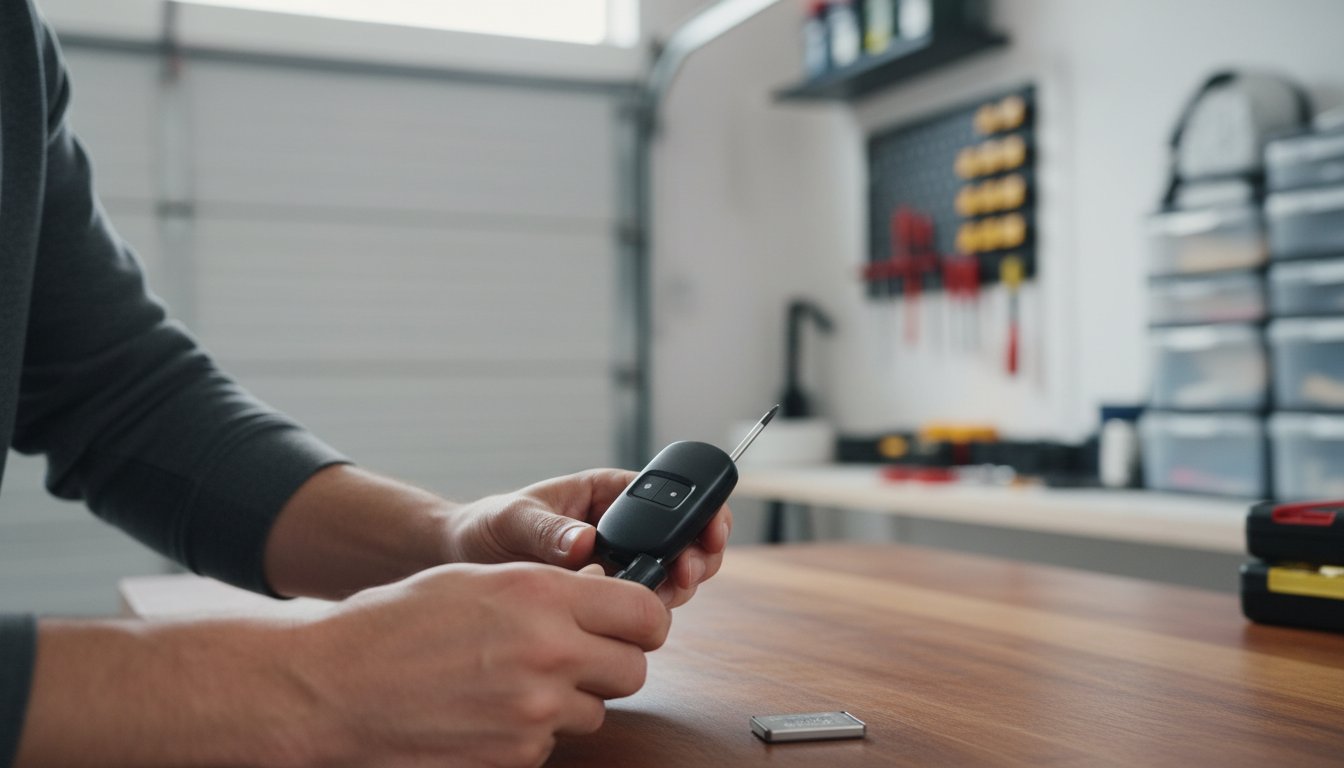
- Open the casing: Most remote casings can be carefully pried open with a small flathead screwdriver or even a coin in the designated slot.
- Identify the battery type: Note the code on the old battery. Common types in Australia include the A23 (a small 12V cylinder) and the CR2032 (a flat 3V coin cell).
- Replace with the correct type: Purchase a quality replacement from any supermarket or hardware store. Ensure it's inserted correctly, matching the positive (+) and negative (-) terminals.
A fresh battery solves the problem more often than not, saving you time and money.
Check the Wall-Mounted Control Panel
Next, test the main system. Go inside your garage and press the large button on the wall-mounted control panel. If the garage door operates normally using this button, you have confirmed the motor and the door mechanics are working correctly. This isolates the problem to your handheld remote or the signal between it and the motor. Modern garage door opener technology relies on a clear radio signal, so if the wall panel works, the issue is with the remote's transmission. If the door does not operate from the wall panel, the issue is more serious and likely lies with the opener motor unit itself, its power supply, or safety sensors.
Inspect for Physical Damage and LED Light
Give your garage door remote a quick visual inspection. Look for obvious signs of damage, such as a cracked case, loose rattling components, or any indication of water entry. Next, press one of the buttons and observe the small LED indicator light.
- No light or a dim flicker: This almost always confirms a dead or dying battery. Replace it as described above.
- A solid, bright light: If the LED lights up but the door doesn't respond, the issue could be a loss of programming (sync) with your motor, which we cover in the next section.
Step 2: Re-Establishing the Connection with Your Motor
If basic checks like replacing the battery have failed, the issue is likely a breakdown in communication between your remote and the garage door motor. This can be caused by signal interference or a loss of programming, which often occurs after a power outage. Reprogramming your remote is a straightforward process that can resolve these connection issues. For model-specific instructions, always refer to your garage door opener's manual if available.
Rule Out Signal Interference
Before reprogramming, ensure another device isn't blocking the signal. Radio frequency interference (RFI) can prevent your remote from working correctly. Common sources of RFI in and around the garage include:
- LED light bulbs (particularly low-quality ones)
- Wireless security systems and cameras
- Cordless phones and baby monitors
- Other nearby appliances or power tools
First, check that the antenna wire on the motor unit is hanging straight down and is not damaged. Try operating the remote from different distances and angles to see if the signal is being blocked. If it works when you are very close to the motor, interference is the likely culprit.
How to Reprogram Your Garage Door Remote
Pairing a new or existing garage door remote to a modern opener follows a simple process. While programming, it's a good reminder that modern openers are complex devices built to strict federal safety standards to protect users, which is why the programming sequence must be followed precisely. Locate the 'Learn' or 'Code' button on the motor unit itself; it's often a square button near the antenna wire, sometimes protected by a light cover.
- Press and immediately release the 'Learn' button. An indicator light on the motor unit will typically begin to glow or flash.
- Within 30 seconds, press and hold the button on your remote that you wish to program.
- Watch for the confirmation signal: the motor unit's light will flash, or you will hear an audible click. Once this happens, release the button on your remote.
- Test the remote to confirm it now operates the door.
Clearing the Motor's Memory
If a remote has been lost or stolen, you must clear the motor's memory for security. This action erases all paired remotes, preventing the missing one from being used. To do this, press and hold the 'Learn' button on the motor unit for approximately 6-10 seconds, or until the indicator light goes out. Important: This will deactivate all your existing remotes, including any built into your vehicles. You will need to reprogram each remote you wish to continue using by following the steps outlined above.
Step 3: Understanding Your Remote's Technology
Not all garage door remotes are created equal. The technology inside your remote determines how it communicates with your opener motor, and identifying this system is the most critical step in finding a compatible replacement. This knowledge explains why many 'one-size-fits-all' universal remotes fail to work with certain openers, especially modern, more secure models.
There are two primary types of technology used in the Australian market: fixed code (dip switch) and rolling code.
Fixed Code Remotes: All About Dip Switches
This is an older system typically found in openers manufactured before the mid-1990s. These remotes use a static, or 'fixed', code that is set manually using a series of small switches.
- What are Dip Switches? Inside the remote's casing (usually near the battery), you will find a small block containing a row of 8 to 12 tiny on/off switches. This is the dip switch block.
- How it Works: The unique pattern of 'on' and 'off' positions creates the transmission code. To sync the remote, this exact pattern must be replicated on the corresponding dip switch block located on your garage door opener's motor unit.
- Security Level: Because the code never changes, this system is considered low-security and is vulnerable to code-grabbing devices.
Rolling Code Remotes: The Modern Standard
Virtually all garage door openers installed in Australia since 1996 use rolling code technology for superior security. This system is significantly more advanced and secure than the older dip switch models.
Instead of a single static code, the remote and the opener's receiver use a synchronised algorithm. This generates a new, encrypted code every time you press the button. This security feature, often referred to as rolling code technology, makes it nearly impossible for criminals to intercept and reuse your signal. Because the code is dynamic, these remotes must be programmed directly to the motor unit using its 'Learn' or 'Code Set' button. Finding the correct replacement garage door remote is essential, as the encryption is specific to the manufacturer.
Knowing whether you have a fixed code or rolling code system is the key to a successful replacement. Once identified, you can find a compatible model in our extensive range of garage door remotes.
Step 4: When to Replace: Finding the Right New Remote
If you've tried troubleshooting and your remote still doesn't work, its internal components have likely failed. Continuing to diagnose the issue is often not cost-effective. The most practical solution is to source a compatible replacement. Getting the correct model from the start is essential to avoid the frustration of a remote that won't pair with your system. Door Supply provides a comprehensive range of remotes specifically for the Australian DIY market.
How to Find Your Opener's Brand and Model Number
To ensure you buy the right replacement, you must identify your garage door opener's brand and model. Look for a sticker or label on the motor unit-the box mounted to your garage ceiling. This label will have all the details you need. The model number is the key piece of information for finding a compatible garage door remote.
Common Australian brands include:
- Merlin
- B&D (B&D)
- ATA (Automatic Technology Australia)
- Gliderol
Genuine vs. Universal Remotes: A Quick Comparison
When choosing a new remote, you have two main options:
- Genuine Remotes: These are made by the original opener manufacturer (e.g., Merlin, B&D). They guarantee 100% compatibility and straightforward programming but are often the more expensive option.
- Universal/Aftermarket Remotes: These are designed to work with multiple brands. While they can be cheaper, they may present programming challenges or have limited functionality.
For guaranteed performance and reliability, we recommend choosing a genuine remote or a high-quality aftermarket model designed specifically for your opener.
Ordering Your Replacement from Door Supply
As a specialist supplier, Door Supply makes it easy to find the correct part. Simply navigate to the remotes section of our website and use the brand and model number from your motor unit to identify the correct product. Buying from a specialist ensures you receive a quality, tested product that is right for your system, saving you time and money. We stock a huge range of remotes for all major Australian brands, ready for fast delivery.
Find your compatible garage door remote now.
Get Your Garage Access Back on Track
Regaining control of your garage door is often simpler than you think. By methodically working through the troubleshooting steps, from the basic battery check to clearing signal interference and re-pairing the device, you can solve the most common remote issues yourself. Understanding your remote's technology-whether it uses dip switches or rolling codes-is crucial for both troubleshooting and selecting the correct replacement if needed. This knowledge empowers you to make the right call without wasting time or money.
When a new garage door remote is the only solution, Door Supply has you covered. As a proudly Australian owned and operated business, we provide the expert advice you need for your DIY project. We make it easy to find the right part online and offer fast, Australia-wide delivery for all our products. Shop our full range of genuine and compatible garage door remotes and restore your home's convenient access with confidence.
Frequently Asked Questions
Why does my garage door remote only work from very close range?
Poor range is most commonly caused by a weak battery. Replacing the battery is the first and easiest step. If a new battery does not solve the issue, check for signal interference from other wireless devices or new LED lighting in the garage. In some cases, the antenna on the garage door motor itself may be damaged or poorly positioned. Ensure the antenna is hanging straight down and is clear of obstructions for optimal reception.
How do I know what type of battery my garage door remote needs?
To identify the correct battery, you must open the remote's casing. The battery type and voltage are printed directly on the battery itself. Common types include CR2032, CR2016, or A23. Use a small screwdriver to open the case if required, remove the old battery, and take note of the code. Replacement batteries are widely available at supermarkets, hardware stores, and electronics retailers. Always match the code exactly to ensure correct operation.
Can I program my car's built-in remote to open my garage door?
Yes, most modern vehicles with integrated remote systems (like HomeLink®) can be programmed to operate a garage door opener. The process requires you to sync the car's system with your garage door motor. This usually involves pressing the "Learn" or "Code" button on your motor unit and following the programming steps in your vehicle's owner manual. Compatibility depends on your motor's technology, particularly whether it uses rolling code security.
Is it safe to use a universal remote for my garage door?
Using a modern universal remote is safe, provided it is compatible with your opener's rolling code technology. Rolling code security ensures the access code changes with every use, preventing unauthorised copying of the signal. Older, fixed-code universal remotes are not secure. Always verify that a universal remote explicitly lists your garage door motor's brand and model as compatible before purchasing to ensure both security and functionality.
How much does a replacement garage door remote cost in Australia?
The cost for a replacement garage door remote in Australia typically ranges from A$25 to A$80. Aftermarket or universal remotes are at the lower end of this range, while genuine brand-name remotes from manufacturers like Merlin, ATA, or B&D are more expensive. Price is determined by the brand, the remote's specific features (such as the number of channels), and the security technology it uses. Always factor in shipping costs if purchasing online.
What should I do if I lose my garage door remote?
If you lose a garage door remote, the most important step is to protect your home's security. You must clear the memory of your garage door motor. This action erases all paired remotes, preventing the lost one from being used. Consult your motor's manual for instructions on how to do this. Afterwards, you will need to reprogram your remaining remotes and any new replacements you purchase. This ensures only your current remotes can access the door.
Can one remote be programmed to open two different garage doors?
Yes, this is possible with a multi-channel remote. These remotes feature two or more buttons, where each button can be programmed to a different device. For this to work, both garage door openers must be compatible with the same remote brand and frequency. This is a common and convenient solution for properties with multiple garage doors, allowing you to control them from a single handset without needing separate remotes for each door.