
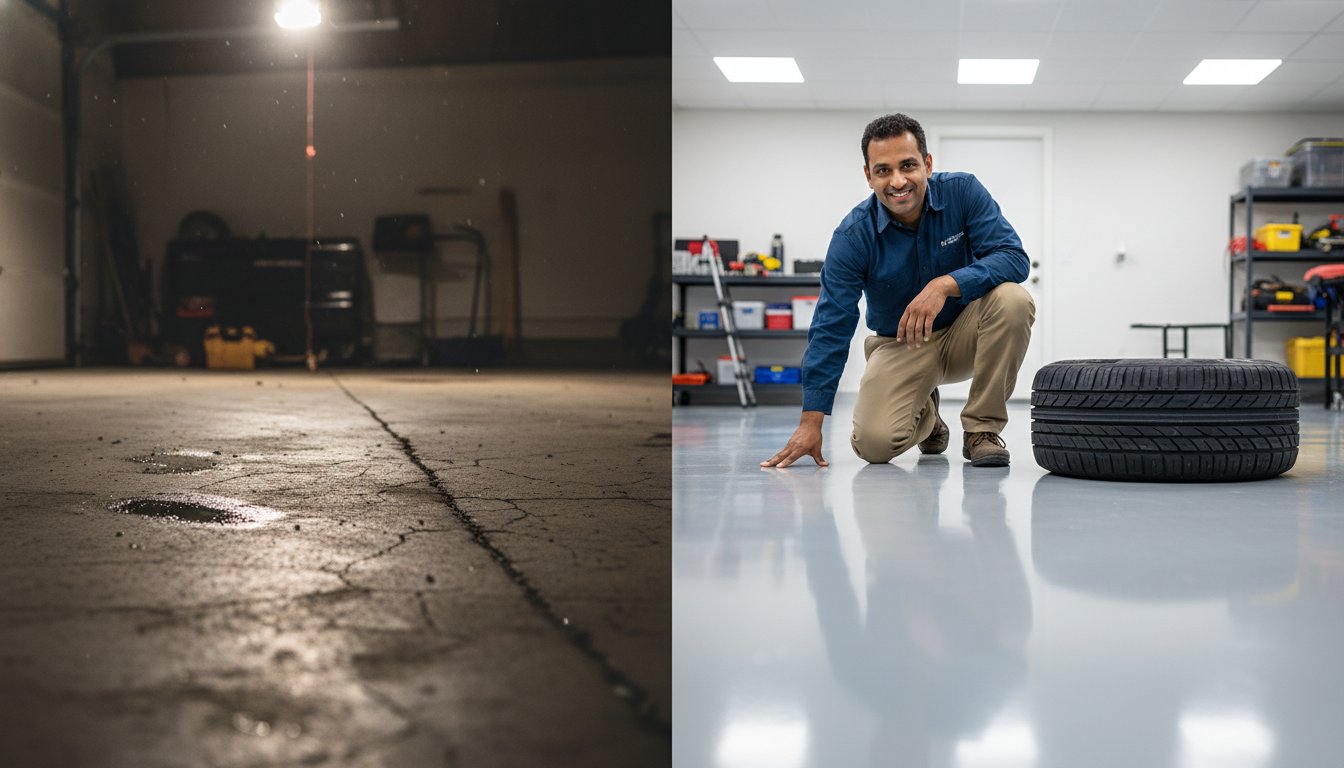
A cracked, stained concrete floor compromises the utility and value of your garage. Standard concrete is porous, difficult to clean, and often fails to withstand the demands of a modern Australian garage, from hot tyres to chemical spills. Upgrading your garage flooring is a practical, high-value investment in your property. This guide provides a direct comparison of the leading DIY options available in Australia, designed to help you make an informed purchasing decision.
We detail the specifications, pros, cons, and estimated costs (in A$) for popular solutions like high-durability epoxy coatings and modular interlocking tiles. You will find clear, step-by-step considerations for installation, helping you assess which product matches your skill level and budget. The objective is to provide all the necessary information to select a functional, long-lasting floor that improves your workspace and protects your investment. No more guesswork-just the facts you need to choose the right solution for your garage.
Why Your Garage Floor Deserves an Upgrade
For most Australian homes, the garage is more than just a place to park the car. It's a workshop, a home gym, or a critical storage area. Yet, the standard bare concrete floor is often neglected. Bare concrete creates constant dust, absorbs oil and chemical spills, and can be a source of moisture problems. It’s an unfinished surface in a space you use every day.
Upgrading your garage flooring is a practical investment. It transforms the space from a basic utility area into a clean, safe, and functional room. A quality floor provides a durable, sealed surface that addresses the core problems of bare concrete and adds tangible value to your property.
The Top 4 Benefits of a Finished Garage Floor
Investing in a proper floor coating or covering delivers immediate, practical advantages.
- Durability & Protection: A finished floor resists common garage hazards. It stands up to impacts from dropped tools and protects the underlying concrete from stains caused by oil, grease, and household chemicals.
- Safety First: Many garage flooring solutions offer anti-slip textures, reducing the risk of falls on wet surfaces. Lighter, more reflective finishes also brighten the entire space, improving visibility for any task.
- Easy Maintenance: A sealed, non-porous floor surface prevents concrete dust from being tracked into your home. Cleaning becomes simple-spills wipe away easily, and the floor can be quickly swept or mopped.
- Aesthetics & Value: A clean, finished garage is a significant selling point. It improves your home's overall appeal and can increase its resale value, showing a high level of care and maintenance.
Key Questions to Ask Before You Start
Before selecting a product, assess your specific needs. Answering these questions will help you choose the right garage flooring solution for your budget and intended use.
- What is the primary use of your garage (e.g., vehicle parking, workshop, home gym, storage)?
- What is your realistic budget for materials, tools, and potential labour?
- How much time and effort can you commit to a DIY installation versus hiring a professional?
- What is the current condition of your concrete slab? Is it cracked, damp, or uneven?
Garage Flooring Options: A Head-to-Head Comparison
Choosing the right garage flooring involves balancing cost, durability, and installation difficulty. This section provides a direct comparison of the most common options available in Australia to help you select the best solution for your needs. Each option is broken down by its pros, cons, and ideal application.
Option 1: Interlocking Floor Tiles (The Popular DIY Choice)
Made from durable PVC or polypropylene, these rigid or flexible tiles click together directly over your existing concrete slab, requiring minimal surface preparation.
- Pros: Fast DIY install with no curing time. Individual tiles can be replaced if damaged. Excellent for hiding cracks and imperfections.
- Cons: Higher initial cost (approx. A$50-A$120/m²). Seams can trap dirt and moisture. May produce a hollow sound when driven on.
- Best for: Quick transformations, multi-use garages, and covering poor-quality concrete.
Option 2: Epoxy Floor Coatings (The Professional Finish)
An epoxy coating is a two-part thermosetting resin applied as a liquid, which then hardens into a solid, high-performance surface. Decorative flakes can be added for a custom look.
- Pros: Creates a seamless, high-gloss finish. Extremely durable and resistant to chemicals, oil, and abrasion. Very easy to clean.
- Cons: Difficult DIY application requiring extensive floor preparation (grinding, acid etching). Long curing times of up to 7 days.
- Best for: Workshops, showroom-style garages, and situations requiring maximum durability.
Option 3: Concrete Floor Paint (The Budget-Friendly Option)
The most straightforward option, this is typically a single-part acrylic or latex paint, sometimes fortified with epoxy for added toughness.
- Pros: Very inexpensive (approx. A$5-A$15/m²) and easy to apply with a roller. Wide range of colours available for a quick refresh.
- Cons: Least durable option. Prone to peeling from hot tyres ('hot-tyre pickup'). Requires re-coating every few years.
- Best for: Low-traffic areas or a quick aesthetic update on a strict budget.
Option 4: Roll-Out Mats (The Quick & Easy Solution)
These are large, heavy-duty mats made from industrial-grade PVC or rubber that you simply unroll to cover your floor, with options for ribbed or coin-top textures.
- Pros: Easiest installation with no prep or adhesives. Portable, making them ideal for renters. Provides excellent cushioning and insulation.
- Cons: Seams can allow moisture underneath. Can be damaged by sharp objects or trolley jacks.
- Best for: Covering specific work areas, renters, or workshops where comfort underfoot is a priority.
For a quick overview, refer to the summary table at the end of this article to compare these popular garage flooring solutions at a glance.
Crucial First Step: Preparing Your Concrete for Any Flooring
Proper preparation is not just a recommendation; it is the most critical factor for a durable and professional-looking garage floor. For coatings like epoxy and paint, this process accounts for 90% of the project's success. A coating applied to an unprepared surface will peel, flake, and fail. Even for interlocking tiles or roll-out mats, a clean and level slab prevents rocking, premature wear, and moisture issues. Do not skip these steps.
Step 1: Deep Cleaning and Degreasing the Surface
Your concrete slab has absorbed years of oil, grease, and chemical contaminants. These must be removed for any new garage flooring to adhere or sit correctly. The goal is a completely clean surface, free of any bond-breaking residue.
- Select a Degreaser: Use a commercial-grade concrete degreaser available from hardware stores. Follow the manufacturer's dilution and application instructions.
- Scrub Aggressively: Apply the solution and scrub with a stiff-bristled deck brush. For best results and larger areas, a pressure washer (minimum 3000 PSI) is highly effective at lifting deep-set stains.
- Rinse and Dry: Thoroughly rinse the floor with clean water until all soap residue is gone. Allow the concrete to dry completely, which may take 24-48 hours depending on humidity and airflow.
Step 2: Repairing Cracks and Pitting
A flawless finish requires a flawless substrate. Filling cracks, holes, and spalling prevents these imperfections from showing through your final floor and creates a solid, level base. This step is essential for a professional result.
- Fill Imperfections: Use a two-part epoxy crack filler or a high-strength concrete patching compound for any cracks or pits. Overfill them slightly.
- Grind Smooth: Once the filler has cured, use an angle grinder with a diamond cup wheel to grind the patch flush with the surrounding concrete. This tool is also used to smooth out high spots or remove old, failing paint.
Step 3: Acid Etching or Grinding for Profile
Coatings like epoxy and paint require a porous surface to create a strong mechanical bond. A smooth, sealed concrete slab is non-porous and will lead to delamination (peeling). The goal is to create a surface texture similar to 80-grit sandpaper.
- Diamond Grinding: This is the superior method used by professionals. It mechanically abrades the surface for a uniform profile. Grinders can be hired from local equipment rental shops in Australia.
- Acid Etching: A more DIY-friendly chemical method. Muriatic acid (or safer citric acid-based alternatives) is used to open the pores of the concrete. Safety is paramount: always wear full PPE, including acid-resistant gloves, goggles, and a respirator. Ensure maximum ventilation. Always add acid to water, never water to acid.
Completing these preparation steps ensures your new flooring system will perform as specified and provide years of reliable service.
Making the Right Choice for Your Australian Garage
Choosing the right garage flooring comes down to your primary use case and local conditions. This summary will help you select the best option with confidence, ensuring your investment meets the demands of your specific garage environment.
Best for the Workshop: Durability and Chemical Resistance
For a hard-working garage, you need a floor that withstands abuse. Epoxy coatings are the top choice for their seamless, non-porous surface that resists oil, grease, and common automotive chemicals. As a strong alternative, heavy-duty interlocking PVC tiles offer excellent impact resistance, easily handling dropped tools or the weight of jack stands without cracking or chipping.
Best for a Showroom Look: Seamless and High Gloss
To achieve a premium, showroom-quality finish, a professionally installed epoxy flake floor is unmatched. The decorative flakes create depth and a high-gloss, seamless surface that looks spectacular. For custom patterns, such as a classic chequerboard design, premium interlocking tiles provide a sharp, clean aesthetic. Remember, quality lighting is crucial to enhance the gloss and colour of your new floor.
Considering the Australian Climate
Local weather plays a significant role in choosing and installing your garage flooring. Keep these factors in mind:
- Humidity: In high-humidity areas like QLD and the NT, solvent-based epoxy may have extended curing times. Plan your installation accordingly or consider alternatives like tiles.
- Temperature Swings: Materials used in VIC and NSW must handle expansion and contraction. High-quality polyaspartic coatings and interlocking tiles are better equipped for these fluctuations than rigid, low-grade epoxy.
- UV Resistance: If your garage door is often open, direct sun exposure can cause some coatings to yellow. Choose a UV-stable product to maintain its colour and finish.
Your Floor is Done. What's Next?
A new floor instantly elevates the space, but it also highlights other areas that need attention. With your foundation set, consider completing the transformation with updated wall paint, practical storage cabinets, or brighter LED lighting.
The final piece to tie the entire project together is the entrance. A tired, dated garage door can detract from your brand-new floor and updated interior. Complete your garage makeover with a new Australian-made door.
Finalise Your Garage Upgrade: From Floor to Door
You are now equipped with the essential knowledge to transform your garage. Choosing the right DIY garage flooring solution comes down to two critical factors: meticulous surface preparation and selecting an option-whether durable epoxy, versatile tiles, or cost-effective paint-that suits your specific use case and Australian conditions. A well-prepared concrete base is the non-negotiable foundation for longevity, while the right material provides the durability and finish required for your workshop, home gym, or vehicle storage.
With a pristine new floor, the final step is to ensure the rest of your garage matches its quality and security. Complete the transformation with a new Australian-made garage door. As DIY specialists for garage renovations, we understand the importance of quality you can install yourself. We supply proudly Australian made products and provide fast, reliable delivery Australia-wide, so you can get the job done right.
Your ultimate garage is well within reach. With the right planning, preparation, and quality Australian materials, you can achieve a professional result that adds significant value and functionality to your home. Get started on your project today.
Garage Flooring: Frequently Asked Questions
How much does garage flooring cost in Australia?
Costs vary significantly based on the type and whether you DIY or hire a professional. DIY epoxy kits for a standard double garage range from A$200 to A$700. Professional installation of an epoxy or polyaspartic coating typically costs A$80 to A$120 per square metre. Interlocking PVC or polypropylene tiles are priced between A$40 and A$90 per square metre. A simple concrete paint is the cheapest option, but offers the least durability.
Can I really apply an epoxy garage floor myself?
Yes, DIY epoxy kits are widely available and can be applied by a homeowner. However, success depends almost entirely on meticulous surface preparation. The concrete must be thoroughly cleaned, degreased, and etched or ground to create a porous surface for the epoxy to bond to. Failure to prepare the slab correctly is the primary reason for DIY applications peeling, bubbling, or failing prematurely. For a guaranteed result, professional application is recommended.
Do interlocking garage tiles stain from hot tyres?
High-quality interlocking tiles made from polypropylene or solid PVC are specifically engineered to resist staining from hot tyres, a phenomenon known as plasticiser migration. Cheaper, lower-grade vinyl or rubber tiles are far more susceptible to this issue, which can leave permanent yellow or black marks. To avoid this, always check the manufacturer's specifications and invest in a quality tile designed for garage environments. As with most things, you get what you pay for.
What is the most durable type of garage flooring?
For maximum chemical resistance, abrasion resistance, and impact durability, a professionally installed, multi-coat epoxy or polyaspartic coating system is the superior choice. These are industrial-grade systems that chemically bond with the concrete to create a seamless, hardened surface. High-density interlocking polypropylene tiles are also extremely durable, with the added benefit that individual tiles can be easily replaced if they become severely damaged, which is a key practical advantage.
How do you clean and maintain a finished garage floor?
Maintenance is straightforward. For coated floors like epoxy, sweep or dust mop regularly to remove abrasive grit. For deeper cleaning, use a mop with a pH-neutral cleaning solution; avoid harsh, acidic chemicals. Interlocking tiles can be swept, vacuumed, or mopped. Most spills can be wiped up easily from either surface. Promptly cleaning oil, petrol, or solvent spills will ensure the longevity and appearance of your floor.
Is garage flooring slippery when wet?
It can be, depending on the finish. High-gloss epoxy and polyaspartic coatings can become very slippery when wet. This is easily mitigated by adding an anti-slip aggregate or polymer grit into the final topcoat during application, which creates a textured finish. Most interlocking tiles are manufactured with a patterned or textured surface that provides excellent traction, making them a less slippery option than a smooth, high-gloss coating, especially in wet conditions.
How long does a new garage floor last?
The longevity of new garage flooring depends heavily on the product, installation quality, and usage. A single-part concrete paint may only last 1-3 years. A well-installed DIY epoxy kit can last 3-7 years. High-quality interlocking tiles offer a lifespan of 15-25+ years. A professionally installed, industrial-grade multi-coat epoxy or polyaspartic system is the most permanent solution, often lasting for 15 years or more in a residential setting without needing to be replaced.