
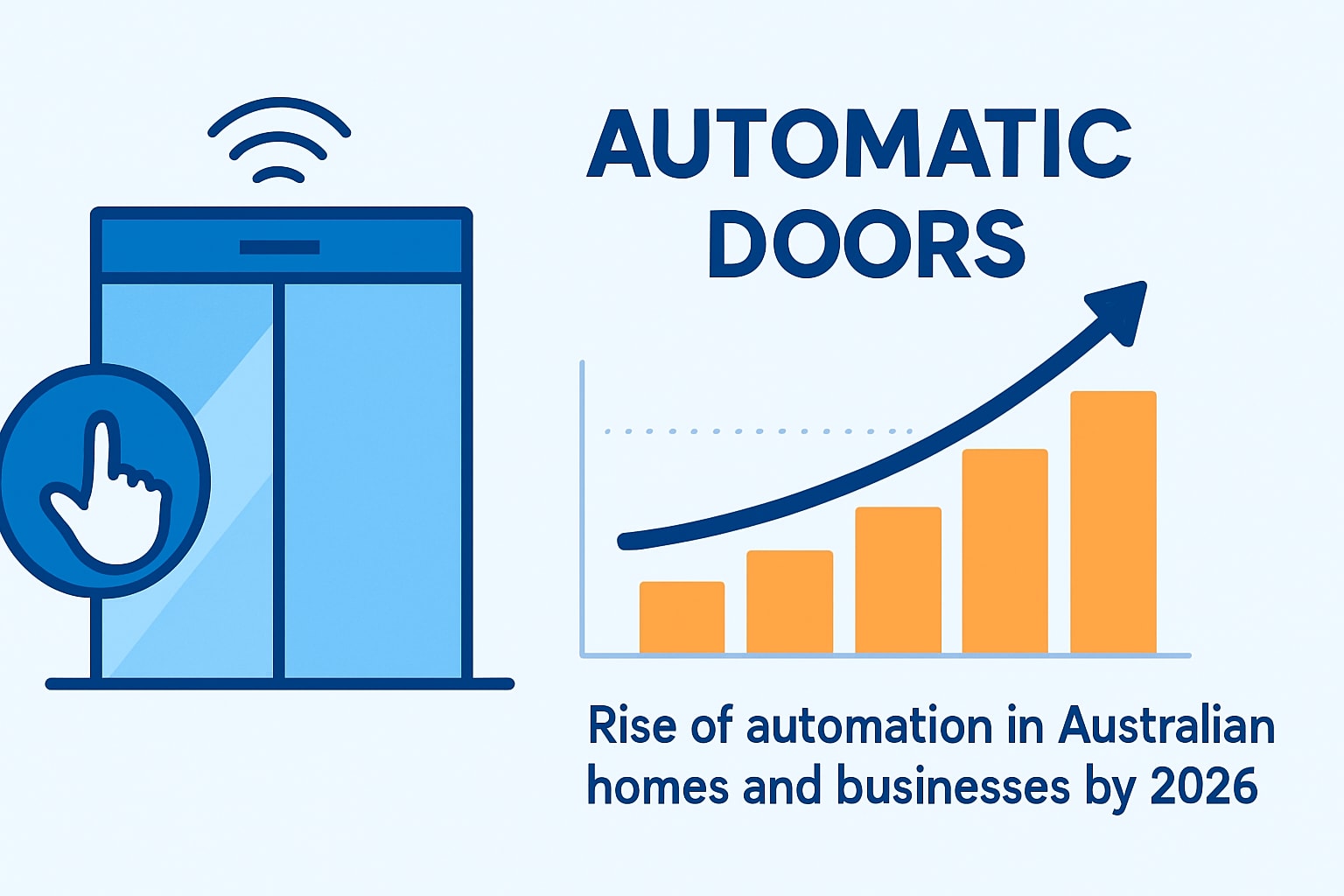
Automation is rapidly transforming the way Australians live and work, with smart technology set to redefine homes and businesses by 2026. As innovation accelerates, automatic doors are becoming essential for anyone seeking enhanced security, effortless convenience, and improved accessibility.
This guide delivers the key insights you need to make informed choices about selecting, installing, and maintaining automatic doors in the coming years. We will explore the latest technology trends, compare types and benefits, share practical selection tips, cover compliance essentials, and look ahead at future developments.
Whether you are a homeowner, builder, or facility manager, discover how tomorrow’s entrance solutions can open new possibilities for your property.
The Evolution of Automatic Doors: Trends Shaping 2026
As we approach 2026, automatic doors are transforming the way Australians think about access, security, and convenience. Driven by rapid technological advancements and evolving user expectations, these systems are no longer just a luxury, but a vital component in homes and businesses across the country.
Key Technological Advancements
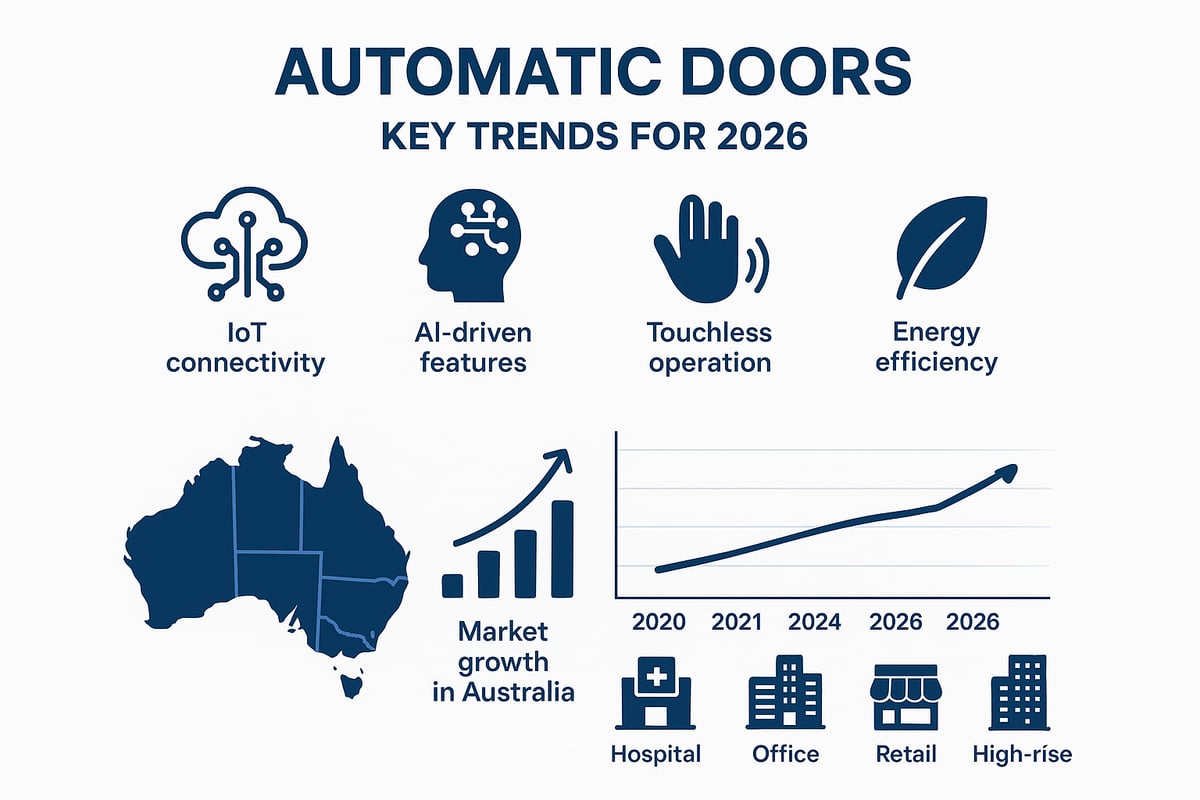
The landscape for automatic doors is evolving rapidly, with the integration of IoT and AI technologies leading the charge. Modern systems now connect seamlessly with smart building platforms, enabling real-time access control, remote operation, and data-driven insights for facility managers.
Touchless solutions have become a priority, especially in response to recent global health events. Sensors, gesture controls, and mobile app integration allow for hygienic, contact-free entry, reducing the spread of germs in busy environments.
Sustainability is also at the forefront. Manufacturers are focusing on energy-efficient mechanisms and the use of recycled or low-impact materials. This not only minimises environmental footprints but also aligns with the broader push for green building certifications.
Security is another area seeing major upgrades. Biometric access, such as fingerprint or facial recognition, is becoming standard in premium automatic doors. Remote monitoring and smart alerts help property owners respond quickly to potential threats.
Maintenance is getting smarter too. Cloud-based platforms can now predict servicing needs, schedule maintenance tasks, and even diagnose issues remotely, significantly reducing downtime and unplanned costs.
For example, high-rise office buildings are adopting Office Flow solutions, connecting automatic doors to wider building management systems for streamlined access and occupant tracking. This integration enhances both operational efficiency and tenant satisfaction.
Market Growth & Demand in Australia
Across Australia, the demand for automatic doors is surging in commercial, retail, and healthcare sectors. Accessibility legislation, urbanisation, and the growth of smart city projects are key drivers behind this trend.
Healthcare facilities, in particular, are embracing hermetic automatic doors to improve infection control and support strict hygiene protocols. Retailers and office complexes are prioritising smooth, barrier-free access to accommodate high foot traffic and comply with disability access standards.
The market for automatic doors is projected to experience robust growth. According to industry research, the global market is expected to reach $41 billion by 2032, reflecting the increasing adoption in both commercial and residential applications. You can read more about these projections in the Automatic Door Market to Reach $41 Billion by 2032 report, which highlights a compound annual growth rate of 7 percent from 2025 onward.
Australian weather and lifestyle also influence product choices. In coastal areas, weather-resistant automatic doors are preferred to withstand harsh winds and salt exposure. Meanwhile, urban dwellers often seek compact, space-saving designs suitable for apartment complexes and mixed-use developments.
As the sector continues to expand, automatic doors are set to become an essential feature in both new builds and retrofit projects, ensuring accessibility, safety, and modern appeal for Australian properties.
Types of Automatic Doors & Their Applications
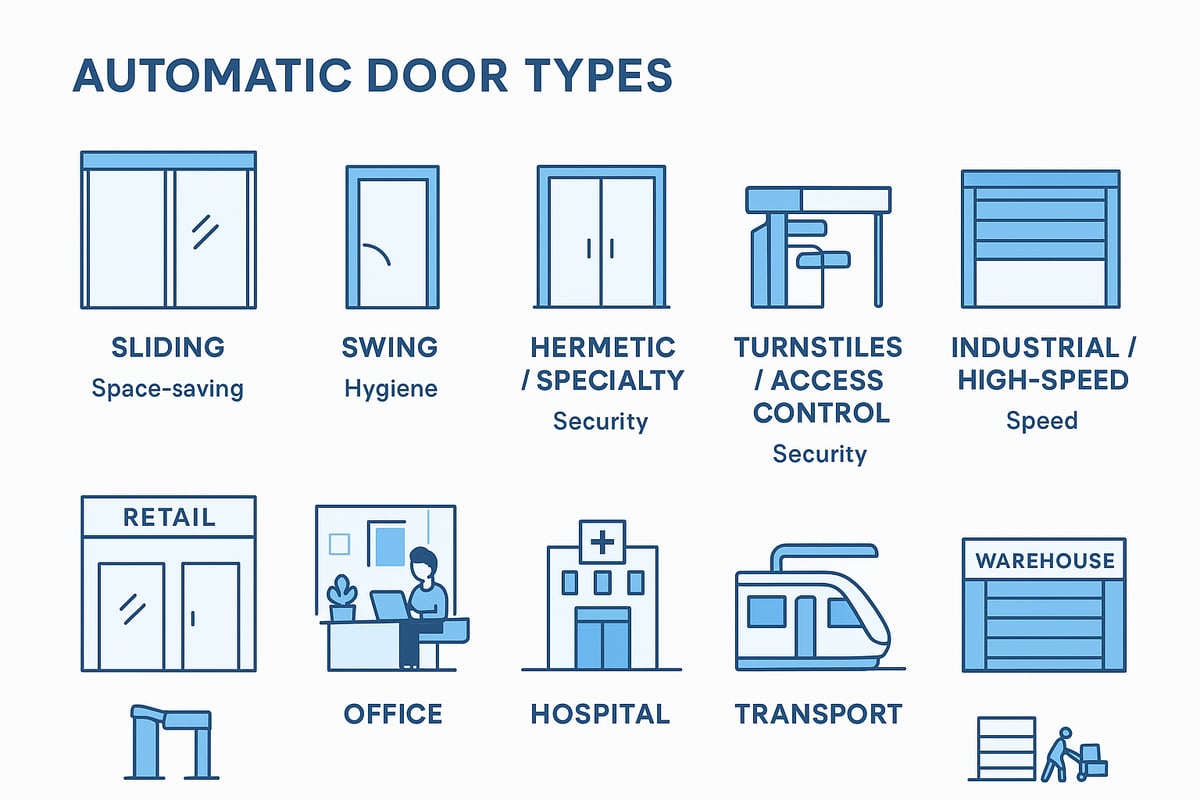
Choosing the right type of automatic doors is crucial for optimising access, security, and efficiency in Australian properties. Diverse environments demand tailored solutions, from bustling retail centres to high-tech laboratories. Let us explore the main categories of automatic doors, their features, and where they excel.
Sliding Doors
Sliding automatic doors are a popular choice for Australian buildings due to their space-saving design and smooth operation. These doors glide horizontally, making them ideal for locations where floor space is limited or high foot traffic is expected.
You will often find sliding automatic doors at retail entrances, apartment complexes, and office lobbies. Their energy-efficient seals help maintain indoor temperatures, reducing heating and cooling costs. Many modern shopping centres, like those equipped with KONE sliding doors, rely on this technology for reliable and secure access.
Key features of sliding automatic doors include:
- Quiet, efficient movement
- Customisable finishes and sizes
- Integration with building security systems
Their versatility ensures seamless entry for all users, while their design complements contemporary architecture.
Swing Door Operators
Swing door operators bring automation to hinged doors, allowing for hands-free access without replacing existing door structures. These automatic doors are especially valuable in settings requiring enhanced accessibility, such as offices, hospitals, and aged care facilities.
Retrofitting is a key advantage, as swing door operators can be installed on most existing doors, minimising renovation costs. In Australian public buildings, the prevalence of swing automatic doors is steadily increasing, particularly to comply with accessibility standards.
Benefits of swing door operators include:
- Improved access for people with mobility needs
- Flexible opening/closing speeds
- Compatibility with safety sensors and locking systems
Their straightforward installation and adaptability make them a practical solution for many organisations striving to meet evolving access requirements.
Hermetic & Specialty Doors
Hermetic automatic doors are engineered for environments where hygiene, noise control, and air tightness are paramount. You will commonly see these doors in medical facilities, laboratories, and pharmaceutical plants across Australia.
The unique sealing mechanism of hermetic doors prevents the ingress of contaminants, supporting infection control in hospitals. Specialty finishes and robust materials also help reduce noise transfer between spaces, creating quieter, more controlled environments.
Key advantages of hermetic and specialty automatic doors:
- Superior hygiene through air-tight seals
- Compliance with medical and laboratory standards
- Customisable for radiation or fire resistance
Australian healthcare projects frequently select hermetic doors for critical areas, ensuring both safety and regulatory compliance.
Turnstiles and Access Control Doors
Turnstiles and access control automatic doors are designed to manage people flow and enhance security in high-traffic areas. These systems integrate with electronic access controls, biometric readers, and surveillance, making them ideal for commercial lobbies, transport hubs, and educational institutions.
For example, KONE turnstiles are widely used in modern office buildings to streamline entry and monitor authorised access. These automatic doors not only regulate who enters but also optimise emergency egress during evacuations.
To learn more about how automatic doors can deliver both security and accessibility, see this guide on maximising security and accessibility.
Features of turnstile and access control doors:
- Customisable authentication methods
- Real-time monitoring and reporting
- Integration with building management systems
These solutions are essential for organisations prioritising safety and operational efficiency.
Industrial & High-Speed Doors
Industrial and high-speed automatic doors are purpose-built for demanding environments such as warehouses, logistics centres, and loading docks. Their rapid open-close cycles help maintain productivity and climate control, even in busy settings.
Durability is a hallmark of these automatic doors, with reinforced materials and weather-resistant seals to withstand harsh Australian conditions. High-speed models further minimise air loss, supporting energy efficiency and food safety in temperature-sensitive operations.
Applications for industrial and high-speed automatic doors include:
- Secure vehicle and goods entry points
- Partitioning production zones
- Reducing dust and noise transfer
The growing demand for efficient logistics and robust security is driving rapid adoption of these doors in the industrial sector. Choosing the right automatic doors for these settings can significantly enhance workflow and long-term cost savings.
Benefits of Automatic Doors for Homes and Businesses
Automatic doors are reshaping how Australians experience their homes, businesses, and public spaces. Modern solutions now offer far more than just convenience. They add measurable value across accessibility, safety, efficiency, design, and hygiene. Understanding these benefits helps you make informed decisions when upgrading access points in 2026.
Enhanced Accessibility & Compliance
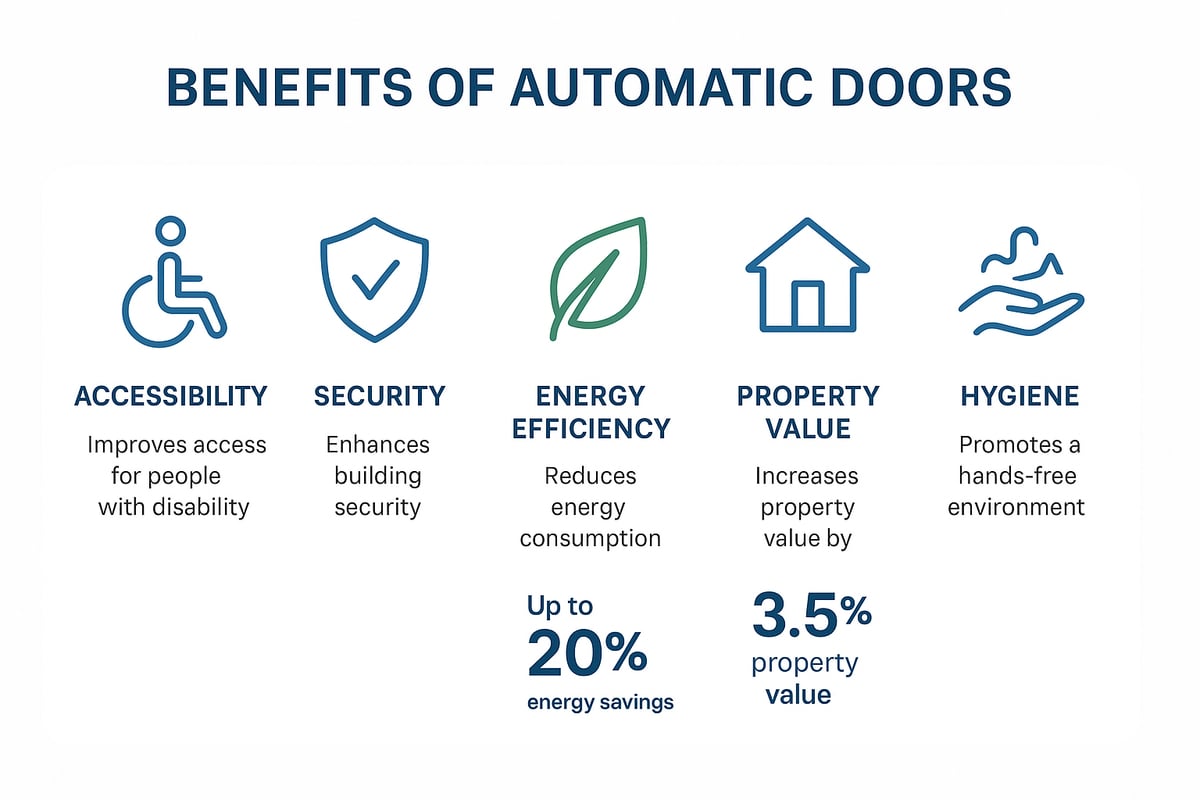
Automatic doors play a vital role in making buildings accessible to everyone. They support barrier-free entry for people with disabilities, older adults, and those carrying goods or managing prams. In Australia, strict accessibility requirements make compliance essential for both new builds and renovations.
Meeting the latest standards, like AS 1428.1:2021 Design for Access and Mobility, ensures that automatic doors provide equal access for all. This not only meets legal obligations, but also demonstrates a commitment to inclusivity. Many public buildings and businesses now prioritise automatic doors to support diverse community needs.
Security & Safety Improvements
Security and safety are top priorities for any property owner. Automatic doors offer advanced features such as automated locking, integration with security systems, and real-time monitoring. These enhancements help protect both people and assets.
Modern automatic doors are fitted with safety sensors that prevent accidents, ensuring the door never closes on users. In busy retail or healthcare environments, these features have led to a noticeable reduction in incidents. For property managers, this provides peace of mind and reduces liability risks.
Energy Efficiency & Cost Savings
Energy efficiency is a significant benefit of automatic doors. By opening only when needed and closing quickly, these doors minimise air loss and help maintain stable indoor temperatures. This is especially valuable in large commercial spaces or climate-controlled areas.
Australian businesses report lower energy bills after installing automatic doors, thanks to improved climate control. Over time, the cost savings can offset the initial investment, making this upgrade a smart financial choice. Efficient operation also supports sustainability goals and reduces the building's carbon footprint.
Aesthetic & Property Value Boost
The look and feel of a building can be transformed with the right automatic doors. Modern designs offer a range of materials, finishes, and custom options to match any architectural style. Whether for a home or a commercial property, these doors add a sleek, contemporary touch.
Investing in automatic doors can increase curb appeal and overall property value. Custom finishes, glass panels, and smart features set new developments apart in the market. For developers and homeowners alike, this enhancement is both practical and attractive.
Hygiene & Touchless Operation
Hygiene has become a major concern in recent years, and automatic doors provide a clear solution. By enabling touchless entry and exit, they reduce contact points in high-traffic areas. This helps limit the spread of germs and supports a healthier environment.
Public buildings, hospitals, and retail spaces increasingly rely on automatic doors for this reason. The shift towards touchless solutions is expected to continue, making these systems a future-proof investment for any property.
How to Choose the Right Automatic Door in 2026
Selecting the perfect automatic doors in 2026 requires more than just choosing a style. Today’s buyers need to consider technology, compliance, durability, and long-term value. Whether upgrading a home, business, or industrial site, understanding each factor ensures your investment meets both current and future needs.
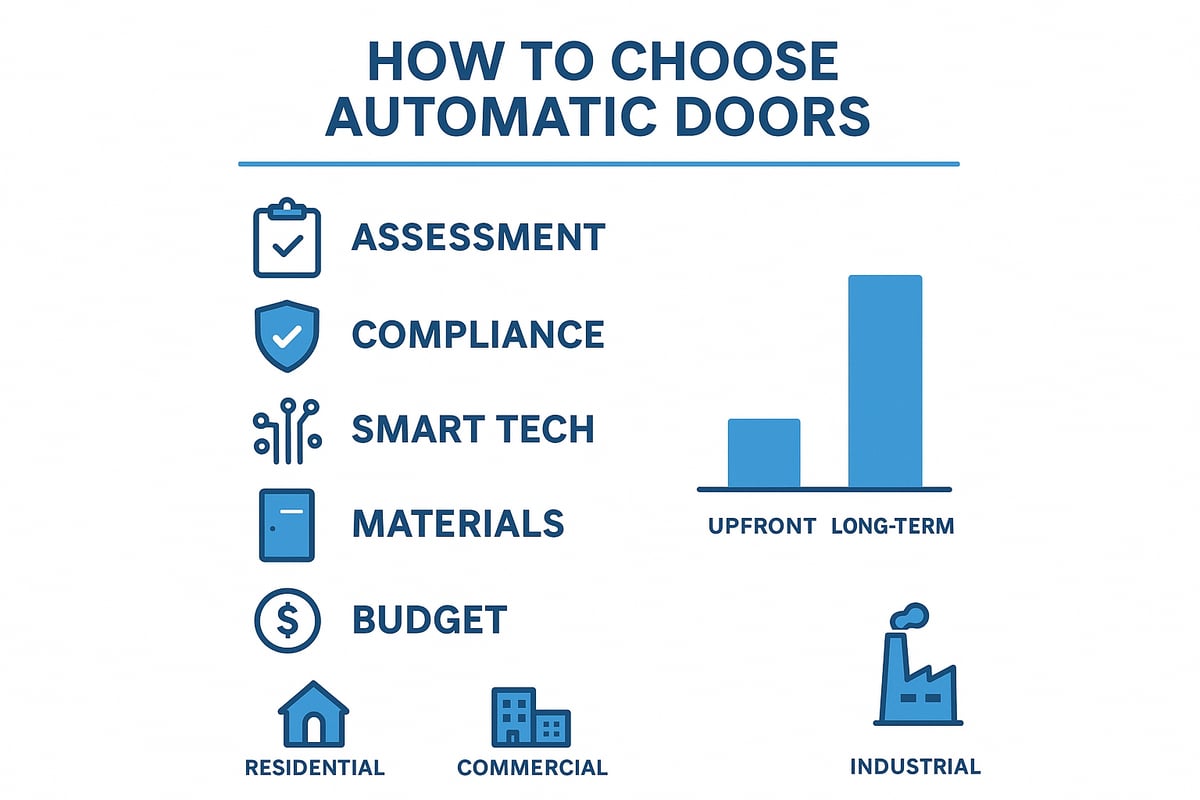
Assessing Your Needs & Building Requirements
Start by identifying the specific requirements for your automatic doors project. Are you looking for residential, commercial, or industrial solutions? Each setting places unique demands on performance and safety. For homes, consider daily foot traffic and available space. In retail or office environments, the volume and flow of people often dictate the type and size of automatic doors needed.
For narrow retail entrances, sliding automatic doors are a popular choice. Their space-saving design and smooth operation make them ideal for busy commercial spaces. In industrial settings, durability and rapid opening are critical for efficient workflow. Always balance your immediate needs with potential future changes in usage.
Compliance & Australian Standards
Compliance is non-negotiable when selecting automatic doors in Australia. Key standards to consider include AS 5007 for powered doors and AS 1428.1 for accessibility. These regulations ensure safety, barrier-free access, and reliable operation for all users. Certification and professional installation are essential for meeting these requirements.
There can be significant penalties for non-compliance, especially in commercial and public buildings. For the latest guidance, review the NCC Clarification on Manual Controls for Power-Operated Hinged Doors. Always verify that your chosen automatic doors and installers uphold the necessary certifications.
Technology Integration & Smart Features
Modern automatic doors in 2026 are more connected than ever. Integration with smart home and building management systems is now standard, providing remote control, real-time monitoring, and seamless automation. Look for automatic doors that offer compatibility with mobile apps and security platforms for added convenience.
In commercial buildings, automatic doors can be linked to access control, fire safety, and energy management systems. For example, integrating doors with a central building management system allows for scheduled locking, energy-saving modes, and instant alerts in case of faults. These features deliver peace of mind and operational efficiency.
Material Selection & Durability
Choosing the right materials for your automatic doors is vital for long-term performance. Options include aluminium, glass, steel, and specialty composites. Each material offers different benefits in terms of strength, appearance, and maintenance. For properties in coastal or harsh weather regions, opt for windlocked or corrosion-resistant finishes to ensure longevity.
Consider how the door material aligns with your building’s design and environmental demands. Aluminium frames are lightweight and durable, while glass panels can enhance natural light and modern aesthetics. Always select materials that meet both functional and architectural goals for your space.
Budget Considerations & Lifespan
Budgeting for automatic doors goes beyond the initial purchase price. Factor in installation costs, ongoing maintenance, and expected lifespan. While upfront costs can vary, investing in higher-quality automatic doors typically yields lower maintenance and energy bills over time.
| Feature | Upfront Cost | Maintenance | Lifespan | ROI Potential |
|---|---|---|---|---|
| Basic Sliding Door | Low | Low | 10+ yrs | Moderate |
| Smart Integrated Door | Moderate | Moderate | 15+ yrs | High |
| Industrial High-Speed | High | Moderate | 20+ yrs | Very High |
Assess warranty terms and service agreements before making a decision. A well-chosen automatic door system will provide reliable performance and value for years to come.
Installation, Maintenance & Modernisation Essentials
Installing, maintaining, and upgrading automatic doors are crucial steps to ensure smooth operation, safety, and long-term value. Whether for a new build or a retrofit, understanding each phase helps owners and facility managers make informed decisions that protect their investment.
Professional Installation Process
Getting automatic doors professionally installed is the foundation for reliable, secure, and compliant access. The process begins with a detailed site assessment, where experts evaluate entry points, traffic flow, and structural requirements. This step ensures the chosen automatic doors are tailored to the specific environment, whether it is a commercial office, healthcare facility, or residential complex.
Next, doors are customised for size, finish, and features, followed by precise installation. Certified installers handle electrical connections and safety sensors, guaranteeing compliance with Australian standards. Once fitted, every component is thoroughly tested for smooth operation and security.
For example, installing automatic doors in a new office typically spans five to seven days. The timeline covers assessment, customisation, delivery, installation, and final safety checks. This structured approach reduces future issues and sets the stage for efficient maintenance.
Maintenance Best Practices
Regular upkeep is vital for extending the lifespan of automatic doors and ensuring optimal performance. Key maintenance tasks include scheduled inspections, cleaning of tracks and sensors, and lubrication of moving components. Early detection of wear helps prevent unexpected failures.
Routine servicing can now be enhanced with IoT-connected systems that provide predictive maintenance alerts. These smart features allow facility managers to address issues before they cause downtime, significantly improving reliability. According to industry data, proactive maintenance can reduce downtime by up to 30 percent.
For a detailed guide on keeping your automatic doors in top condition, see Garage door maintenance in Australia. Following best practices ensures compliance and minimises costly repairs.
| Maintenance Task | Frequency | Benefit |
|---|---|---|
| Visual Inspection | Monthly | Early issue detection |
| Sensor Cleaning | Quarterly | Prevents false triggers |
| Lubrication | Biannually | Reduces wear and tear |
| Professional Servicing | Annually | Ensures compliance and safety |
Modernisation & Upgrades
As technology evolves, upgrading automatic doors can deliver greater efficiency, safety, and compliance. Retrofitting older doors with modern automation systems is a popular option for buildings seeking to improve accessibility and energy performance without full replacement.
Upgrades often include new sensors, advanced controllers, or integration with building management systems. Modular modernisation packages allow for phased improvements, addressing specific needs such as touchless entry or enhanced security.
For commercial properties, investing in upgraded automatic doors can lead to significant energy savings and ensure ongoing compliance with Australian standards. These enhancements future-proof assets and increase property value, making them a smart choice for forward-thinking owners.
Troubleshooting Common Issues
Even with quality installation and regular maintenance, automatic doors may occasionally experience problems. Common issues include misaligned sensors, power supply interruptions, or software errors. Regular troubleshooting starts with checking sensor alignment and clearing any obstructions.
If doors fail to operate, inspect electrical connections and review control settings. Minor issues like dirt on sensors can be handled in-house, while complex faults such as motor failures or persistent software errors require a professional technician.
Knowing when to attempt a simple fix versus calling an expert is essential for safety and efficiency. Prompt attention to any malfunction keeps automatic doors operating smoothly and minimises disruption to daily routines.
Future Outlook: The Next Generation of Automatic Doors
As we look ahead to 2026 and beyond, automatic doors are set to redefine how Australians interact with their built environment. The next generation of automatic doors will blend smart technology, sustainability, and personalised access, transforming homes, businesses, and public spaces. With these developments, property owners, builders, and facility managers will find more opportunities for efficiency, security, and innovation.
Innovations on the Horizon
The future of automatic doors is being shaped by cutting-edge technology and environmental priorities. AI-driven access control will enable doors to recognise authorised users through facial recognition or mobile credentials, providing a highly secure and seamless experience. Personalisation features will allow doors to adjust opening speeds, security settings, and even greetings based on individual preferences.
Sustainability is another major driver. Manufacturers are exploring solar-powered and energy-harvesting door systems, which promise to reduce operational costs and carbon footprints. Expect to see innovations like transparent photovoltaic glass and recycled materials integrated into the design of automatic doors.
Predictive maintenance will become more widespread, with cloud-based systems monitoring door performance and scheduling repairs before issues arise. These advancements will help extend the lifespan of automatic doors and minimise downtime for businesses.
Evolving User Expectations
Australians are demanding more from their automatic doors, with a focus on seamless, touchless operation and customisation. Users expect doors to blend effortlessly with smart home and building systems, offering app-based control, remote access, and integration with security platforms.
Design flexibility is also key. Property owners want automatic doors that reflect their brand or personal style, with options for custom colours, finishes, and even digital signage. Accessibility remains a top priority, especially as regulations evolve to ensure inclusivity for all users.
It is important to consider that not all touchless solutions meet every user's needs. For example, Automatic Doors and Accessibility: Why 'Wave to Open' Isn't Always Inclusive explores common pitfalls and highlights the importance of truly universal access.
Regulatory Changes & Industry Standards
Australia's regulatory landscape for automatic doors is expected to evolve rapidly. Upcoming changes will likely emphasise sustainability, digital connectivity, and improved accessibility. Building codes and standards may require energy-efficient operation, integration with smart building systems, and advanced safety features.
Compliance will remain essential for both commercial and residential installations. Certification and regular inspection will be necessary to meet updated standards. Property owners should stay informed about new requirements to avoid costly penalties and ensure their automatic doors deliver both safety and value.
Manufacturers and suppliers will need to adapt quickly, investing in research and development to stay ahead of regulatory trends. This focus on compliance will drive innovation and raise the standard for automatic doors across Australia.
Automatic Doors in Smart Cities
As Australian cities embrace smart technology, automatic doors will play a central role in integrated urban infrastructure. In transport hubs, shopping centres, and public buildings, these doors will help manage people flow, enhance security, and support accessible, connected environments.
Automatic doors will integrate with IoT networks, providing real-time data on usage patterns, occupancy, and maintenance needs. In large-scale developments, doors will contribute to energy management strategies and support emergency response systems through advanced connectivity.
People Flow Planning and Consulting will become increasingly important, ensuring that automatic doors are placed and programmed for optimal efficiency and safety in busy urban settings. This integration will support Australia's vision of smarter, more liveable cities.
Market Projections & Investment Insights
Industry analysts project continued growth for automatic doors in Australia, driven by demand in commercial, healthcare, and residential sectors. By 2026, the market value is expected to rise significantly as more property owners invest in automation, security, and sustainability.
Opportunities abound for builders, developers, and facility managers seeking to future-proof their assets. The return on investment for automatic doors is bolstered by energy savings, reduced maintenance, and enhanced property values.
As technology matures and costs decrease, adoption will accelerate, making automatic doors a standard feature in modern Australian buildings. Staying ahead of market trends and regulatory changes will be crucial for maximising value and ensuring long-term success.
As we look ahead to 2026, it’s clear that automatic doors are no longer just about convenience—they’re about smarter security, better accessibility, and future-ready design for Australian homes and businesses. If you’re considering how to bring these benefits into your daily life, now’s the perfect time to take the next step with a solution built for local conditions and evolving standards. Whether you’re upgrading for energy efficiency, safety, or style, you can start your journey today—explore your options and buy a domestic roller door to enjoy seamless access, professional installation, and the peace of mind that comes with expert support.