
Container Roller Door: Prices, Kits & Installation Australia
A container roller door is a metal door that rolls up and down over an opening cut into a shipping container. You install it where you need easy access without the hassle of swinging doors that take up space. These doors work like standard roller shutters but are specifically sized and built to fit shipping container walls.
This guide covers everything you need to know about buying and installing container roller doors in Australia. You'll find pricing breakdowns for different door sizes, what to look for in kits, how to measure your container properly, and whether you should tackle the installation yourself or hire a professional. We'll also compare the main types available so you can pick the right one for your container project.
Why container roller doors are worth it
You get better security for your container when you add a roller door because it creates a stronger barrier than cutting open the standard container doors. The metal construction resists break-in attempts better than timber alternatives, and you can lock the door from inside or outside. Standard container doors swing wide and need clear space in front, but a container roller door rolls up vertically and saves you metres of valuable ground space around your container.
Weather protection and versatility
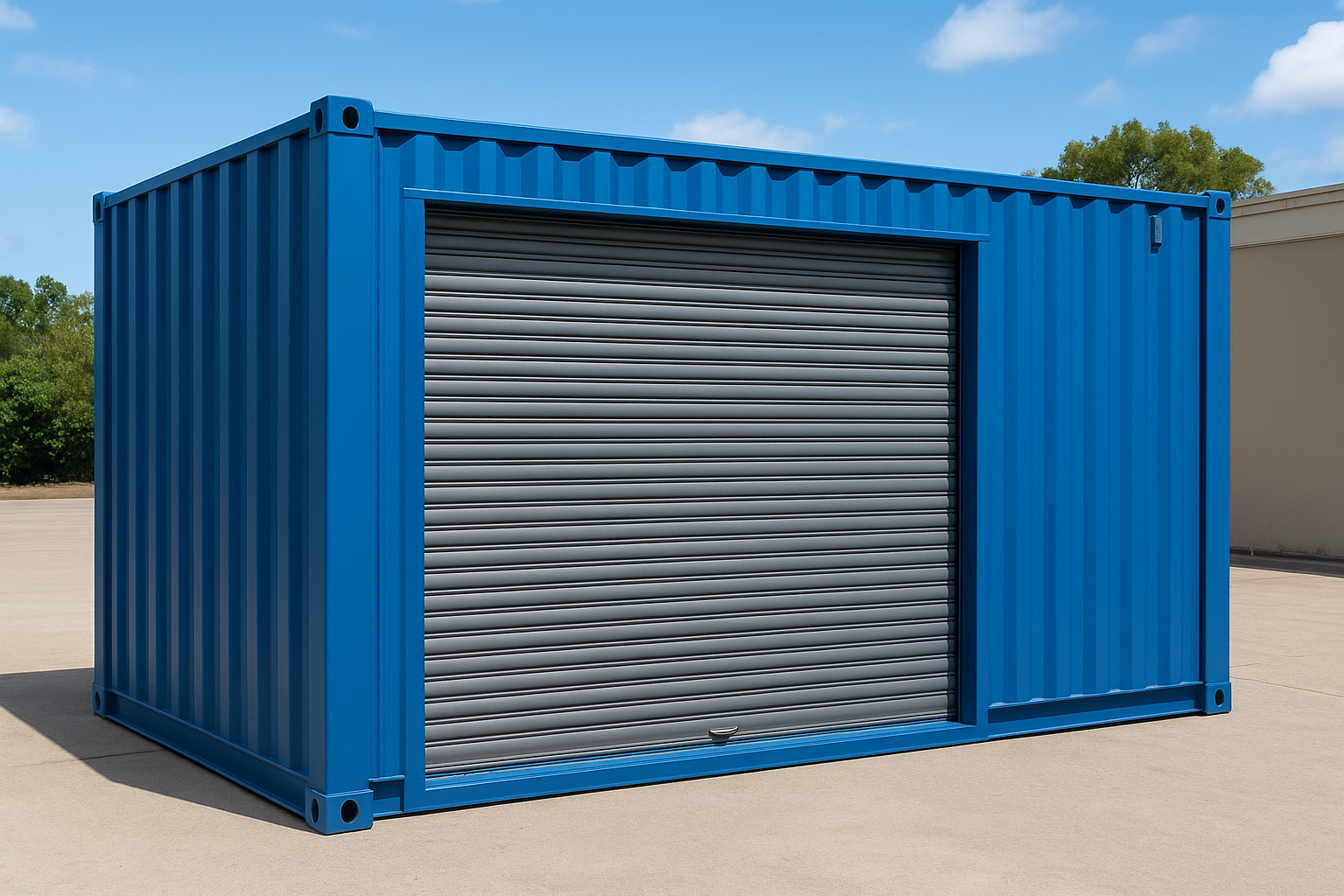
Weather seals around roller doors keep rain and dust out of your stored items or workspace. You can open the door partially for ventilation without exposing everything inside, which you can't do with standard swing doors. Installing a roller door also lets you convert your container into a mobile shopfront, workshop, or equipment bay that opens completely for easy loading and unloading.
Adding a roller door transforms a basic storage box into a functional workspace or retail unit.
You'll find these doors work particularly well if you've joined multiple containers together and need internal access between sections.
How to choose and measure a container roller door
You need to measure the opening you'll cut into your container before ordering any door. Standard shipping containers come in specific widths: 20-foot and 40-foot containers are both 2.35 metres wide on the inside. Most suppliers offer roller doors in common sizes that fit these standard dimensions, but you can also order custom sizes if you're cutting a non-standard opening.
Measuring your container opening
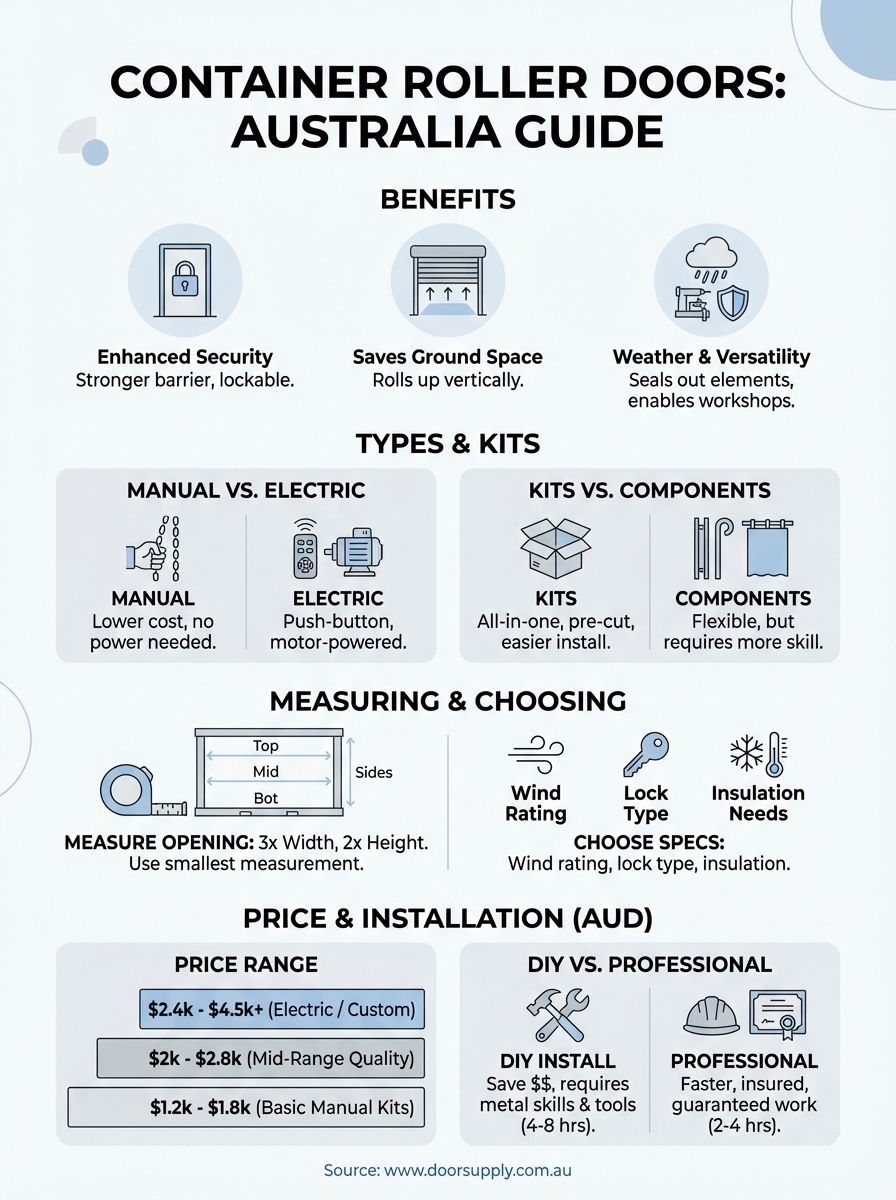
Measure three times to avoid expensive mistakes: the width at the top, middle, and bottom of your opening, then the height on both sides. Containers can warp slightly over time, so you want the smallest measurement from each direction to ensure your door fits. Write down these measurements in millimetres rather than centimetres because precision matters when you're ordering a custom roller door that needs to seal properly.
You also need to check the wall thickness of your container, which is typically around 2mm for the corrugated steel panels. Add 50-75mm to your opening dimensions for the door frame and tracks that mount on either side.
The cut opening can be framed out using angle or box section to create a rigid frame, alternatively, if you cut the opening to the flat of the wall, then order a door to exact size, it is possible to mount the door direct to the container without a frame.

Choosing the right door specifications
Pick a door with a wind rating that suits your location, especially if you're in coastal or exposed areas. The locking mechanism matters too: you can choose manual locks, padlock points, or integration points for electric openers. Consider whether you need insulation in the door panels if you're creating a workspace, and check the colour options match your container or building scheme.
Types of container roller doors and kits
You can buy pre-assembled roller door kits that include the door curtain, side tracks, mounting brackets, and all fixing hardware in one package. These kits come ready to install into your cut opening and typically include installation instructions specific to shipping containers. Alternatively, you can order individual components separately or commission a custom-built door from a fabricator who specialises in container modifications.
Manual vs electric roller doors
Manual roller doors operate with a chain or strap mechanism that you pull to raise and lower the door. These cost less upfront and need no power supply, making them perfect for remote container locations or simple storage applications. Electric roller doors use a motor that you control with a remote, wall switch, or even a smartphone app in some models. The motor mounts on the door axles and powers the door up and down at the press of a button. Externally mounted doors like shown below will need a weather hood to protect the auto opener (if used) and to stop water going bewtween the container wall and the door.
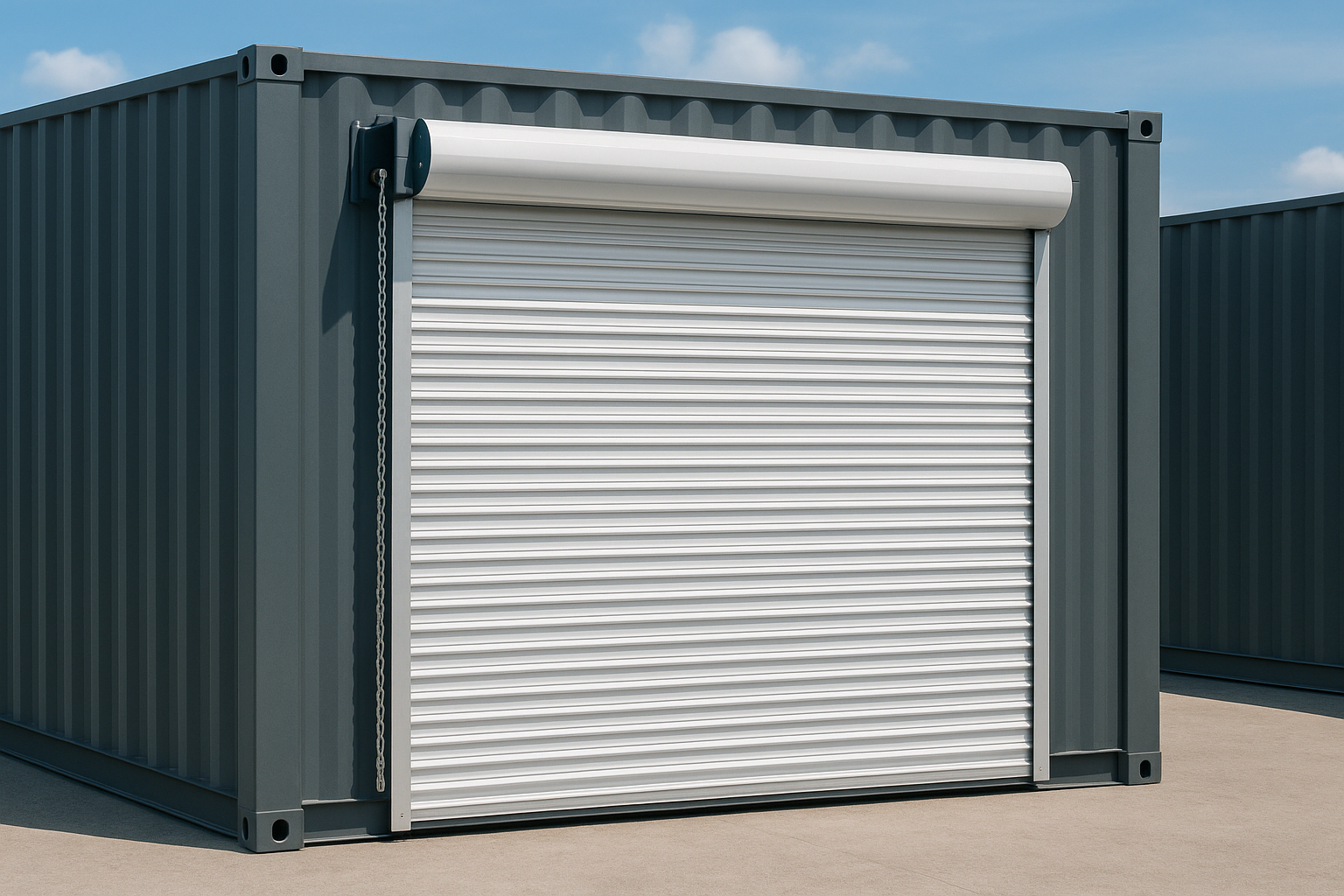
Electric doors make sense for containers you access frequently or when you're moving heavy equipment in and out regularly.
Complete kits vs component purchases
Complete container roller door kits bundle everything you need for installation, including the curtain, guides, bottom rail, mounting plates, and fixings. Kit manufacturers pre-cut the components to standard container dimensions, which eliminates guesswork during installation. Buying components separately gives you more flexibility for unusual openings but requires more technical knowledge to ensure all parts work together properly and meet Australian wind load standards.
Container roller door prices in Australia
You'll pay anywhere from $849 to $4,500 for a container roller door in Australia, depending on the size, quality, and features you choose. Standard manual doors for typical container openings cost between $849 and $2,200, while electric models with motors and remote controls start around $1500 and climb to $3,800 or more. Custom sizes, premium finishes, and high wind ratings push prices higher.
Budget and mid-range options
Entry-level manual roller doors suitable for 20-foot containers typically cost $849 to $1,800 for a basic kit. These doors cover openings around 1,900mm wide by 2,100mm high and include the curtain, tracks, and mounting hardware. Mid-range options between $2,000 and $2,800 offer better build quality, thicker steel curtains, improved locking systems, and weather seals that last longer in harsh Australian conditions.
Most suppliers charge $200 to $400 extra for custom sizing beyond standard dimensions, and you'll pay another $150 to $300 for powder coating in specific colours rather than standard white or cream. Electric motor kits add approximately $800 to $1,400 to your total cost depending on the motor brand and whether you want smart controls.
Premium and custom installations
High-specification doors designed for commercial containers or extreme weather locations cost $3,500 to $4,500 or more. These feature reinforced curtains, superior wind ratings exceeding standard requirements, insulated panels for temperature control, and commercial-grade locking mechanisms. Fabricators charge premium rates for one-off custom designs that integrate with modified container structures or unusual opening configurations, often quoting $4,000 and up for fully tailored solutions with professional installation included.
DIY install vs professional install
You can save $800 to $1,500 by installing a container roller door yourself, but you need basic metalworking skills and the right tools to cut and seal the container properly. DIY installation typically takes 4 to 8 hours for someone with experience, while first-timers should budget a full weekend. Professional installers complete the job in 2 to 4 hours and guarantee their work meets Australian building standards.
What DIY installation requires
Cutting through container steel demands an angle grinder, measuring tools, a drill, and safety equipment including eye protection and gloves. You need to create a perfectly square opening because even small measurement errors cause gaps that leak water or prevent the door from operating smoothly. Framing the opening requires welding skills or bolting techniques to reinforce the cut edges and mount the door tracks securely to the corrugated walls.
Getting the opening level and square matters more than any other step in the installation process.
When to hire a professional
Professional installers bring liability insurance that covers damage to your container or injuries during installation. They handle council permits if your container modification requires approval, and they warranty their workmanship for 12 months or more. Choose professional installation when you're adding electric motors, need certification for commercial use, or lack confidence working with power tools on metal structures.
Choosing your container roller door
You now know the price ranges, installation options, and types of container roller doors available across Australia. Your choice depends on your budget, how often you'll use the door, and whether you need electric operation or manual controls. Match your door specifications to your container's purpose: basic storage needs a simple manual door, while a workshop or retail space benefits from electric operation and better weather sealing.
Take accurate measurements before ordering and decide whether you'll tackle the installation yourself or hire a professional. If you need a quality roller door for your home garage or container project, browse our range of Australian-made roller doors with free nationwide delivery.