
Farm Shed Roller Doors: Buyer’s Guide to Sizes & Prices
Farm shed roller doors are vertical opening doors made from interlocking steel slats that roll up into a compact coil above the opening. You mount them to the front of your shed, and they give you wide access for machinery, vehicles and equipment without taking up horizontal space along your walls. They seal tight, lock secure, and handle the weather better than most other door types.
This guide walks you through everything you need to know before you buy. You'll learn which door style suits your shed, how to pick the right size, what clearance you need above the opening, and what prices to expect. We'll also cover installation basics, maintenance tips, and how to avoid the common mistakes that cost buyers time and money.
Why farm shed roller doors are a smart choice
You save valuable floor space when you install farm shed roller doors because they roll vertically and store above the opening. Unlike sliding doors that need clearance along your shed walls, roller doors give you full use of the interior perimeter for storing equipment, parking machinery or setting up workbenches. The vertical operation means you don't sacrifice usable space on either side of your doorway.
Space efficiency and security
Roller doors consume zero horizontal space when open or closed, which matters when you're working with tight clearances around your shed. You can park vehicles right up to the wall and still open the door fully. They also lock tight with internal barrel bolts or electric openers, giving you better security than most sliding or hinged options. The solid steel construction resists forced entry better than lightweight alternatives.
Weather protection and durability
Colorbond steel curtain resist rust, fading and impact damage from years of farm use. The continuous seamed curtain creates a solid barrier that stops wind and rain from entering your shed, which protects stored machinery, hay, grain and tools. You won't deal with warped panels or sagging frames like you might with timber or lightweight alternatives.
How to choose the right farm shed roller door
You need to match your door specification to how you'll use the shed and what conditions it faces. Start by measuring your largest vehicle or equipment, then add 500mm of clearance on each side to ensure easy access without scraping door frames or panels. Factor in the weather patterns on your property, particularly wind exposure. Consider whether you want manual operation or an electric opener, because retrofitting an opener later costs more than ordering it upfront.
Match door width to your machinery
Measure the widest piece of equipment you'll move through the opening, including mirrors, attachments and any extended parts. Add 1000mm total (500mm each side) to this measurement for your minimum door width. Tractors, harvesters and headers need wider openings than utes or smaller implements. You'll regret ordering too narrow when you can't fit new machinery through the door five years later.
Always measure at the widest point of your equipment, not the body width, because attachments and implements often extend beyond the base vehicle.
Consider wind rating for your location
Standard farm shed roller doors suit most inland areas with moderate wind exposure. Coastal properties and exposed hilltops require wind-locked or wind-strong rated doors that resist higher wind loads without damage. Check your local wind classification (N1 through C4) before ordering, because using an under-rated door voids warranties and leads to buckled slats or failed operation during storms. Wind-rated doors cost 30-40% more but save you from expensive replacements after the first severe weather event.
Common door widths for farm sheds
Single bay sheds typically use 2.4 to 3 metres wide doors for vehicle access, while double bays need 4 to 5 metres to accommodate wider machinery. Headers, harvesters and large tractors often require 5.5 to 6 metre openings, which pushes you into Shutter Door or industrial roller door territory. You can order doors up to 6 metres wide from many Australian suppliers, though anything beyond 5 metres requires heavier-duty components and costs more.
Clearance requirements above and around openings
You need 200 to 550mm of vertical clearance above your door opening for the rolled-up curtain, depending on door height and profile. Standard domestic doors typically require 400-500mm, while Larger doors larger doors require 500-650mm. Measure your available clearance before ordering because incorrect calculations mean you can't install the door or you'll need costly shed modifications.
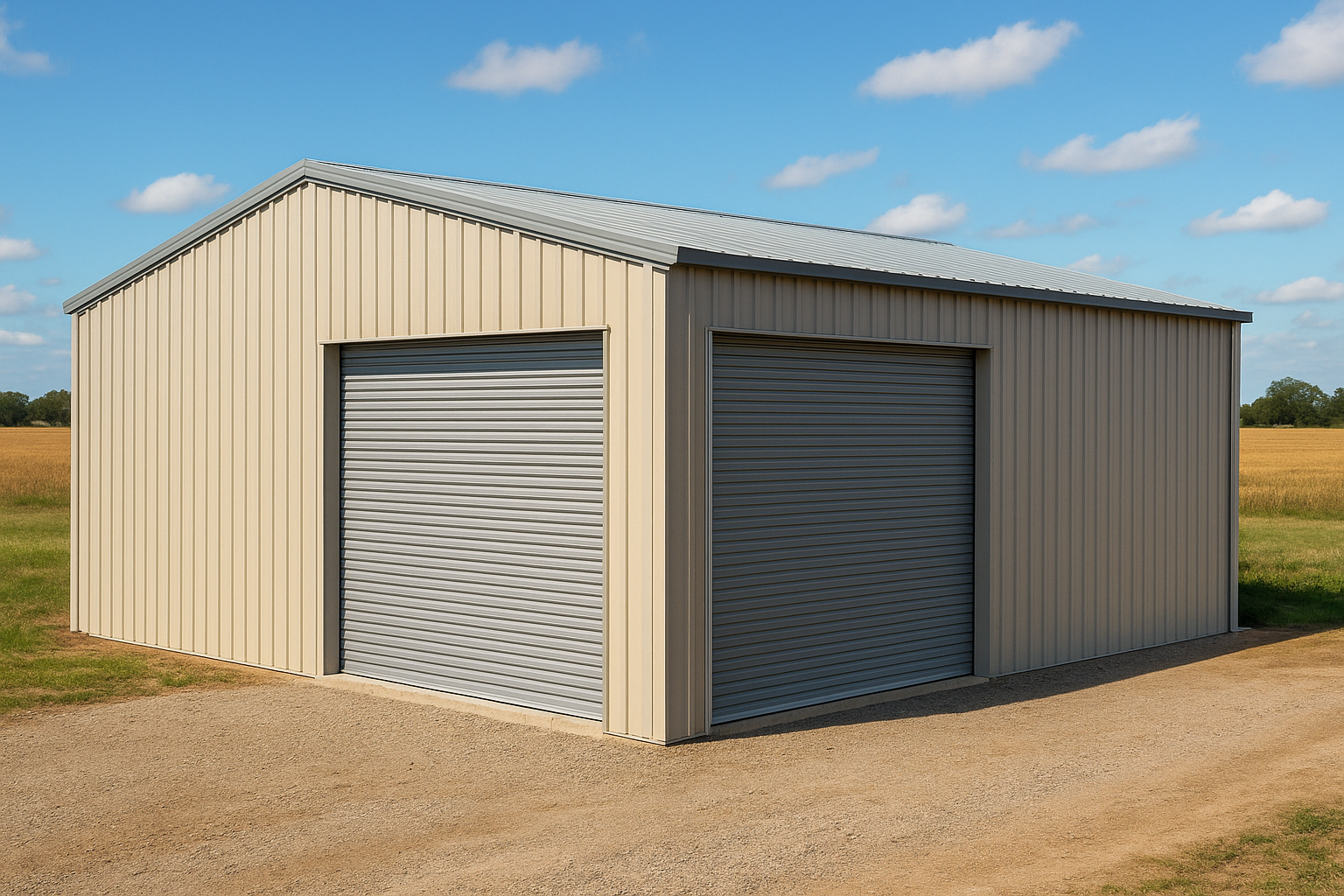
Always confirm clearance requirements with your supplier before finalising your order, because different door types and wind ratings affect the space needed.
Side clearance requires 100-275mm on each side of the opening for guides and mounting brackets. Custom-sized doors solve clearance problems when your opening sits close to corners or other structural elements.
Price ranges and what affects cost
Basic farm shed roller doors start at around $1,000 for a standard 2.4-metre wide domestic door with manual operation. You'll pay $3,000 to $5,000 for typical farm shed sizes between 3 to 4 metres wide, while larger 5-metre doors cost $5,000 to $15,000. Wind-rated doors for exposed locations add 30-40% to these base prices, and doors wider than 5 metres can reach $25,000 to $50,000 because they require industrial-grade components and engineering.
Entry-level and standard door pricing
Standard domestic roller doors between 2.4 and 3 metres wide cost $3,000 to $5,500 installed. These doors suit lighter-duty farm applications where you don't face severe weather and you're happy with manual operation. Double bay doors from 4 to 5 metres wide range from $3,000 to $12,000, depending on height and whether you choose Colorbond, Zincalume or Galvanised steel. Manual operation keeps costs down, while adding an electric opener increases the price by $800 to $2,500.
Wind-rated doors cost significantly more upfront but avoid expensive replacements when storms damage under-rated doors.
Key cost factors beyond door size
Wind rating represents the biggest variable cost factor, with wind-locked and wind-strong doors costing 30-50% more than standard versions. Height affects price more than width because taller doors need stronger slats and heavier-duty guides. Remote-controlled electric openers with safety features cost more than basic chain-pull motors, while installation charges vary from $500 to $2,000 depending on site access and preparation work required.
Installation, safety and maintenance basics
You can install farm shed roller doors yourself if you have basic building skills and follow the manufacturer's instructions carefully, but professional installation ensures correct alignment, proper tensioning and full warranty coverage. Most suppliers charge $500 to $2,000 for installation depending on door size and site complexity. Professional fitters complete the job in 3 to 6 hours, while DIY installation typically takes a full day or weekend for first-timers.
DIY installation vs professional fitting
DIY installation requires two people, basic hand tools, a drill, level, and ladder access to mount the housing box above the opening. You'll need to ensure the opening has square corners and level mounting surfaces before you start, because misalignment causes binding, uneven operation and premature wear. Suppliers provide detailed installation guides with step-by-step instructions, but incorrect installation voids your warranty and creates safety risks. Professional fitters handle all mounting, tensioning and adjustment work, plus they test safety features before handing over the completed installation. Professional installation costs more upfront but protects your warranty and ensures safe operation from day one.
Regular maintenance requirements
Monthly checks of bottom seals, guide tracks and locking mechanisms prevent most problems before they develop. Spray silicone lubricant on guide tracks and moving parts every three months to maintain smooth operation. Annual inspections by qualified technicians catch worn components, tension issues and safety feature failures before they cause door damage or safety hazards.
Next steps for your shed door
You now understand how to size, specify and price farm shed roller doors for your property. Start by measuring your opening and largest equipment, then contact suppliers with your exact dimensions and wind classification for accurate quotes. Browse custom-made roller doors to compare your options and get pricing based on your specific requirements. Order early if you're building a new shed, because manufacturing and delivery typically takes three to four weeks from order confirmation.