

Shipping container doors are transforming how Australians create secure storage, innovative businesses, and unique living spaces. As container modifications continue to rise, selecting the right door in 2026 is crucial for security, accessibility, and day-to-day functionality. This guide covers everything you need to know about shipping container doors, from door types and essential features to installation tips, compliance, and creative applications. Discover your options, learn how to enhance security and convenience, and take action to choose the best solution for your next project.
Understanding Shipping Container Doors: Types and Functions
Exploring the world of shipping container doors is essential for anyone looking to modify containers for storage, business, or living spaces. The right door impacts security, access, and overall functionality. Understanding the main door types available in Australia helps you choose the best fit for your container project.
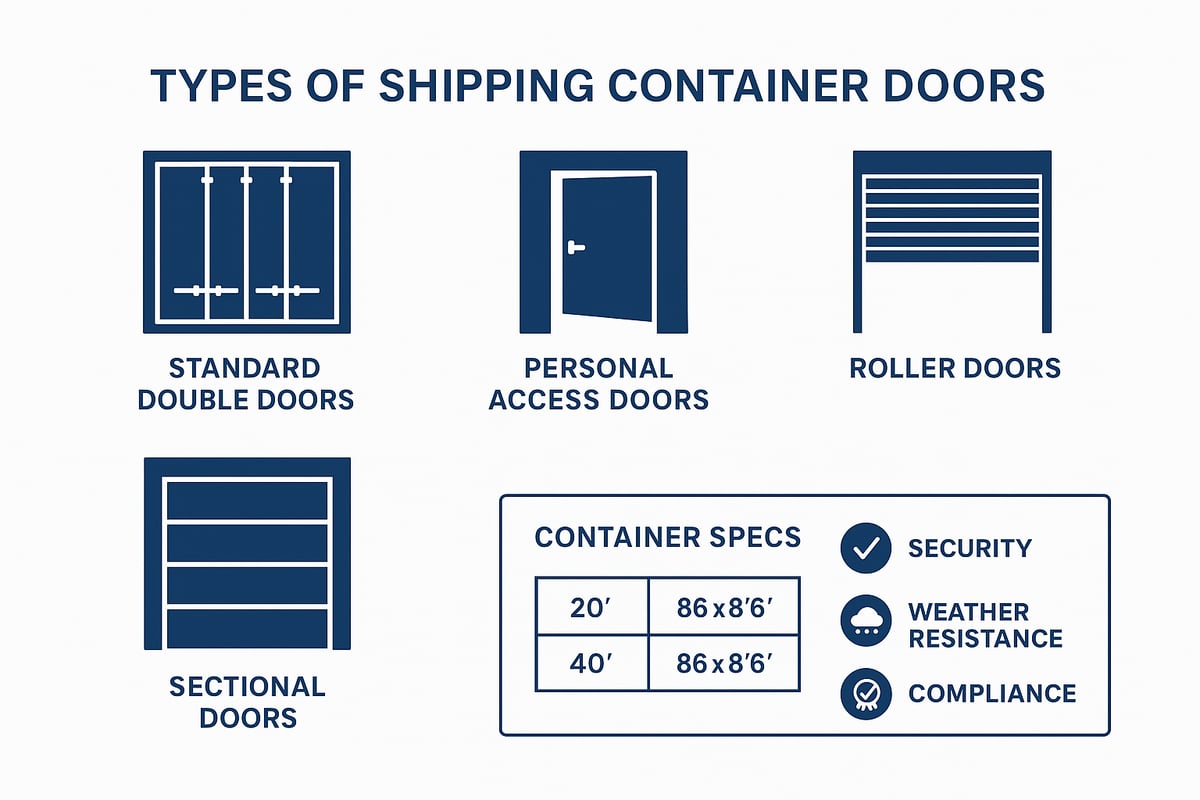
Standard Container Doors
Standard container doors are the original double doors found on most shipping containers. Made from heavy-duty steel, these doors are designed for maximum strength and durability. They feature robust locking mechanisms, including multi-point cam locks and heavy padlock hasps, to keep contents secure.
Weatherproof seals are a hallmark of standard shipping container doors, helping to protect stored goods from the elements. These doors are commonly used for both international freight and static storage. Their main advantages are exceptional security and resistance to harsh weather.
However, their size and weight can make frequent access challenging, particularly for smaller or modified spaces. Most Australian containers are 20ft or 40ft, making these doors the most prevalent option in the market. Standard shipping container doors are ideal for high-security storage and transport but may not suit every access need.
Personal Access (PA) Doors
Personal access doors, also known as PA doors, are single-leaf doors designed for easy entry and exit. They are usually constructed from steel or aluminium, with options for added insulation. PA doors are often retrofitted into containers used as workshops, site offices, or living spaces.
Security is a key feature, with quality locks and reinforced frames providing peace of mind. Access control options, such as digital locks, are increasingly popular. A common example is the use of PA doors in site offices, allowing staff to enter safely without opening the main doors.
There is a growing demand for personal access doors for containers in Australia, particularly among those converting containers for business or residential use. These doors strike a balance between convenience and security, making them a top choice for modified shipping container doors.
Roller Doors
Roller doors are a space-saving solution that can be installed on the side or end of a container. Made from durable materials like COLORBOND steel, some models include wind-rated features for added resilience. Roller doors provide a wide opening and smooth operation, perfect for workshops, garages, or retail spaces.
One of the key advantages is their ability to maximise usable space, as the door rolls up instead of swinging out. This makes roller doors especially suitable for sites with limited room. Installation can be more complex than standard doors, and costs may be higher, but the benefits often outweigh these factors.
Roller doors are among the most popular upgrades for container-based businesses in Australia. They are commonly seen in container workshops and pop-up retail kiosks, offering easy access and reliable security for shipping container doors.
Sectional and Sliding Doors
Sectional doors consist of multiple panels that lift vertically, making them ideal for areas with limited headroom. Sliding doors, on the other hand, open sideways along a track, eliminating the need for swing space and maximising access.
Both types come in a range of materials and finishes, including glass and steel. Sectional doors are often used in commercial settings where vertical space is at a premium, while sliding doors are favoured for retail, pop-up shops, and container cafes.
A popular example is the use of sliding glass doors in container showrooms, providing natural light and a modern look. When choosing between sectional and sliding doors for shipping container doors, consider site constraints and the desired balance of accessibility and aesthetics.
Specialty and Custom Doors
Specialty and custom shipping container doors cater to unique requirements. Options include fire-rated, cyclone-rated, and fully insulated doors for applications demanding extra protection. Doors with windows or vision panels add light and visibility, while custom sizes and hardware allow for tailored solutions.
Fire-rated doors are essential for containers storing hazardous materials, ensuring compliance with strict Australian Standards. Insulated and anti-microbial doors are increasingly specified in food, pharmaceutical, and healthcare sectors.
Demand for custom shipping container doors is on the rise, especially for projects with strict compliance needs or branding requirements. These solutions offer flexibility and peace of mind, ensuring your container meets both functional and regulatory standards.
Key Features to Consider When Choosing a Shipping Container Door
Selecting the right shipping container doors is essential for ensuring your container project is secure, efficient, and compliant. Understanding key features will help you make informed decisions that align with your intended use, site conditions, and budget.
Security and Locking Systems
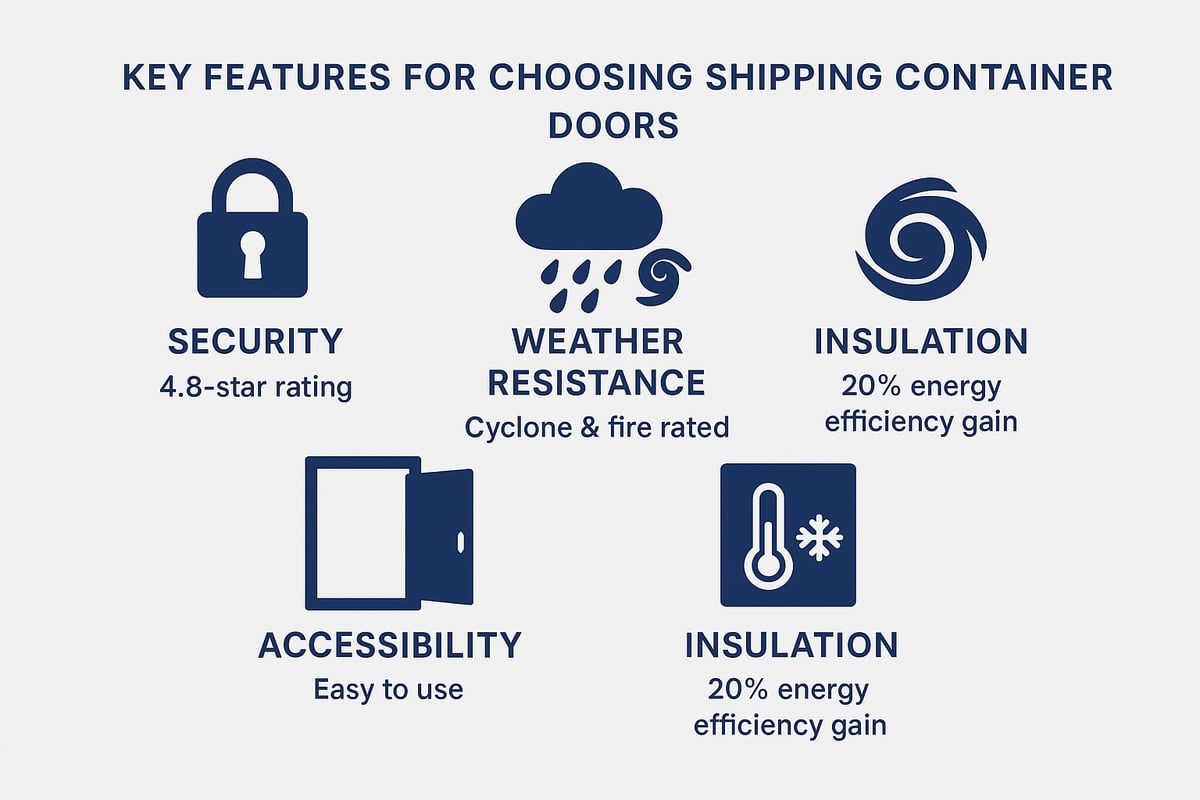
Security is a top priority when evaluating shipping container doors. Most doors feature multi-point locking, heavy-duty padlocks, and anti-tamper hardware, making them suitable for high-value storage or business use.
Consider these points for maximum protection:
- Look for doors with certified security ratings.
- Ensure lockboxes or anti-drill features are present.
- Match security levels to your contents and site risks.
For example, many businesses opt for reinforced locks on shipping container doors, resulting in a 4.8-star average security rating from leading Australian suppliers. By prioritising advanced locking systems, you safeguard assets and deter unauthorised access.
Weather Resistance and Durability
Australia’s climate demands that shipping container doors withstand harsh weather and resist corrosion. High-quality doors use galvanised or COLORBOND® steel, marine-grade coatings, and weatherproof seals to protect against rain, wind, and salt exposure.
Key considerations include:
- Durable finishes for long-term outdoor use.
- Cyclone and wind-rated door options.
- Insulated seals to prevent water ingress.
For example, COLORBOND® steel doors are engineered for longevity and rated for extended outdoor exposure. Choosing weather-resistant shipping container doors ensures your contents stay dry and secure, even in extreme conditions.
Accessibility and Ease of Use
Accessibility is crucial for shipping container doors, especially in busy environments or for frequent use. Door width, height, and the opening mechanism all impact ease of entry and exit.
Choose the right type for your needs:
- Personal access doors for regular staff entry.
- Roller and sliding doors for moving equipment or vehicles.
- ADA-compliant designs for disability access.
For wide, easy access in workshops or retail settings, roller doors are a popular choice. Explore roller doors for shipping containers to compare sizes and features that suit your project. Thoughtful selection enhances workflow and convenience.
Insulation and Energy Efficiency
Insulated shipping container doors are vital for temperature-sensitive uses, such as offices, cool rooms, or container homes. Upgrades like PIR core insulation and thermal breaks help maintain interior comfort and reduce energy costs.
Consider:
- Door panels with integrated insulation.
- Seals that minimise thermal bridging.
- Applications in refrigerated or air-conditioned spaces.
For instance, PIR core doors can boost energy efficiency by up to 20%, making them ideal for climate-controlled shipping container doors. This translates to lower running costs and improved occupant comfort.
Aesthetics and Customisation
Modern shipping container doors offer a variety of finishes and customisation options to complement your project’s design and branding. Whether for a retail pop-up, office, or home, appearance matters.
Custom options include:
| Finish | Description |
|---|---|
| COLORBOND® | Multiple colours, durable |
| Glass panels | Natural light, visibility |
| Branding | Logos, custom graphics |
For example, many pop-up shops use custom-coloured shipping container doors to align with their brand identity. As retail and hospitality conversions grow, aesthetics and personalisation are becoming increasingly important.
Shipping Container Door Installation: Step-by-Step Guide
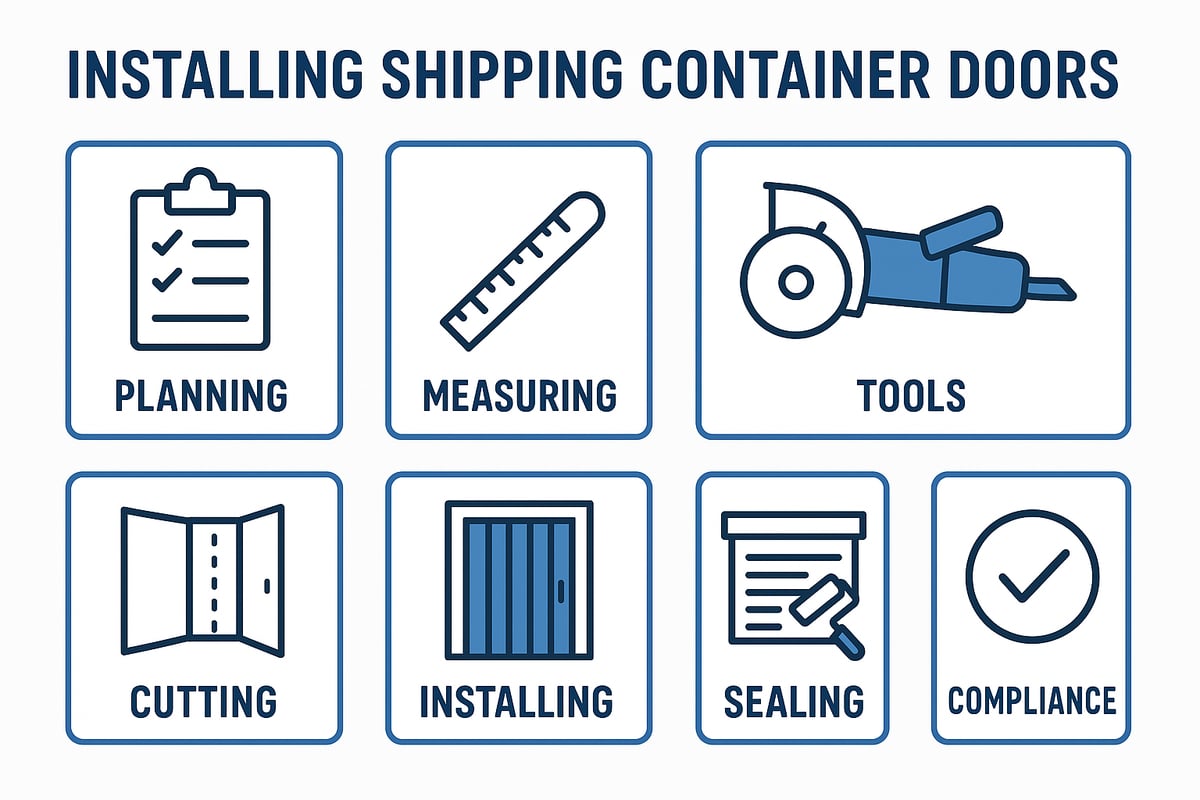
Installing shipping container doors requires careful planning and precision at every stage. Whether you are upgrading for security, accessibility, or a new business fitout, following a systematic approach ensures your project meets both functional and compliance needs.
Planning and Preparation
Every successful installation of shipping container doors begins with thorough planning. Start by assessing your container’s type, size, and current condition. Determine the intended use for the new door—will it serve as a main entry, frequent access point, or equipment bay?
Accurate measurement is crucial. Before cutting, measure the opening’s width and height exactly where you plan to install the door. For step-by-step guidance on this process, refer to Measuring for container door installation. This helps ensure a perfect fit and avoids costly errors.
Check the structure for rust, dents, or weaknesses near the proposed opening. Also, review local council regulations and building codes, as requirements for shipping container doors may differ depending on use or location.
Tools and Materials Needed
Having the right tools and materials streamlines the installation of shipping container doors. Essential tools include:
- Angle grinder (for cutting steel walls)
- Power drill and bits
- Tape measure and marker
- Level and square
- PPE (gloves, safety glasses, hearing protection)
For materials, you will need:
- Door kit (frame, hardware, fasteners)
- Reinforcement steel (for structural strength)
- Weatherproof sealant
- Insulation (if required)
Using pre-hung door kits can simplify the process, as these come with frames and hardware pre-assembled for shipping container doors. Always prioritise safety and double-check tool condition before work begins.
Cutting and Framing the Opening
Mark the exact outline for your shipping container doors using a straight edge and marker. Double-check measurements before making any cuts. Use an angle grinder to slice through the steel wall, working slowly for clean edges.
After cutting, reinforce the perimeter of the opening. Weld or bolt steel box sections around the cut area to retain the container’s structural integrity. This reinforcement is especially important for larger shipping container doors, such as roller or sectional doors.
Proper framing ensures the new door fits securely and operates smoothly. Inspect the frame alignment before proceeding to the next step.
Installing the Door
Position the door frame within the prepared opening, ensuring it sits level and plumb. Secure the frame using heavy-duty fasteners or welding, based on the door design and site requirements. Carefully hang the door leaf or panels, then install all required hardware.
For shipping container doors with multi-point locks or automation, follow the manufacturer’s instructions for fitting and adjustment. Test the door’s operation several times, checking for smooth movement and proper closure.
A well-installed door should open and close with ease while maintaining a tight seal against the container wall.
Sealing and Weatherproofing
Effective sealing is vital for protecting shipping container doors from weather and dust. Apply marine-grade sealant around all frame edges, focusing on joints and fastener points. Install weatherproof strips or gaskets as specified in the door kit.
For insulated or climate-controlled spaces, add thermal insulation around the frame to reduce thermal bridging. Inspect the installation for any gaps or potential water ingress points.
Regularly check seals and reapply as needed to maintain the long-term durability of shipping container doors, especially in harsh Australian climates.
Compliance and Final Checks
Finish by ensuring your shipping container doors meet all relevant Australian Standards. This includes fire ratings, wind resistance, and disability access where required. Test all locks, handles, and opening mechanisms for reliable function.
Document the installation, especially for cyclone-rated or fire-rated doors that may require certification for insurance or regulatory approval. Conduct a final inspection for weatherproofing, security, and operational safety.
By completing these steps, you ensure your shipping container doors deliver security, functionality, and compliance for years to come.
Compliance and Australian Standards for Container Doors
Navigating compliance for shipping container doors in Australia is crucial for safety, legal operation, and long-term practicality. Whether you are modifying containers for commercial, industrial, or residential use, understanding the right standards and regulations ensures your project avoids costly setbacks. Let us break down the key compliance areas to help you choose and install shipping container doors with confidence.
Relevant Standards and Regulations
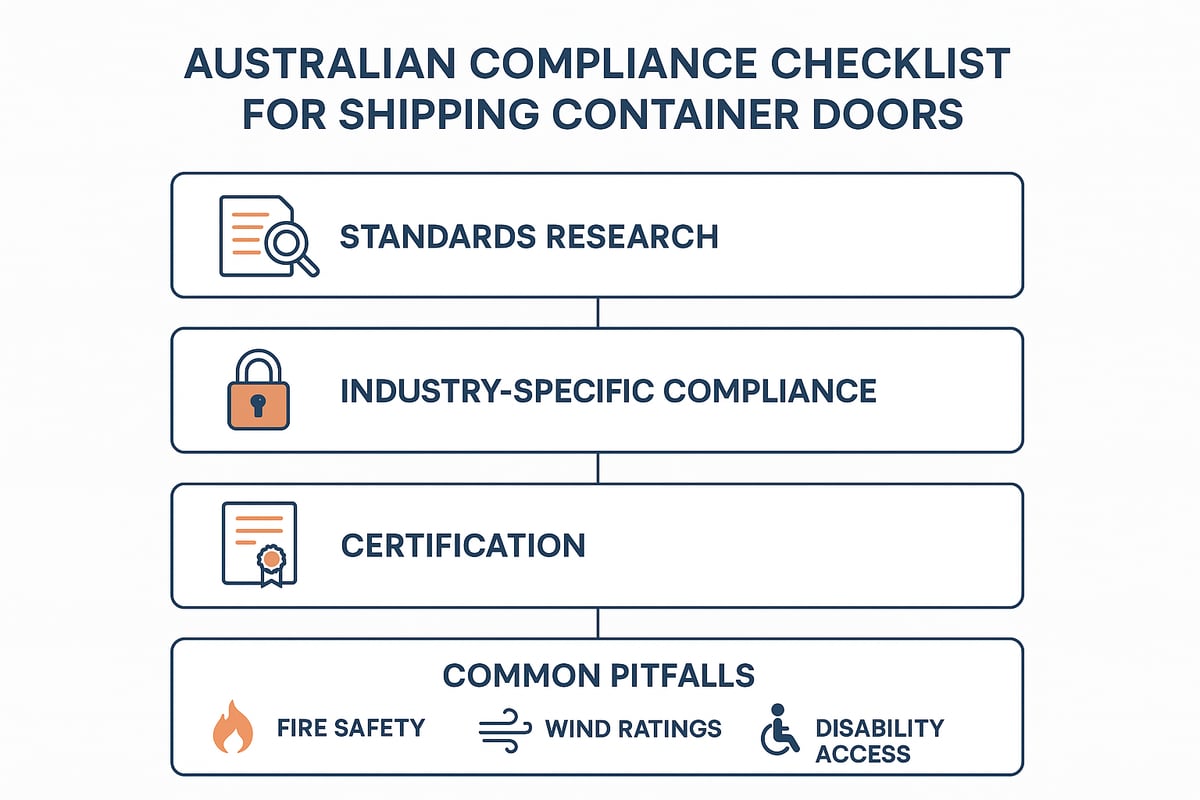
Australian standards for shipping container doors are designed to meet strict requirements for safety, security, and durability. The most common standards include AS/NZS 1170 for structural integrity, AS 1905 for fire-resistant doors, and National Construction Code (NCC) provisions for access and wind ratings.
It is essential to verify that your shipping container doors meet these benchmarks, especially in regions prone to cyclones or bushfires. For those seeking the full regulatory framework, Marine Order 44—Safe Containers offers comprehensive guidelines on container safety, including door standards and inspection requirements.
Always confirm that your chosen doors have appropriate ratings and are installed according to manufacturer instructions. This upfront diligence will help avoid compliance issues later.
Industry-Specific Compliance
Different industries have unique compliance requirements for shipping container doors. Healthcare, food, and pharmaceutical applications often demand doors with anti-microbial finishes, cleanroom compatibility, and strict temperature controls.
For example, medical container conversions may require fire-rated or insulated doors to meet infection control protocols. The food and beverage sector typically looks for doors that are easy to clean and resistant to corrosion.
When planning container modifications, consult with industry specialists to ensure all materials and finishes align with relevant standards. This approach minimises risk and supports smooth certification processes for your shipping container doors.
Certification and Documentation
Certification is a critical step in demonstrating compliance for shipping container doors. Always request certificates of compliance from suppliers, particularly for fire-rated or cyclone-rated doors. These documents are often necessary for council approvals, insurance, and regulatory audits.
Installers should also provide documentation that confirms doors have been fitted according to Australian Standards. Keep records of all certifications, installation reports, and inspection results. This paperwork will streamline future maintenance, resale, or expansion of your container facility.
Relying on certified products and installers ensures your shipping container doors pass all necessary checks and support your business’s legal obligations.
Common Compliance Pitfalls
Many projects encounter issues by overlooking key compliance factors for shipping container doors. Common pitfalls include failing to meet wind or fire safety standards, installing non-compliant locks, or choosing door widths that do not allow for disability access.
To avoid these mistakes, always check state and territory regulations before installation and consult with professionals on best practices. Do not rely solely on generic advice or overseas standards.
Regularly review updates to Australian Standards to keep your shipping container doors compliant over time. Proactive planning will prevent costly modifications and ensure your doors remain fit for purpose.
Innovative Uses for Shipping Container Doors in 2026
The landscape for shipping container doors is rapidly evolving in Australia, with new trends shaping how these adaptable entry solutions are used across residential, commercial, and specialist sectors. As the demand for modified containers continues to soar, innovative door applications are enhancing security, accessibility, and aesthetics for a wide variety of projects.
Container Homes and Offices
Shipping container doors are central to the success of modern container homes and office conversions. Homeowners and architects are increasingly choosing sliding and glass door options to maximise light and create seamless indoor-outdoor flow. This trend not only improves liveability but also enhances security and energy efficiency.
For example, sliding glass doors for container conversions are a popular choice for residential projects, offering a balance of style and robust protection. With container homes rising by 20% in Australia since 2023, innovative door solutions are now a critical component in both new builds and retrofits.
Retail, Hospitality, and Pop-Up Venues
Retailers and hospitality operators are leveraging shipping container doors to create flexible, open, and inviting spaces. Roller and sectional doors make it easy to transform a container into a vibrant pop-up café or market stall, allowing for rapid deployment and dynamic customer engagement.
Custom finishes and branded door panels are common, helping businesses stand out in busy settings. The ability to open up the entire container front with a roller door is especially valued for events and seasonal venues, ensuring quick setup and pack-down without compromising on security.
Warehousing and Industrial Storage
Shipping container doors play a crucial role in industrial storage and warehousing. Large roller doors or wide-opening side doors provide easy access for machinery, vehicles, and bulk inventory. Enhanced locking systems and weatherproof seals keep assets safe from both theft and the elements.
Many workshops and storage facilities are now designed with multiple access points, allowing efficient workflow and improved safety. The adaptability of shipping container doors means they can be tailored to suit unique operational requirements, including frequent high-traffic access.
Emergency, Medical, and Remote Applications
In emergency response and remote healthcare settings, shipping container doors must meet strict standards for safety and hygiene. Fire-rated and anti-microbial door options are increasingly specified for medical containers, ensuring compliance with Australian regulations.
Insulated and secure doors enable mobile labs and clinics to operate in harsh environments, protecting sensitive equipment and personnel. The right door choice supports rapid deployment and reliable performance for field hospitals, disaster relief units, and remote community support hubs.
Self-Storage and Modular Facilities
Self-storage providers and modular facility operators are at the forefront of creative shipping container door applications. Roller and personal access doors are integrated with advanced access control and security systems, delivering convenience and peace of mind to clients.
Innovative multi-unit storage complexes rely on tailored door solutions to maximise space and usability. For further inspiration, see Innovative Uses of Shipping Containers in Australia, which highlights how door modifications are transforming the self-storage industry, now experiencing significant growth across the country.
Maintenance and Troubleshooting for Container Doors
Regular care is essential to keep shipping container doors operating smoothly and securely. Well-maintained doors reduce the risk of costly repairs and ensure long-term performance in demanding Australian conditions. Let’s explore practical steps for routine upkeep, troubleshooting, and upgrades for all types of shipping container doors.
Routine Maintenance Tasks
Routine maintenance for shipping container doors helps prevent wear and extend service life. Schedule inspections every quarter to check for signs of rust, corrosion, and mechanical wear.
Tasks include:
- Lubricating hinges, rollers, and locking components
- Cleaning seals and removing debris from tracks
- Inspecting door frames for structural integrity
- Checking weather seals for cracks or gaps
For standard side doors, follow manufacturer guidelines for upkeep and use only compatible lubricants and sealants. Well-maintained shipping container doors ensure reliable access and security for storage or workspace conversions.
Common Issues and Solutions
Even with regular care, shipping container doors can develop issues. Common problems include doors sticking, misalignment, lock jams, or weather-related damage.
Quick fixes:
- Lubricate stiff hinges and locks
- Adjust roller door tension or alignment
- Replace damaged seals to prevent leaks
Roller doors may need occasional tension adjustments or track cleaning to operate smoothly. For more details on troubleshooting and upgrades, see this Roller Door in Shipping Container: Sizes and Costs guide. Promptly addressing issues with shipping container doors helps avoid downtime and costly repairs.
Extending Door Lifespan
Prolonging the lifespan of shipping container doors starts with preventative care. Apply protective coatings and repaint as needed to combat rust, especially in coastal or industrial environments.
Tips include:
- Regularly reseal weather strips and joints
- Use marine-grade finishes for outdoor installations
- Upgrade to corrosion-resistant hardware for high-use doors
For heavy-duty or standard duty side doors, consult product specifications to ensure correct maintenance procedures. These steps keep shipping container doors functioning optimally, even in harsh Australian conditions.
Safety and Security Upgrades
Enhancing the safety and security of shipping container doors protects valuable assets and improves user confidence. Consider advanced locking systems, alarms, and smart access control for business or high-value storage.
Upgrade options:
- Install multi-point locks or anti-tamper hardware
- Retrofit doors with electronic access systems
- Add security bars or reinforced frames for extra protection
Regularly assess and update security features to meet changing needs. Upgrading shipping container doors with modern safety solutions ensures compliance with current standards and peace of mind for all users.
As you explore the best door solutions for your shipping container project, it’s clear that security, weather resistance, and ease of use are key. If you’re considering an option that offers wide access, reliable performance, and is perfect for both residential and commercial needs, a quality roller door can make all the difference. Whether you’re upgrading a workshop, enhancing storage, or fitting out a new business space, choosing the right door is crucial for both function and peace of mind. If you’re ready to take the next step, you can buy a domestic roller door that’s designed to meet Australian standards and last for years to come.