
Australian homes and businesses are facing a surge in demand for smarter, more secure storage as we move toward 2026. Choosing the right small storage door is now essential for anyone looking to maximise space and protect their assets.
This handbook will guide you through every aspect of the small storage door journey, from understanding the different types and materials to expert tips on installation and maintenance. You will gain practical knowledge to make confident, informed decisions for your property.
Explore the latest door options, security features, and future trends so you can optimise your storage solutions. Let’s get started on creating a safer, tidier, and more valuable space.
Understanding Small Storage Doors: Types and Applications
Australians are increasingly seeking practical ways to maximise their available space, whether at home, in a shed, or across commercial properties. A small storage door is a crucial feature in these environments, offering efficient access while saving valuable room. This section breaks down what defines a small storage door, the most popular types, their applications, and the main factors to consider when choosing the right one for your needs.
What Qualifies as a Small Storage Door?
A small storage door typically refers to an entry point designed for compact spaces, where standard or oversized doors would be impractical. These doors often measure between 900mm and 2400mm in width, making them ideal for storage units, garden sheds, or tight garage openings.
Common uses include securing tool sheds, providing access to under-stair storage, or partitioning off storage rooms in commercial settings. Unlike standard doors, a small storage door is engineered to optimise available space, often sliding or rolling to avoid swing clearance issues.
The space-saving benefits are significant, especially in urban Australian homes where every square metre counts. For example, a 900mm roller door is perfect for mini storage units where access and security are essential but space is limited.
Popular Types of Small Storage Doors
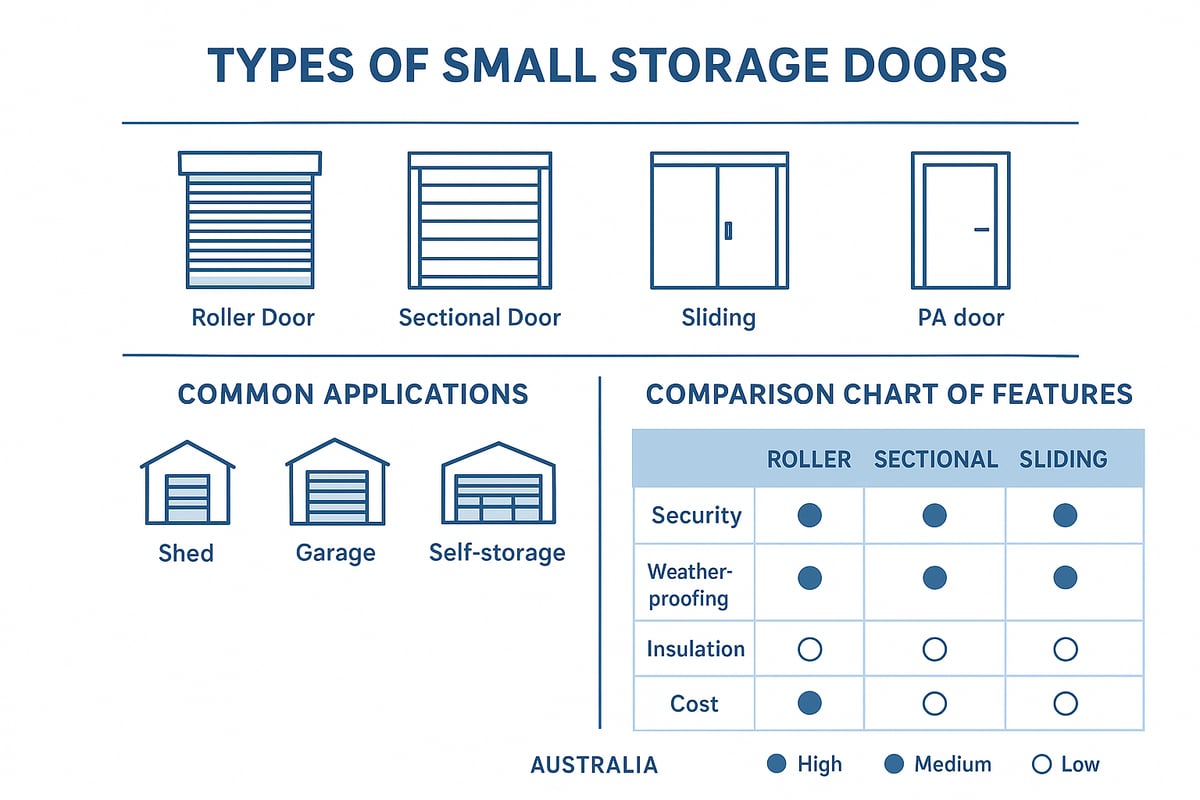
Several types of small storage door are available, each suited to specific requirements:
- Roller doors: These doors roll up vertically, saving space and offering robust security. They are widely used in self-storage facilities and garages. For a wide range of options, see Roller Doors for Storage Units.
- Sectional doors: Composed of hinged panels, sectional doors open vertically and tuck away along the ceiling, making them highly space-efficient for garages and workshops.
- Sliding doors: Ideal where headroom is limited or side access is preferred, sliding doors move horizontally and are commonly used in warehouses or large sheds.
- Personal access (PA) doors: These single-leaf doors provide convenient entry to storage spaces without operating a larger roller or sectional door, making them practical for sheds and secure rooms.
Case example: Roller doors dominate the self-storage industry due to their ease of use, compact profile, and reliable security, making them a preferred choice for both commercial and residential storage units.
Applications Across Residential and Commercial Settings
A small storage door finds its place in a variety of settings:
- Residential: Garages, backyard sheds, and outdoor storage enclosures.
- Commercial: Warehouses, shipping containers, and secure storage rooms.
- Self-storage businesses: Essential for unit access, with roller doors being the most common.
- Renovations and new builds: Frequently specified in plans to maximise storage efficiency.
According to industry reports, over 65 percent of new Australian self-storage units feature roller doors, reflecting the popularity of the small storage door in this rapidly growing sector. Whether upgrading an old shed or designing a new commercial facility, these doors are a practical solution for compact access requirements.
Key Considerations for Choosing the Right Door
When selecting a small storage door, consider the following factors to ensure the best fit for your property:
- Size constraints: Measure the opening carefully to determine the correct door size.
- Frequency of use: High-traffic doors may benefit from automation or reinforced hardware.
- Security and weather resistance: Look for robust locks and weather seals, especially in exposed locations.
- Aesthetic integration: Choose finishes and colours that match the overall look of your home or business.
For example, matching a Colorbond finish to your home's exterior can enhance street appeal while providing the durability needed for Australian conditions.
Benefits of Upgrading to Modern Small Storage Doors
Upgrading to a modern small storage door can deliver a range of benefits:
- Improved security, thanks to stronger materials and advanced locking systems.
- Enhanced durability and weatherproofing, especially with insulated or wind-resistant models.
- Greater convenience, with options for automation and remote access.
- Increased property value, as a well-chosen door boosts both functionality and appearance.
A real-world example: Replacing an old, rusted shed door with a new, insulated roller door not only improves day-to-day usability but can also provide a measurable return on investment by increasing the value and appeal of your property.
Materials, Finishes, and Customisation Options
Choosing the right materials and finishes for your small storage door is crucial for security, durability, and style. Modern options offer flexibility to suit any Australian property, from backyard sheds to commercial storage units. Let us explore the key material choices, finish options, insulation features, customisation potential, and sustainability considerations for your next small storage door.
Common Materials for Small Storage Doors
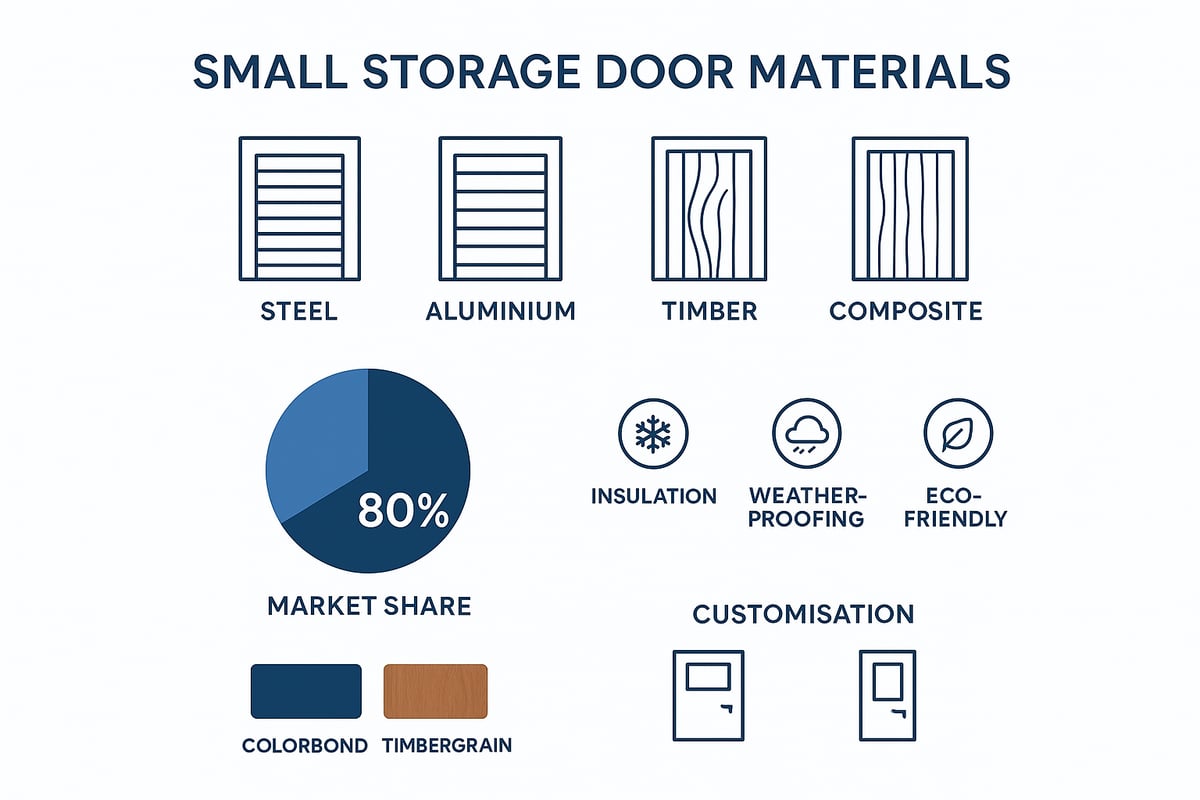
The material you choose for your small storage door directly impacts its strength, longevity, and value. Steel is by far the most popular choice in Australia, accounting for 80 percent of all small storage door sales. It is known for its exceptional durability, security, and cost-effectiveness, making it ideal for both residential and commercial settings.
Aluminium is another strong contender, offering a lightweight and rust-resistant solution. This makes aluminium a smart pick for coastal areas or where ease of installation is a priority. Timber remains a favourite for those seeking natural aesthetics and added insulation. While timber requires more maintenance, it brings warmth and charm to any property.
Composite materials are now gaining attention in the small storage door market. These doors blend the best qualities of steel, aluminium, and timber, delivering modern alternatives that balance strength, insulation, and visual appeal. If you are looking for a small storage door that performs well in harsh conditions while fitting your budget, material choice is the first decision to make.
| Material | Durability | Security | Insulation | Maintenance | Market Share |
|---|---|---|---|---|---|
| Steel | High | High | Moderate | Low | 80% |
| Aluminium | Moderate | Moderate | Low | Very Low | 10% |
| Timber | Moderate | Moderate | High | High | 7% |
| Composite | High | High | High | Low | 3% |
With so many options, the right small storage door material will depend on your specific storage needs, climate, and desired lifespan.
Finishes and Colour Choices
A small storage door should not only protect your valuables but also enhance your property’s look. Colorbond steel is extremely popular in Australia, offering a huge range of colours and finishes to suit any home or business. Colorbond’s baked-on paint technology ensures long-lasting colour and minimal fading.
Powder-coated finishes are another favourite, providing a smooth, hard-wearing surface that resists chipping and scratching. For those who prefer a classic or rustic style, timbergrain finishes and custom textures can mimic the appearance of real wood without the upkeep.
Matching your small storage door’s finish to your property’s design adds curb appeal and can even boost resale value. Always consider both visual harmony and durability when selecting a finish.
Insulation and Weatherproofing Features
Insulation and weatherproofing are vital for any small storage door, especially in Australia’s varied climate. Insulated panel options help maintain consistent temperatures inside your storage area, protecting contents from heat and cold. Quality weather seals guard against wind, rain, and dust, extending the life of your door and everything inside.
In regions prone to high winds or cyclones, windlocked roller doors provide extra security and peace of mind. For example, Domestic Windlocked Roller Doors are engineered to withstand Australia’s toughest weather, making them a smart investment for exposed or coastal properties.
When choosing a small storage door, always factor in insulation and weather resistance to ensure your valuables stay safe and protected all year round.
Customisation and Sizing
Every storage space is unique, and your small storage door should be too. Made-to-measure solutions allow you to maximise every centimetre, whether you are working with a narrow laneway, a compact shed, or an unconventional garage. Custom sizing ensures a perfect fit and smooth operation, regardless of your space.
Upgrades such as automatic openers, heavy-duty handles, and secure locks can be added to your small storage door for convenience and safety. Personal touches like windows, louvres, or decorative panels help your door blend seamlessly with the rest of your property.
A real-life example is custom doors designed for the tight spaces of inner-city laneways, where off-the-shelf options simply will not work. With so many accessories and personalisation options available, you can create a small storage door that meets both practical and aesthetic needs.
Sustainability and Eco-Friendly Options
Sustainability is now a key factor in choosing a small storage door. Many manufacturers use recycled steel or aluminium, reducing the environmental impact of production. Energy-efficient insulation options help lower heating and cooling costs for your storage space.
Low-VOC finishes and coatings improve indoor air quality and support green building practices. By selecting eco-friendly materials and processes, you can enjoy a small storage door that is both high-performing and environmentally responsible.
Step-by-Step Guide: Selecting and Installing a Small Storage Door
Choosing and fitting the right small storage door can transform your storage space, making it more secure, accessible, and visually appealing. This step-by-step guide will walk you through every stage, from measuring up to installation, so you can confidently select and install the ideal solution for your property.
Step 1: Assess Your Storage Needs and Site
Start by carefully measuring the opening where your small storage door will be installed. Use a tape measure to record width, height, and available headroom. Double-check for obstructions like pipes or shelving.
Think about how often you'll access the space. Daily use may call for a wider or automated small storage door, while seasonal storage might suit a simpler option. Also, consider what you're storing—garden tools, bikes, or commercial inventory may each require different clearances.
For example, a garden shed may only need a single 900mm-wide door, while a commercial unit might need a 2400mm roller door for larger items. Accurate assessment at this stage prevents costly mistakes later.
Step 2: Compare Door Types and Features
Different types of small storage door deliver unique benefits. Compare roller, sectional, and sliding doors for fit, function, and price.
| Door Type | Space Needed | Security | Insulation | Cost | Best For |
|---|---|---|---|---|---|
| Roller | Minimal | High | Moderate | $$ | Sheds, garages |
| Sectional | Moderate | High | High | $$$ | Garages, workshops |
| Sliding | Side space | Medium | Low | $ | Tight spots, small sheds |
Manual operation keeps costs down, but automation boosts convenience. Consider security features like reinforced locks, and insulation for comfort. For a deeper dive into sectional models, see the Sectional Doors Overview.
Weigh up each type to match your storage needs and budget.
Step 3: Choose Materials, Finishes, and Accessories
Select materials for your small storage door based on climate, location, and durability. Steel is robust and secure, ideal for most Australian conditions. Aluminium resists rust in coastal areas. Timber offers natural insulation and a classic look.
Match finishes to your property. Colorbond steel is popular for its range and longevity. Add accessories like handles, secure locks, and automatic openers for ease of use and enhanced value.
For instance, upgrading a coastal shed to a Colorbond steel small storage door can prevent rust and improve street appeal. Accessory choices let you personalise the door for function and style.
Step 4: Obtain Quotes and Order Your Door
Contact reputable suppliers for quotes on your chosen small storage door. Compare prices online and in-store. Remember to factor in delivery fees and installation if needed.
Custom doors typically have a lead time of two to four weeks in Australia, so plan ahead. Check what's included in the quote—are installation, hardware, or removal of your old door extra?
Getting multiple quotes ensures you receive the best value and suitable options for your timeline and budget.
Step 5: Prepare the Installation Site
Before your small storage door arrives, clear the area and check the structure. Remove any debris or old framing. Ensure the surface, such as a concrete slab, is level and sturdy.
If you're installing an automatic door, confirm there's power nearby. Gather required tools—a drill, level, and safety gear are essentials. Always follow safety precautions when working with heavy panels or power tools.
For example, prepping a commercial site may require reinforcing tracks into concrete, while a garden shed might only need minimal groundwork.
Step 6: Professional vs. DIY Installation
Decide whether to install the small storage door yourself or hire a professional. DIY can save money, but requires skill with tools and an extra set of hands. Complex or automated doors are best left to professionals, who ensure compliance with Australian safety standards.
Professional installation usually adds 10 to 20 percent to the total cost, but can save time and reduce headaches. If your door is large, heavy, or includes automation, consider bringing in an expert for a smooth, safe result.
Door Supply: Your Trusted Source for Small Storage Doors
Door Supply provides a wide range of small storage door solutions for homes, sheds, and commercial sites across Australia. Their instant online pricing, custom sizing, and nationwide delivery streamline the process.
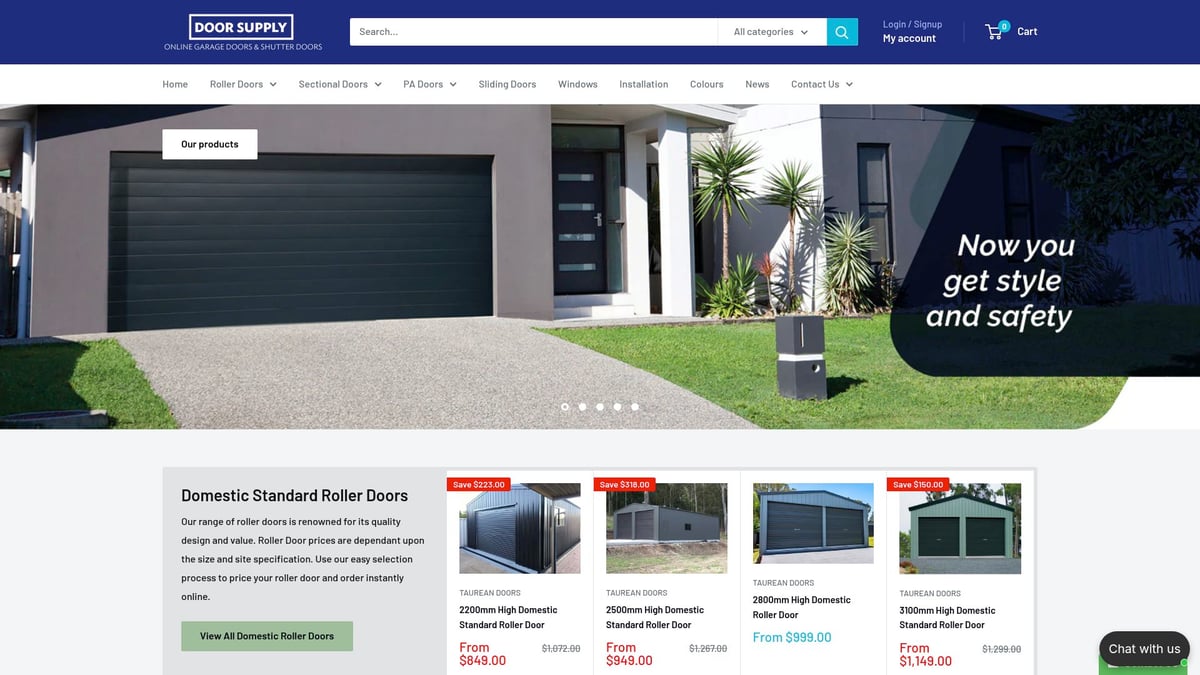
You can access detailed installation guides or book professional services, making it easy for both DIY and trade customers. Choose from trusted brands, a broad palette of Colorbond finishes, and wind-resistant options.
Expert support ensures your small storage door fits perfectly and performs reliably, no matter your storage needs.
Security, Safety, and Smart Features for 2026
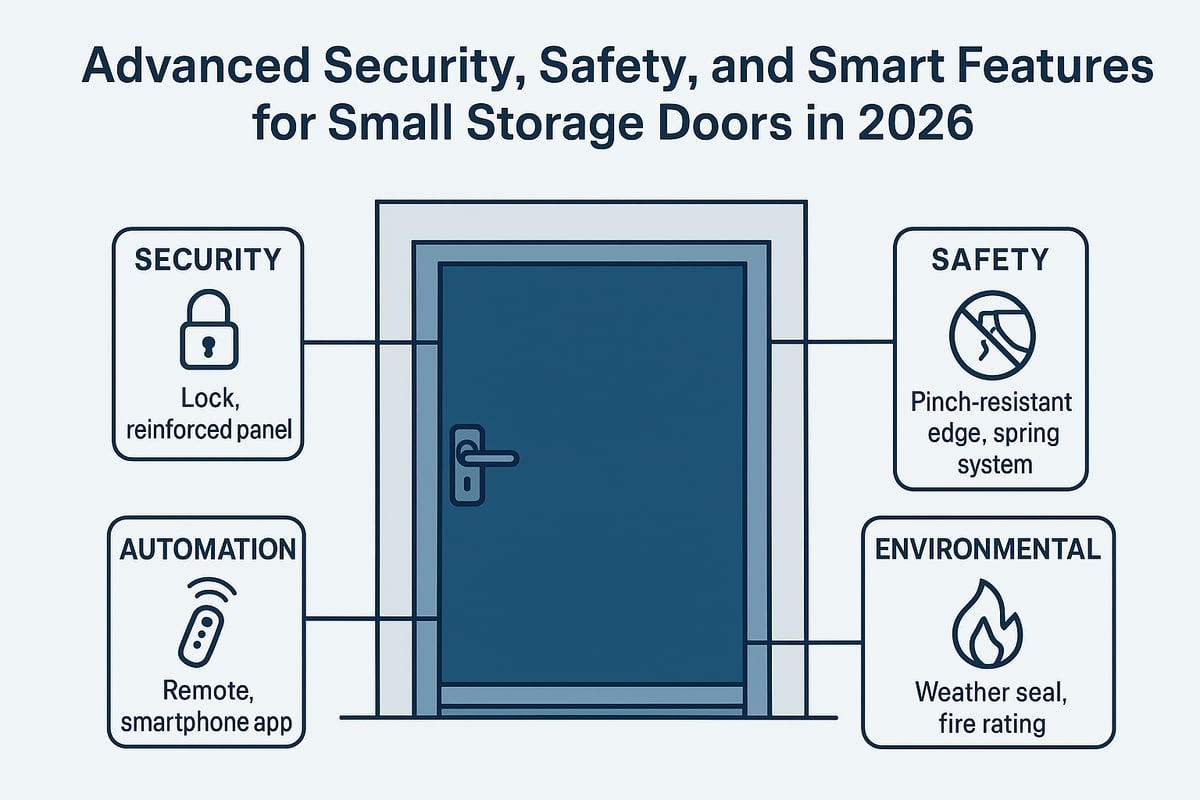
As property owners demand more from their storage solutions, the small storage door is evolving to meet the challenges of 2026. Innovations in security, safety, and smart technology are driving new standards in both residential and commercial settings. Understanding these features is essential for anyone selecting, installing, or upgrading a small storage door.
Essential Security Features
When choosing a small storage door, security is a top priority for homeowners and businesses alike. Modern doors feature heavy-duty locks, reinforced steel or aluminium panels, and tamper-resistant hardware to deter break-ins. For extra peace of mind, many small storage doors now integrate with property-wide security systems, allowing remote monitoring and alerts.
Common security upgrades include:
- Keypad entry systems for self-storage units
- Concealed hinges and internal locking bars
- High-security padlocks and deadbolts
These advancements ensure your valuables remain protected, whether you are storing tools in a garden shed or managing a commercial storage facility.
Safety Considerations
Safety is just as important as security when it comes to a small storage door, especially in settings where families or employees use the space regularly. Pinch-resistant panels and safe-edge designs help prevent injuries during operation. Spring and track safety mechanisms minimise the risk of sudden closures or derailments.
All reputable small storage door products in Australia comply with AS/NZS 4505 safety standards. Regular inspections and proper maintenance ensure mechanisms remain in top condition. Prioritising safety features protects everyone using or accessing storage areas, reducing the risk of accidents and liability.
Automation and Smart Storage Door Tech
The latest small storage door models come packed with automation and smart technology. Automatic openers, remote controls, and smartphone integration are rapidly becoming standard features, making access quick and convenient. Smart sensors detect motion, obstructions, and can trigger auto-close functions for enhanced security.
According to the SSAA State of the Industry 2024, nearly 40% of new residential roller doors in Australia now include smart automation.
| Feature | Benefit |
|---|---|
| Remote control | Open/close from a distance |
| Smartphone app | Manage access anywhere |
| Motion sensor | Auto-detect movement |
| Auto-close | Boosts security, saves time |
These advancements make the small storage door a seamless part of the modern smart property.
Weather and Environmental Protection
Australia’s extreme weather conditions require a small storage door that is built to last. Wind-rated and cyclone-proof doors are crucial in coastal regions, while fire-resistant and bushfire-compliant designs (BAL ratings) protect rural properties. Quality weather seals prevent dust, pests, and rain from entering storage areas.
For example, fire-rated small storage doors are a smart investment for rural sheds, providing peace of mind during bushfire season. Insulated panels further enhance protection, keeping stored items safe from both heat and cold.
Future-Proofing Your Storage Door Investment
Investing in a small storage door with upgradeable hardware and modular technology ensures long-term value. Many modern doors are compatible with evolving smart home systems, allowing you to add features as your needs change.
Look for products that offer easy integration with new security devices or automation accessories. Future-proofing your small storage door not only increases convenience but also helps maintain your property’s value and appeal for years to come.
Maintenance, Repairs, and Longevity Tips
Regular care and timely repairs are essential for maximising the performance and lifespan of your small storage door. With proper attention, you can prevent common issues, control costs, and ensure smooth, secure access year-round. Here is a practical guide to keeping your small storage door in peak condition.
Routine Maintenance Checklist
To keep your small storage door working reliably, set up a quarterly routine. Begin by cleaning the door tracks to remove dust and debris, as buildup can hinder smooth movement. Lubricate all moving parts, including rollers, hinges, and locks, to reduce friction and prevent wear.
Inspect weather seals and door panels for cracks or damage, especially after storms or heavy use. Tighten any loose screws or bolts, and check that all hardware is secure. For automated doors, test the opener and safety sensors regularly to ensure everything operates safely.
A small storage door that receives regular attention will last longer and offer better performance. If you notice unusual noises or resistance, address them promptly to avoid bigger issues.
Common Issues and Troubleshooting
Despite routine care, some problems can still arise with a small storage door. Sticking or noisy operation is often caused by dirt in the tracks or worn rollers. Clean and lubricate these areas first. If the door is misaligned, check for bent tracks or loose brackets and adjust as needed.
Lock malfunctions can occur if dust or rust builds up inside the mechanism. Apply a graphite-based lubricant to the lock and test its operation. For ongoing trouble, replacing the lock may be necessary. If you have a personal access door in your shed, refer to Personal Access Doors for Sheds for compatible replacement parts and troubleshooting guides.
Persistent faults, like repeated opener failures or warped panels, may require professional attention. Always follow manufacturer recommendations for your specific small storage door.
Extending the Life of Your Storage Door
Protective coatings play a vital role in preserving your small storage door, especially in harsh Australian climates. Apply a rust-resistant finish to steel doors and consider UV-resistant paints for timber or composite materials. Regularly check for early signs of rust or rot and treat affected spots immediately.
Timely repairs are crucial. Replace worn springs, rollers, and seals as soon as you notice deterioration. Using genuine parts from reputable suppliers helps maintain the integrity of your small storage door and supports warranty claims.
A proactive approach can easily add years to your door’s lifespan. Schedule annual professional servicing for complex mechanisms or automated doors to catch issues early.
Cost of Maintenance and Repairs
For most small storage door owners, annual maintenance costs range from $100 to $250 AUD. This includes routine servicing, lubrication, and minor part replacements. Automated doors or doors exposed to extreme weather may incur higher costs due to specialised components.
Repair costs are influenced by material type, age, and the complexity of the issue. Replacing a lock or roller is generally inexpensive, while panel repairs or opener replacements can be more substantial. Always check your warranty coverage, as many manufacturers include basic repairs for a set period.
Investing in regular upkeep helps control long-term costs and avoids expensive emergency repairs. Keep a record of all maintenance performed on your small storage door for reference.
When to Replace vs. Repair
Knowing when to replace your small storage door is just as important as maintenance. Look for signs such as persistent structural damage, recurring faults, or outdated security features. If repairs become frequent or costly, a replacement can offer better value and improved performance.
Consider the environmental benefits too. Upgrading to a new, energy-efficient door can lower energy costs and provide better insulation. Compare the total cost of ongoing repairs to the investment in a modern small storage door to make an informed decision.
In summary, proactive care and timely upgrades ensure your small storage door remains secure, reliable, and cost-effective for years to come.
Trends and Innovations in Small Storage Doors for 2026
The small storage door landscape is rapidly evolving as Australian homeowners and businesses seek smarter, more sustainable solutions. From minimalist designs to cutting-edge technology, let’s explore the key trends shaping these doors for 2026.
Evolving Design and Material Trends
Modern small storage door solutions are embracing minimalist, space-saving styles that optimise every square metre. Clean lines and compact profiles are now favoured for both urban homes and commercial sites.
Sustainable materials are making a significant impact. Manufacturers are increasing the use of recycled steel, aluminium, and composite panels. Durable finishes, such as powder-coated and Colorbond, offer both visual appeal and long-term protection.
A wide range of customisable colours and textures allows property owners to match their small storage door to architectural trends. These advances ensure each installation delivers both functional and aesthetic value.
Smart Technology Integration
Technology is transforming the small storage door into an intelligent access point. AI-powered access control systems, such as biometric or keypad entry, are increasingly common. Predictive maintenance alerts help users identify issues before they become costly problems.
Integration with smart home and business systems enables remote monitoring and operation. Smartphone apps now allow you to open, close, or check the status of your small storage door from anywhere.
Smart sensors enhance safety by detecting obstructions and automatically reversing movement. These innovations ensure your storage remains secure and convenient.
Market and Consumer Trends
The Australian market for small storage door solutions is expanding rapidly. Self-storage and micro-storage units are in high demand, with more Australians seeking flexible, secure storage options.
Automation and remote access capabilities are now expected features. According to the Australia Self-Storage Market Outlook 2030, the local self-storage sector is projected to grow by 7 percent annually through 2026.
This surge is driving investment in advanced small storage door technologies, making secure, automated storage more accessible to all.
Regulatory and Environmental Considerations
Compliance with updated building codes is a top priority for small storage door manufacturers. Bushfire and cyclone-rated designs are increasingly required, especially in high-risk regions. Products with BAL ratings and wind-resistance testing meet these critical needs.
Environmental certifications are also influencing buyer decisions. Many small storage door products now feature eco-friendly coatings, low-VOC finishes, and energy-efficient insulation.
As we look ahead to 2026, it’s clear that having a secure, space-efficient storage door can make all the difference in protecting your valuables and making the most of your property. With so many options and features to consider, choosing the right door doesn’t have to be overwhelming—especially when you have reliable support and expert advice on hand. If you’re ready to upgrade your storage space with a durable, easy-to-use solution that fits perfectly, take the next step and Buy a domestic roller door. You’ll enjoy peace of mind and lasting value for years to come.