
Ever wondered why doors in Australian homes seem to fit perfectly, no matter the style or era? If you have ever tackled a renovation or planned a new build, you know how confusing it can be to figure out which door size is right for your project.
Understanding standard door size australia is crucial. It not only saves you time and money but also makes installations easier and opens up a wider range of design options for your home or business.
This guide will walk you through everything you need to know about standard door size australia for 2026. We will cover door types, common dimensions, compliance requirements, and tips for buying the right door.
Whether you are a homeowner, builder, or renovator, this article is your go to resource for standard door size australia. You will find up to date standards, style variations, compliance tips, and expert advice to help you make informed decisions.
Here is what you can expect: a clear overview of standard sizes, how door types vary, key regulatory details, step by step measuring advice, and where to find the best doors for your next project.
Standard Door Sizes in Australia: The 2026 Overview
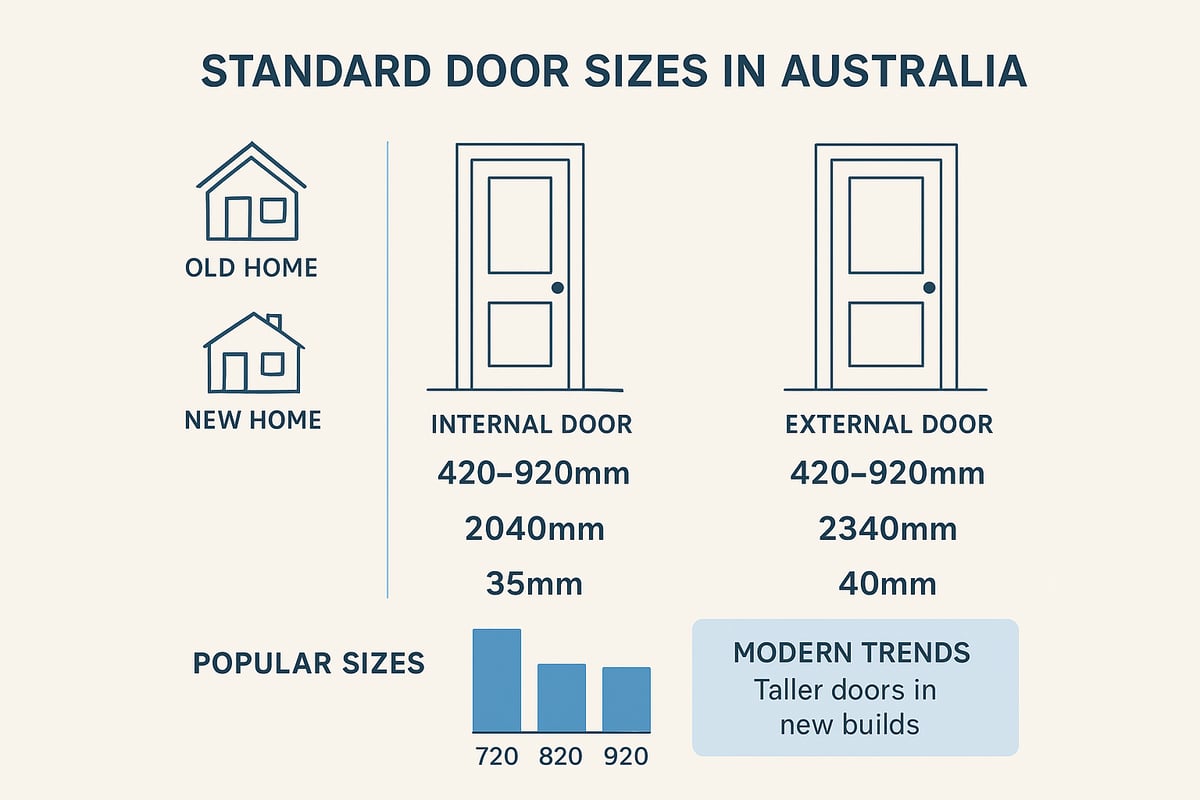
When planning a renovation or new build, knowing the standard door size australia guidelines is essential. In the Australian context, a “standard door size” refers to the most commonly manufactured and readily available dimensions for both internal and external doors. These standards ensure that doors fit seamlessly into typical wall frames, allowing for easy replacement, cost-effective installation, and broad design flexibility.
Australia’s most prevalent internal door size is 820mm wide by 2040mm high, with a thickness of 35mm. This dimension strikes the right balance between accessibility, privacy, and space efficiency in most homes. However, the standard door size australia range is broad, accommodating various room functions and architectural needs. Internal doors typically range in width from 420mm for compact spaces up to 920mm for wider access points. Heights are most commonly 2040mm, but 2340mm high doors are increasingly popular in modern designs.
| Door Type | Common Width (mm) | Common Height (mm) | Typical Thickness (mm) |
|---|---|---|---|
| Internal | 420, 520, 620, 720, 770, 820, 870, 920 | 2040, 2340 | 35 |
| External | 820, 870, 920, 1020 | 2040, 2340 | 40 |
| Garage/Specialty | 2100+ | 2400+ | Varies |
For external doors, the standard door size australia measurements differ to accommodate security and insulation needs. Most front and back entry doors are 820mm or 920mm wide, with 2040mm or 2340mm heights and a thicker 40mm profile for added durability. Wider doors, such as 1020mm, are often used for statement entryways or to improve accessibility.
Door sizes have evolved alongside Australian housing trends. In older homes, such as a typical 1970s brick residence, internal doors are usually 2040mm high and may be narrower, especially in laundries or bathrooms. In contrast, a 2026 new build often features taller 2340mm internal doors, reflecting higher ceilings and open-plan living preferences. This shift not only enhances natural light flow but also creates a sense of spaciousness.
Ceiling height and architectural style strongly influence the standard door size australia options selected. Homes with 2.7m or higher ceilings now commonly use 2340mm doors to maintain visual proportion. Meanwhile, minimalist and contemporary designs favour wider and taller door profiles for a modern, airy feel.
Recent data shows the 820mm x 2040mm internal door remains dominant, but demand for the 2340mm height is growing rapidly in new developments. Many homeowners and builders are drawn to the flexibility and aesthetic value offered by larger door panels. For a detailed breakdown of these dimensions and their applications, see the Standard door sizes in Australia resource.
Consider a practical example. A 1970s brick home might have 720mm-wide internal doors and a 2040mm-tall entry, which can limit design choices during renovation. By contrast, a 2026 open-plan home will likely feature 2340mm-tall, 820mm- or 920mm-wide doors throughout, supporting accessibility and a contemporary look. Understanding the standard door size australia guidelines helps you select doors that fit, look great, and meet compliance requirements for your project.
Types of Doors and Their Standard Sizes
Choosing the right door style is more than a design decision. It is essential for compliance, function, and ease of installation. Understanding the standard door size australia options for each door type helps you plan effectively, control costs, and ensure your project runs smoothly in 2026.
Standard Door Size Australia Table: Major Door Types
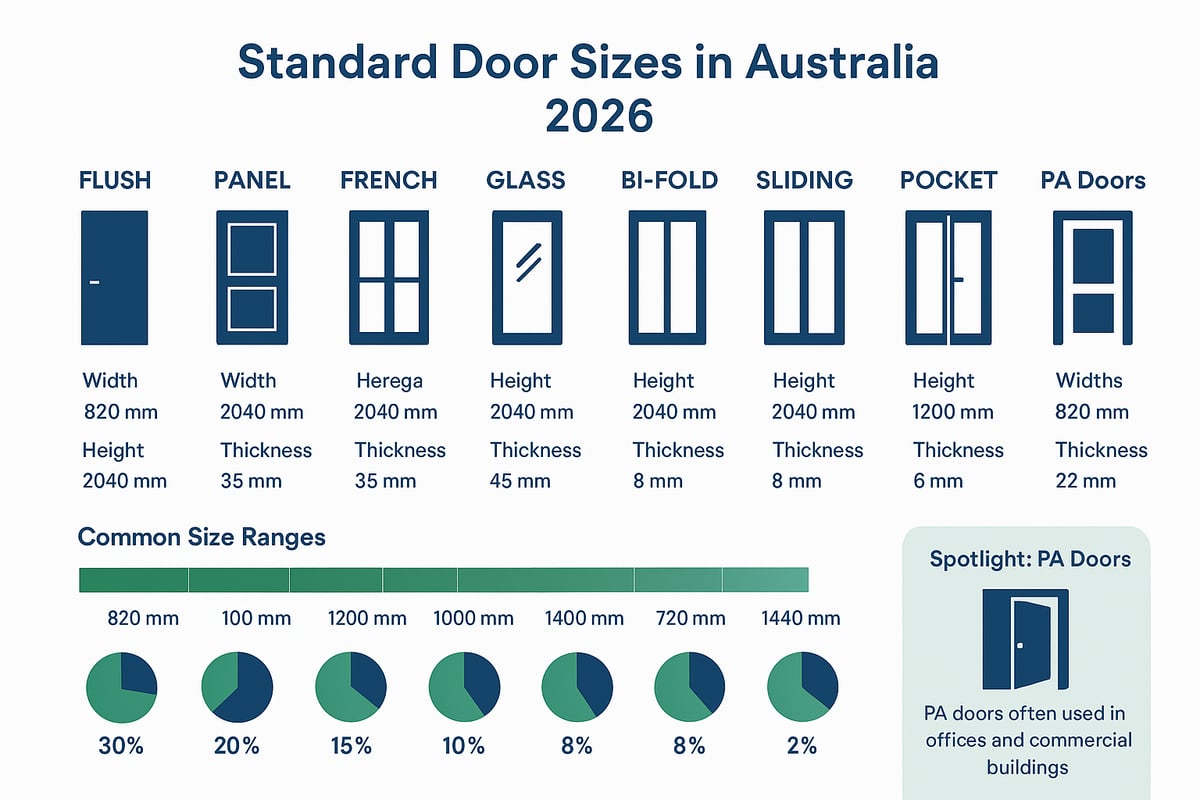
| Door Type | Common Widths (mm) | Common Heights (mm) | Typical Thickness (mm) | Main Uses |
|---|---|---|---|---|
| Flush | 620, 720, 770, 820, 870, 920 | 2040, 2340 | 35 (internal), 40 (external) | Bedrooms, bathrooms |
| Panel | 720, 820, 870, 920 | 2040, 2340 | 40 | Entryways, living areas |
| French | 620-920 (per leaf) | 2040, 2340 | 40 | Living, dining, patios |
| Glass | 720, 820, 870, 920 | 2040, 2340 | 35-40 | Internal, external |
| Bi-fold | 2x450–7x870 panels | 2040, 2340 | 35-40 | Laundries, pantries, patios |
| Sliding | 820, 920, 1200+ | 2040, 2340 | 35-40 | Living, closets, garages |
| Double | 2x720–2x920 | 2040, 2340 | 40 | Entry, theatre rooms |
| 720, 820, 870 | 2040, 2340 | 35-40 | Bathrooms, ensuites | |
| PA (Personal Access) | 600, 720, 820, 920 | 2040, 2340 | 40-45 | Garages, sheds, side access |
This table captures the most common standard door size australia dimensions for each major door type. Internal doors are often 820 mm wide and 2040 mm high, while external doors tend to be thicker and sometimes wider, especially for main entry points.
Hinged, Sliding, and Folding Doors: Sizing Differences
The way a door operates impacts its sizing. Hinged doors, including flush and panel styles, are most often found in standard widths like 820 mm. Sliding doors, whether single or double, need wider openings. For example, a standard sliding door may be 1200 mm or more to allow for smooth access and light.
Folding doors, such as bi-folds, are measured by the number of panels and their combined width. A two-panel bi-fold door can be as narrow as 900 mm, while a seven-panel version can span over 6000 mm, making it perfect for connecting living spaces to outdoor areas. The standard door size australia for folding and sliding models varies more widely because of these functional needs.
Why Not All Styles Are Available in Every Size
Not every door style is available in every standard door size australia. Structural requirements, weight limitations, and design intent restrict some options. For instance, oversized glass doors need thicker frames for stability, and double doors require wider wall spaces. French doors are usually custom paired, so their width per leaf is less than a full single door.
Manufacturers offer the most popular sizes to streamline production and reduce costs. Choosing a non-standard size usually means custom work, which can extend lead times and increase your budget.
Door Thickness: What Varies by Type
Door thickness is another important factor in the standard door size australia equation. Most internal doors are 35 mm thick, balancing weight and durability for daily use. For external doors, 40 mm is common, providing extra strength, insulation, and security.
Panel doors, especially those used as entry doors, may be even thicker for added impact resistance. Specialty doors like PA doors for garages or sheds can reach 45 mm or more, accommodating hardware and weatherproofing.
Market Share of Each Door Type in Australian Homes
Recent industry data shows flush and panel doors dominate the standard door size australia market, making up about 60% of all internal doors. Sliding and bi-fold doors are gaining ground, particularly in open-plan homes where wider access is valued. French and glass doors account for around 15%, often selected for their style and ability to maximise light.
Specialty doors, including pocket and PA doors, are seeing increased demand as homeowners seek flexible solutions for compact spaces and multi-use areas.
Specialty Focus: Personal Access (PA) Doors
PA doors are designed for convenient entry to garages, sheds, and side yards. Their standard door size australia options typically include widths of 820 mm and heights of 2040 mm or 2340 mm, but can vary to suit commercial or high-security requirements.
For a detailed breakdown of sizes and installation tips, see the Personal access doors sizing guide. This resource helps you choose the right PA door for your project, whether it is a new build or a retrofit.
Summary: Matching Door Type and Size to Your Needs
Selecting the right standard door size australia is about more than picking a look. It involves understanding the functional differences between door types, their available sizes, and how these fit your space and requirements.
Flush, panel, and glass doors suit most internal applications, while sliding, bi-fold, and double doors are ideal for open-plan areas or where space is at a premium. Specialty doors, such as PA and pocket types, provide solutions for unique access points and compact layouts.
With the right knowledge, you can confidently choose the best door style and size for any Australian home or project.
Australian Standards & Building Compliance for Doors
Navigating the world of standard door size australia means more than just picking dimensions off a chart. Every installation must comply with strict Australian Standards and the Building Code of Australia to ensure safety, accessibility, and long-term value. This compliance is not just a formality; it is essential for both legal and practical reasons.
Relevant Australian Standards for Doors
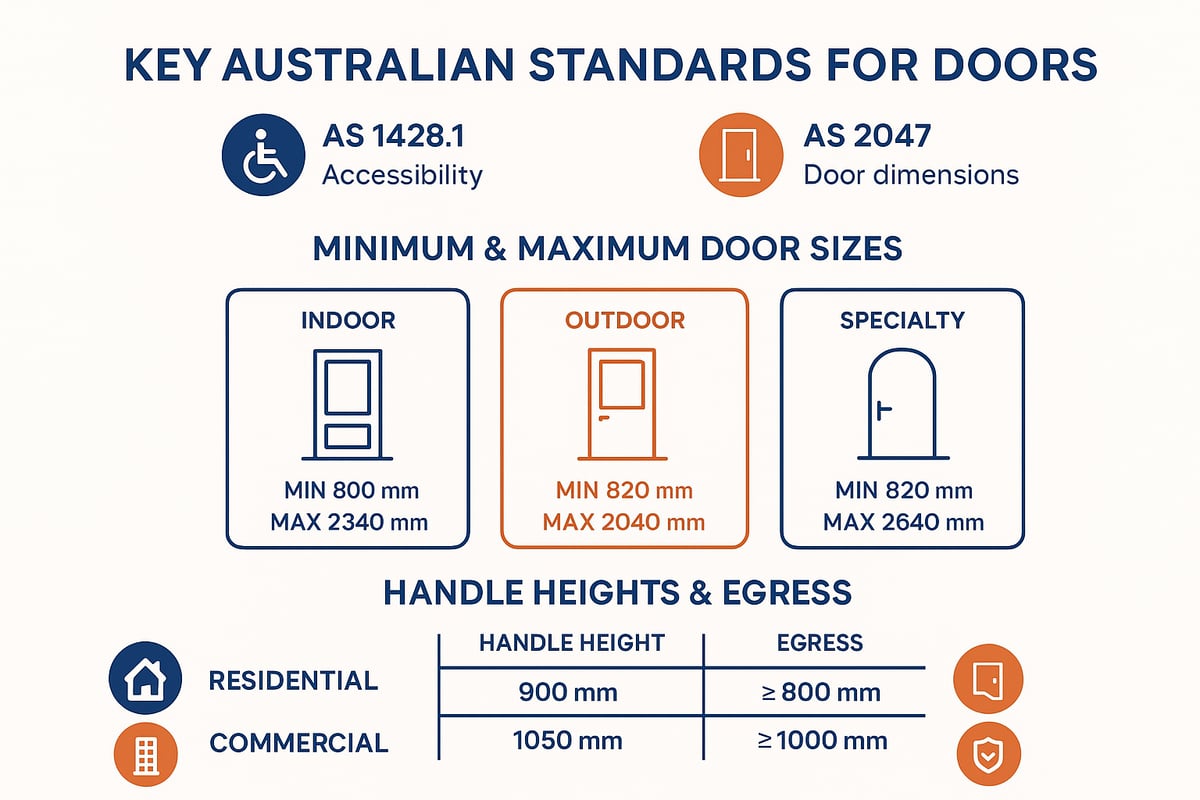
Australian regulations set out clear requirements for standard door size australia. The most important standards are:
- AS 1428.1: Accessibility requirements, including minimum clear opening widths and door handle heights.
- AS 2047: Standards for windows and external doors, covering weatherproofing and structural performance.
- Building Code of Australia (BCA): Enforces minimum and maximum door sizes, fire safety, and egress rules.
For example, AS 1428.1 specifies that accessible doors must have a minimum clear opening of 850mm when open. Door handles must be installed between 900mm and 1100mm above the finished floor. You can review specific Building Code of Australia compliance requirements for further detail.
Compliance in Practice: Minimums, Maximums, and Accessibility
Most residential internal doors in Australia are 820mm wide and 2040mm high, but compliance means ensuring these meet the minimums set for your project type. For commercial or accessible spaces, the standard door size australia may need to be wider—often 920mm or more.
Fire safety rules require that exit doors open outward and provide clear, unobstructed egress. For multi-unit dwellings, external doors must comply with both AS 2047 and local fire regulations. Handle heights, clearances, and even door swing directions are all dictated by these standards.
Recent Updates and Regional Differences
Australian Standards are regularly updated, so it is crucial to check for changes before ordering or installing. For 2026, updates to AS 1428.1 have clarified requirements for automated and smart doors, ensuring new technologies still meet accessibility rules.
While the standard door size australia remains consistent nationwide, minor variations exist between states and territories, especially regarding fire and cyclone safety in coastal regions. Builders should always consult local codes in addition to national standards.
Why Compliance Matters for Homeowners and Builders
Meeting the standard door size australia does more than tick a regulatory box. Proper compliance:
- Ensures doors are safe and accessible for everyone
- Simplifies future renovations or replacements
- Boosts the resale value of your property
- Is often required for insurance approval
For example, a new home built with compliant door sizes will easily pass inspection and appeal to a wider range of buyers, including those needing accessible features. Non-compliance can lead to costly rectifications or insurance issues down the track.
Factors Influencing Door Size Selection in 2026
Selecting the right standard door size australia is a critical decision for any renovation or new build. Several factors will shape your choice, from available space and compliance to design preferences and budget. Understanding these influences ensures your project achieves both style and function.
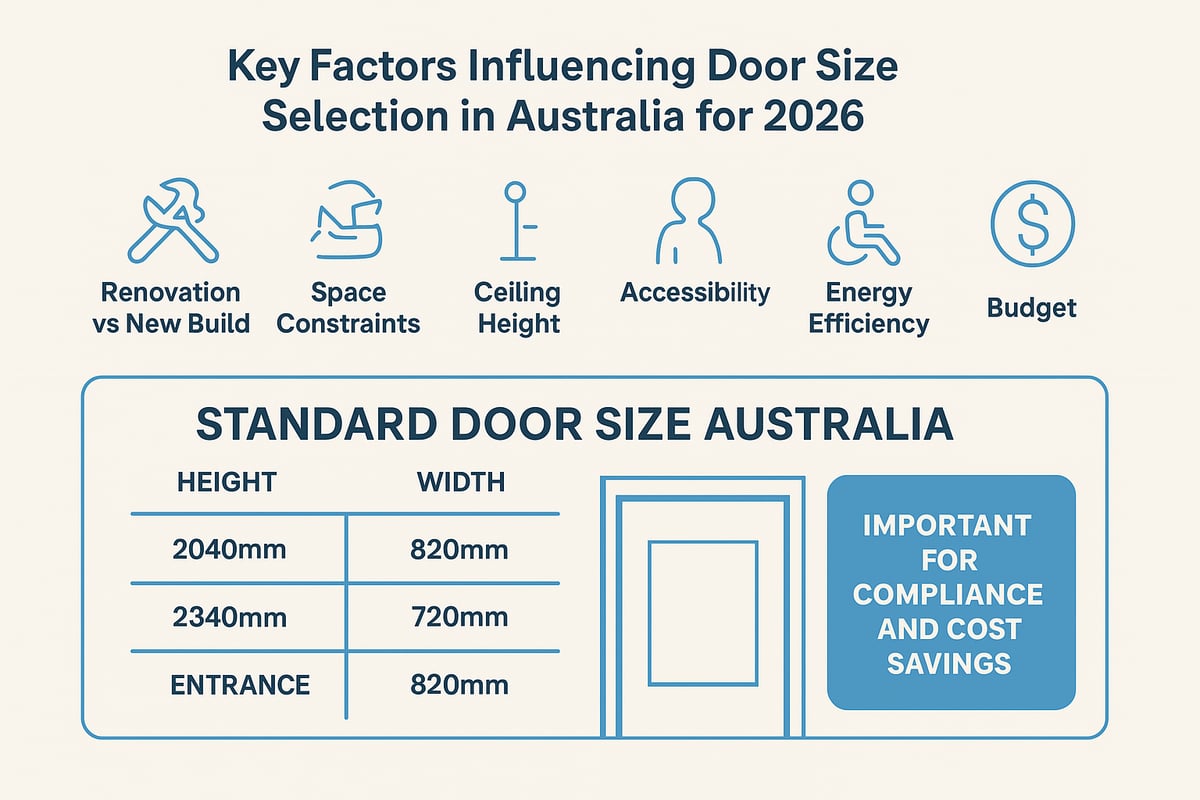
Renovation vs. New Build
When tackling a renovation, homeowners often need to match the existing standard door size australia to avoid costly custom orders. New builds, on the other hand, offer greater flexibility. Builders can choose larger or taller doors to suit modern designs and open-plan layouts. In both cases, sticking to standard sizes is generally more affordable and ensures easier access to replacement parts.
Space Constraints and Room Function
Limited space is a common challenge, especially in older homes or compact modern apartments. For small bathrooms, laundries, and pantries, using a narrower standard door size australia, such as 720mm wide, maximises functionality without compromising access. Bedrooms and living areas typically use 820mm doors, balancing privacy and ease of use.
- Use 720mm for tight spaces
- 820mm suits most bedrooms
- 920mm for accessibility or statement entryways
Ceiling Height and Architectural Style
The height of your ceilings and your home’s architectural style play a major role in door selection. Modern builds with higher ceilings often feature 2340mm tall doors, creating a sense of space and luxury. Classic homes may retain 2040mm doors for authenticity. Choosing the right height ensures visual harmony and compliance with architectural trends.
For more insights into why standard sizing matters, see common standard building dimensions in Australia.
Accessibility and Energy Efficiency
Accessibility requirements are increasingly important in 2026. Wider doors, such as 870mm or 920mm, make homes more inclusive for wheelchair users and meet compliance standards. Energy efficiency is also a consideration, as the correct standard door size australia helps maintain insulation and reduce energy costs. Selecting insulated doors and tight-fitting frames further enhances performance.
Security and Budget Considerations
Security is a top priority for entry doors. Heavier, wider doors offer improved protection and presence. Budget also influences choice. Standard door size australia options are usually more cost-effective than custom builds, with broader availability and faster installation. Custom doors may suit unique architectural needs but often come at a higher price.
Practical Example: Modern Open-Plan Home
A builder working on a contemporary open-plan home chooses 2340mm tall doors throughout. This standard door size australia enhances natural light, creates a seamless flow, and aligns with 2026 design trends, all while keeping costs manageable by avoiding custom orders.
Frequently Asked Questions About Standard Door Sizes in Australia
Choosing the right door can be confusing, especially with so many sizes and options on the market. To help, we’ve answered the most frequent questions about standard door size australia. Whether you’re renovating or building new, these answers will guide your decision.
What is the most common door size in Australia?
The most common standard door size australia homeowners encounter is 820mm wide by 2040mm high, with a thickness of 35mm for internal doors. This size suits most bedrooms, bathrooms, and living spaces.
| Door Type | Standard Widths (mm) | Standard Heights (mm) | Standard Thickness (mm) |
|---|---|---|---|
| Internal | 620, 720, 770, 820, 870, 920 | 2040, 2340 | 35, 40 |
| External | 820, 870, 920 | 2040, 2340 | 40 |
Larger doors, like 2340mm high, are becoming more popular in new builds.
Are all doorways standard size, or do I need custom doors?
Not every doorway fits a standard door size australia. While most modern homes use standard sizes, older homes may have unique openings that need custom solutions. For example, heritage buildings often feature shorter or narrower doors.
Before ordering, always measure your opening. If your frame does not match a standard, you may need a custom option. Many suppliers offer both, so you can choose what fits best. For a practical overview, see these B&D domestic door standard sizes to compare real-world options.
What is the standard thickness for internal and external doors?
Internal doors in Australia are usually 35mm thick, while external doors are often 40mm. Some premium doors or fire-rated models can be thicker, especially for added security or insulation. The standard door size australia includes both width and thickness, so check both before buying.
If you’re replacing a door, measure the old door’s thickness as well as the frame. This ensures the new door will fit and function properly.
Can standard doors be trimmed to fit non-standard openings?
Standard doors can often be trimmed slightly to fit a non-standard opening. Most timber doors allow for trimming 5–10mm on each edge. However, some designs, like hollow-core or glass insert doors, have limited trimming options.
Always check the manufacturer’s guidelines before cutting. Over-trimming can compromise the door’s strength. For more on fitting and measuring, explore this guide to standard door frame sizes explained.
How do I know if my home needs a custom door?
If your doorway is significantly outside the standard door size australia, or you want a special design, you may need a custom door. Signs you need custom include:
- Unusual width or height (not matching standard increments)
- Heritage or period home with original frames
- Unique architectural features or curves
Measure carefully, and consult a professional if unsure. Many suppliers can make doors to your exact requirements.
What is the standard door handle height?
According to Australian Standard AS 1428.1, the standard handle height is between 900mm and 1100mm above the finished floor level. This range ensures accessibility and comfort for most users.
When installing a new door, always confirm handle placement. The standard door size australia includes not just the door but also hardware position, which impacts usability and compliance.
Are there extra-wide or extra-tall options for accessibility?
Yes, the standard door size australia now commonly includes wider (870mm or 920mm) and taller (2340mm) doors. These options are ideal for wheelchair access, prams, or moving bulky items. Many new homes and renovations opt for these sizes to future-proof accessibility.
If you have specific needs, consult your supplier for available options. Most can recommend solutions that balance accessibility, compliance, and style.
Tips for choosing the right door size for your project
- Measure your frame multiple times for accuracy
- Consider future needs, such as accessibility
- Check your local regulations for compliance
- Use standard sizes where possible to save on costs and lead times
- Review product guides and supplier resources before ordering
Understanding standard door size australia will make your next project run smoothly, whether you are replacing a single door or fitting out an entire home.
Door Size Trends and Innovations for 2026
Australian homes are evolving fast, and so are the expectations for standard door size australia. In 2026, several key trends are shaping both the design and function of doors. Homeowners and builders are now seeking solutions that not only meet compliance, but also elevate the look and feel of their spaces. Whether you’re considering a renovation or a new build, staying informed about these trends helps future proof your investment.
The Rise of Extra Tall and Wide Doors
One of the most noticeable shifts in standard door size australia is the growing popularity of extra-tall doors. Modern homes, especially new builds and luxury residences, are now featuring doors as high as 2340mm. This trend is driven by higher ceilings and open-plan living, making spaces feel lighter and more expansive. Wider entry doors, often 920mm or more, are also in demand for both accessibility and visual impact. This evolution is not limited to front entries; internal doors are following suit, allowing for greater flow and accessibility throughout the home.
Material Innovations and Technology Integration
Advances in materials are changing what is possible for standard door size australia. Composite, aluminium, and smart glass doors are gaining traction thanks to their durability and design flexibility. These materials enable larger doors without sacrificing strength or insulation. In garage and external doors, robust options like sectional and roller doors are designed in standard sizes for easy installation. For those looking to upgrade, the Sectional garage door standard sizes now include a broad range to suit modern architectural needs.
Smart Locks, Automation, and Door Thickness
The integration of smart locks and home automation systems is influencing standard door size australia. Door thickness must now accommodate advanced locking mechanisms and automation technology. This shift is especially relevant for front and garage doors, where security and convenience are top priorities. Automated roller doors are becoming a staple in Australian homes, with roller door size collections offering ready-to-fit options for a variety of openings. These innovations make it easier to enhance both security and daily convenience.
Sustainable Choices and Market Share of Standard Sizes
Sustainability is no longer a niche consideration. In 2026, eco-friendly materials and energy efficient designs are integral to standard door size australia. Manufacturers are offering more doors made from recycled or responsibly sourced timber, as well as insulated glass and composite options. Standard sizing helps reduce waste and enables efficient mass production, which lowers costs and environmental impact. Market data shows that standard doors still hold the majority share in new builds, but demand for custom sizes is growing, especially for unique architectural projects.
Future Outlook: Flexibility and Customisation
Looking ahead, the standard door size australia will continue to adapt as homeowners’ needs evolve. The trend toward larger, light-enhancing doors is expected to persist, along with greater demand for flexible and bespoke solutions. Manufacturers are responding by expanding standard ranges and offering more customisation options without lengthy lead times. Innovations in design and technology will further blur the line between standard and custom, ensuring Australians have access to door solutions that are both practical and on trend.
Now that you understand the essentials of standard door sizes in Australia for 2026, it is the perfect time to put that knowledge into action for your next renovation or new build. Whether you are upgrading for improved security, energy efficiency, or simply a fresh look, choosing the right garage door can make all the difference in both functionality and style. If you are looking for a reliable solution that fits seamlessly with standard dimensions and modern trends, you might want to Buy a sectional garage door. You can enjoy quality, convenience, and peace of mind with every purchase.